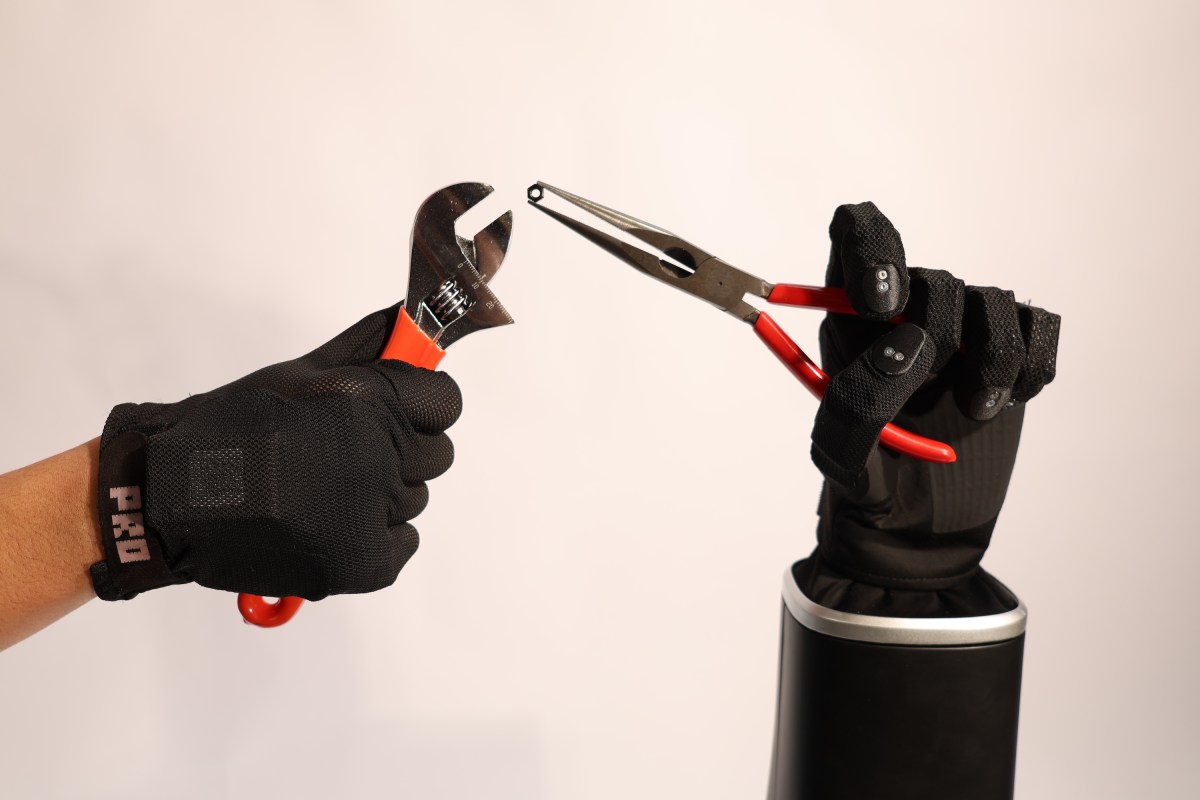
Robot hand startup Proception, founded by a former Tesla engineer, has settled its trade secret lawsuit with Tesla and raised $11 million(約18億円) to develop high-dexterity robotic hands.
The company uses sensor-laden gloves to capture human hand interaction data at scale, an approach Li believes is key to solving dexterous manipulation—widely considered one of the last major hurdles for humanoid robots.
What happened
Jay Li, a former technical lead on Tesla's Optimus humanoid robot program, has settled a lawsuit Tesla filed against him last year for allegedly taking trade secrets. Li is now free to focus on his startup Proception, which announced Monday it has raised $11 million(約18億円) in seed funding led by First Round Capital, with contributions from Y Combinator and BoxGroup. The company is also shipping its first batch of high-dexterity robotic hands to researchers and robotics companies.
Why it matters
Robotic hands remain one of the hardest unsolved engineering challenges in robotics. The consensus view is that making robotic hands equivalent to a human's is still many years away — a Northwestern University director estimated a decade until they are functional and useful. Proception's approach could accelerate progress by combining sensor-packed hardware with a scalable data-collection method using instrumented gloves, addressing what Li sees as a gap where most companies focus on hardware alone or use non-scalable data methods.
What to watch
Proception's robotic hand has 22 degrees of freedom and multiple joints per finger. The company is now accepting wider orders beyond its initial batch to researchers and robotics companies. First Round's investment partner noted he expects Proception to have the most sophisticated hand available today, backed by underlying data and models that could make humanoid robots truly performant.
Ask the AI about this article →
AI-summarized, only the topics you pick — one digest a day via Email, Slack, or Discord.
Free · takes 30 seconds · unsubscribe anytime
Ask AI anything about this article. Q&As are published on this page for other readers too.
As robotics deployments grow from small pilots to dozens of sites across multiple shifts, companies are discov…
AI, satellite navigation, and autonomous systems are transforming robotic lawn mowers from a niche product int…
Automation Taipei 2026 is examining why, despite extraordinary progress in artificial intelligence, the physic…

R2 Labs, a Peachtree Corners, Georgia–based smart manufacturing provider, has developed the RAC (R2 Autonomy C…
Mouser Electronics announced on August 20, 2026, that it is now stocking the MSPM0G5187 mixed-signal microcont…
A technology writer argues that the traditional salaried 9-to-5 job model—invented for 20th-century factories—…