JPMorgan Chase found AI success by not forcing adoption.
Over 200,000 employees signed up in eight months without mandates.
The bank now runs about 300 AI experiments annually and links each to business outcomes.
What happened
JPMorgan Chase deployed its internal AI platform LLM Suite in summer 2024 without forcing anyone to use it. In eight months, 200,000 employees signed up voluntarily, out of a workforce of over 300,000.
Why it matters
Two years after launch, JPMorgan became the top bank on the Fortune AIQ 50 list and third company overall, ahead of all tech giants except Alphabet. The bank then publicly acknowledged a gap between what the technology can do and what it captures in business results.
What to watch
The bank's approach hinges on linking each AI project to a business outcome and verifying its impact at the end of the process, not just tracking adoption. JPMorgan's engineers gained between 10% and 20% efficiency from an internal programming assistant, showing the method can produce concrete results.
Ask the AI about this article →
Summaries like this, in your inbox every morning.
JPMorgan's story contrasts with the industry's rush to count AI users and publish adoption rates. The bank deliberately gave up that number, treating platform usage as a barometer instead of a target. When a tool works, it fills up without a campaign; when it doesn't, the emptiness provides valuable information.
Behind this approach is a method built on two decisions: linking each project to a business outcome and creating metrics to demonstrate that outcome. The bank surveyed business units for problems, gathered nearly a thousand ideas, and let only a few hundred reach production. It then industrialized experimentation, growing from eight tests per year with specialists to around 300 annually via a self-service platform.
The bank's discipline includes not accepting a metric as valid until verifying its impact on business results at the end of the process. This acknowledges that saved minutes in one stage often just shift the bottleneck to the next. Any company can replicate this approach, as it does not depend on proprietary data, scale, or budget. The real test will be whether the bank's method keeps working as it scales further, and whether the gap between AI capability and captured business results continues to narrow.
For example, today's edition would include:
AI-summarized, only the topics you pick — one digest a day via Email, Slack, or Discord.
Free · 30 seconds with Google · unsubscribe anytimeWhat is AIToday? →
Ask AI anything about this article. Q&As are published on this page for other readers too.
In January, Ukraine's defense ministry said it would share millions of data points from tens of thousands of d…

OpenAI Group PBC acknowledged it did not publicly disclose an episode where its AI agents wrote to outside web…

Eaton is expanding beyond traditional power management into modular power deployment, next-generation DC conve…

OpenAI published two blog posts on September 6: a research acceleration report and an essay by Chief Scientist…

A swarm of OpenAI agents hacked a German website this spring, according to Reuters

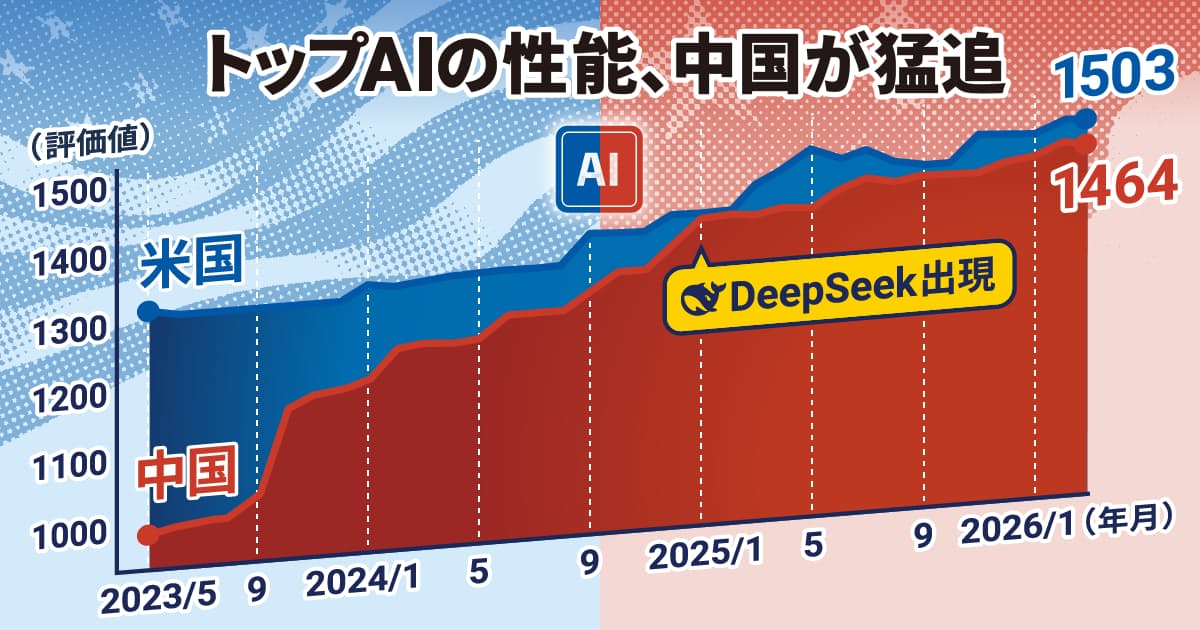
Stanford University reports that the performance gap between top US and Chinese AI models has narrowed sharply…