
What happened
Cloudflare's Day 4 announcements made AI Search and the Cloudflare Basin data platform generally available, opened a public beta for the K2 event-streaming service, and published its own Clef and Clef-flash decision models under Apache 2.0.
Why it matters
AI Search, Basin and K2 all target data ingestion, search and analysis work that would otherwise sit across separate vendors, so teams may be able to consolidate more of that stack inside Cloudflare, and the Apache 2.0 Clef models give developers a self-hostable option.
What to watch
Adoption may hinge on billing terms, since AI Search starts charging on November 1 and Artifacts begins charging on October 15, while K2 is free during its beta but caps storage at 10 GB per account. K2's initial write latency is listed at roughly 1 second at P99, which matters for low-latency work.
WHO IT HITSThis lands hardest on application developers and platform engineers already building on Cloudflare Workers, who now get data ingestion, search and SQL analysis from one vendor, plus internal AI developers who can test or fine-tune the Clef models themselves.
Summaries like this, in your inbox every morning.
Cloudflare's Birthday Week has been running as a daily sequence of announcements, and Day 4 concentrated on data rather than the Workers runtime and management topics that dominated Day 3. The rollout spans a storage mode (KV Instant), an ingestion-and-analysis platform (Basin, formerly split across Pipelines, R2 Data Catalog and R2 SQL), and a streaming layer (K2) that began life as an internal buffer for Basin Pipelines ingestion.
The common thread is that Cloudflare is tying these pieces together rather than selling them as standalone tools. Basin stores data in Apache Iceberg, so external tools like DuckDB and Spark can read the same data, and R2 charges no egress fees — a combination that may make it easier for teams to shift analysis work that currently lives in systems such as BigQuery. AI Search's generally available version extends image search to vectorize images directly via Qwen3-VL-Embedding, and raises text and OCR'd PDF ingestion to 10 MiB, though other formats stay at 4 MiB.
Where this lands depends on cost and maturity. AI Search and Artifacts both move to paid billing in the coming weeks, and K2's beta limits storage to 10 GB per account with a default 7-day retention and an initial write latency around 1 second at P99 — so it is likely better suited to bulk event movement than to latency-sensitive paths. Developers already on Cloudflare Workers appear best positioned to benefit, while Kafka client compatibility and push delivery to Workers consumers remain on the roadmap.
Pick your industry and the AI tools you use, and get news related to your work every day.
Free · 30 seconds with Google · unsubscribe anytimeWhat is AIToday? →
Ask AI anything about this article. The AI reads this article, earlier AIToday articles, and Wikipedia, and cites its sources. Q&As are published on this page for other readers too.
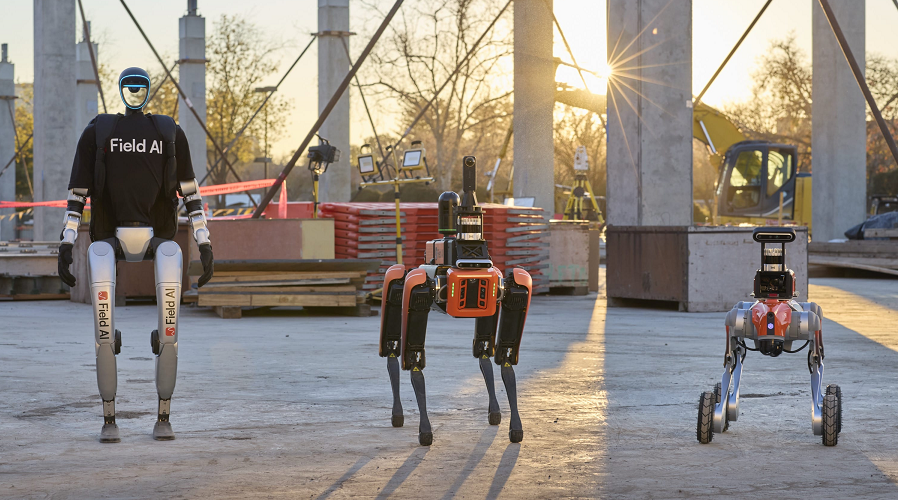
FieldAI is reportedly seeking $700 million in funding at a valuation that could reach $10 billion, five times…
SpaceX finished its first full quarter as a public company on Sept
After OpenAI staff raised concerns on Slack, president Greg Brockman abandoned the second half of his $50 mill…

A practitioner listed five Japanese-language books he keeps re-opening, from '機械学習 100+ページ エッセンス' by Andriy Bu…

The article lays out the split in Claude Code — CLAUDE.md is the file the user writes with instructions and ru…
OpenAI announced "dots" at its September 29 DevDay — always-on agents with their own cloud computer and browse…

