What happened
Tim Bucher, co-founder and CEO of Agtonomy, argues that the next big AI play is embedding physical AI into heavy equipment like tractors and sprayers, not just humanoid robots. He points to 2026 as the year the conversation shifts from whether autonomy is possible to whether industries will deploy it at scale.
Why it matters
With the average U.S. farmer nearly 60 years old and farmers 65+ making up over 40% of the farming population, plus construction needing hundreds of thousands of new skilled workers in 2026, labor shortages are structural. Physical AI in machines is positioned as a practical way to keep farms and projects viable.
What to watch
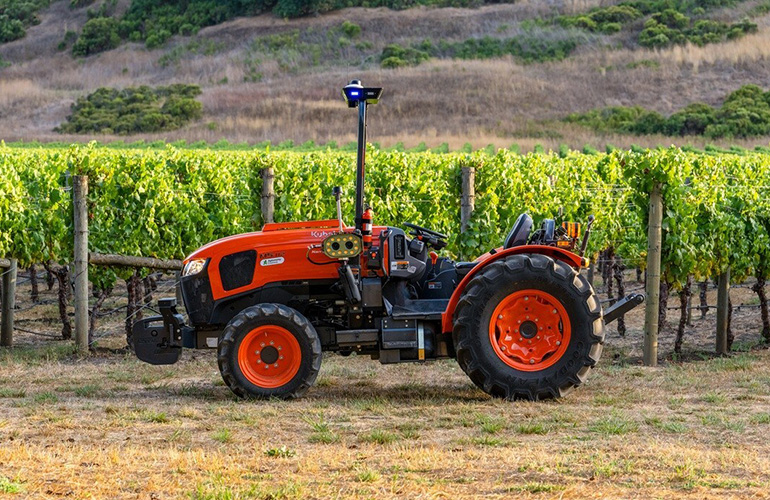
The winning model, Bucher says, is partnership between existing equipment manufacturers and AI innovators—"the iron factory meets the AI factory." He highlights Agtonomy's work with Kubota and Doosan Bobcat tractors, where one tech operator can supervise multiple machines.
Summaries like this, in your inbox every morning.
Bucher's argument rests on the distinction between humanoid robots designed for human environments and the need for autonomy in off-road industrial work. He emphasizes that the physics of off-road work doesn't change with better AI—machines still need to mow, spray, dig, and haul. The value lies in embedding intelligence into those machines, allowing them to operate with less dependence on skilled operators.
The labor crisis is a key driver. With U.S. farmers averaging nearly 60 years old and construction facing a need for hundreds of thousands of new skilled workers in 2026, the labor gap is structural, not cyclical. Bucher suggests that OEMs—the established equipment manufacturers—are the ones with the reach to scale autonomy, but they likely can't build AI capabilities overnight. Hence, the proposed partnership model: AI companies provide the "brain," while OEMs provide the "brawn."
Bucher also addresses potential concerns about reliability. He notes that critical safety decisions must happen on board the machine, with low-latency processing, rather than relying on cloud connectivity. This points to a future where machines are increasingly self-sufficient in perception and decision-making, even as they work alongside humans.
Pick your industry and the AI tools you use, and get news related to your work every day.
Free · 30 seconds with Google · unsubscribe anytimeWhat is AIToday? →
Ask AI anything about this article. The AI reads this article, earlier AIToday articles, and Wikipedia, and cites its sources. Q&As are published on this page for other readers too.
Applied Materials and Intel are widening their EPIC Center collaboration to cover next-generation transistors…

Innodisk and Apacer both reported year-over-year and month-over-month revenue growth for September 2026, suppo…
Anthropic announced Anthropic Cyber Mission on October 8, starting with the Critical Infrastructure Defense Pr…

Nvidia-backed AI data centre operator Firmus withdrew its planned $5 billion IPO on Friday, citing market vola…

Amazon is planning a $21 billion investment in AI data-center infrastructure in India by 2030, and trees outsi…

Valuence's "Generative AI User Trends Survey" (June 2024–May 2026) tracked six services including ChatGPT, Gem…