What happened
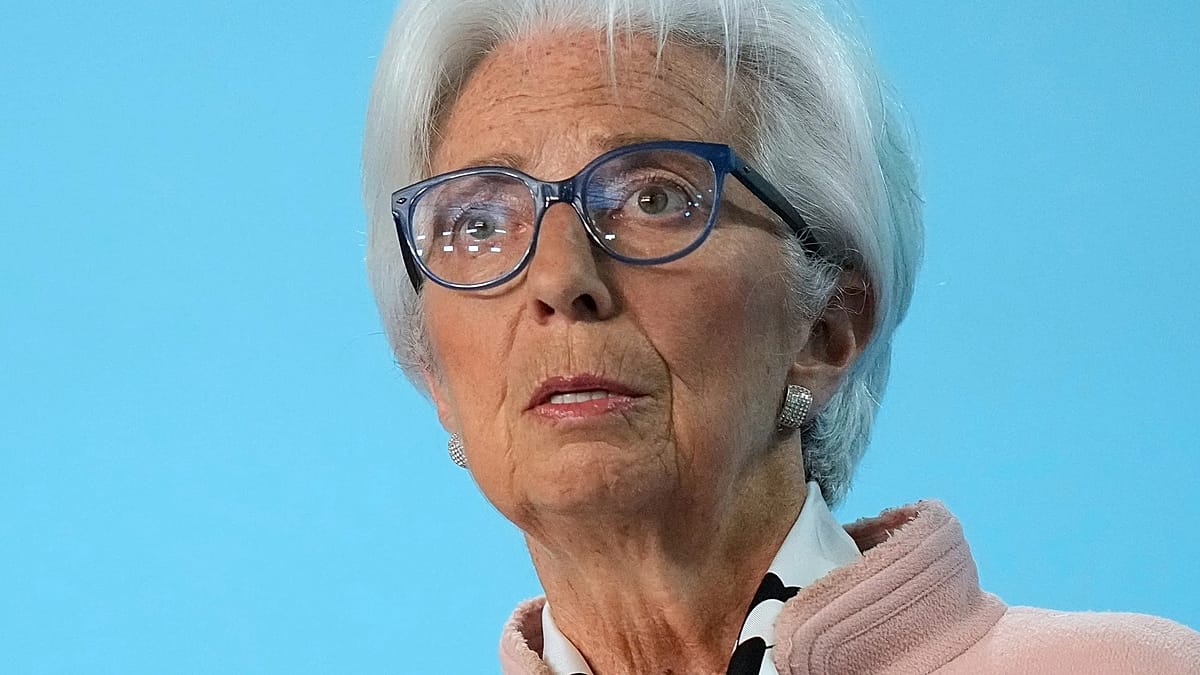
ECB President Christine Lagarde said eurozone households hold around €440 billion in US tech companies including Nvidia and Alphabet, and warned Europe risks paying for the US AI boom without matching economic benefits.
Why it matters
Those savings give American technology companies valuation support and cheaper access to capital, while Europe's share of the benefit is not assured, Lagarde said.
What to watch
The EU's Savings and Investments Union and Listing Act are meant to channel more household money into European firms, but officials and analysts say investment will follow opportunity, not direction.
WHO IT HITSEuropean retail savers, pension schemes and insurers are directly lending to US tech via bonds and equities; European policymakers shaping the Savings and Investments Union and Listing Act carry the reform burden.
Ask the AI about this article →
Summaries like this, in your inbox every morning.
Lagarde's warning in Vienna draws on a new ECB analysis published Tuesday, which found eurozone households held nearly €10 trillion in bank deposits as of May 2026 and keep about one-third of their financial assets in deposits, compared with 11% among US households. She noted the US produced 59 notable AI models last year, China 35, and France and the United Kingdom one each — a gap in where the companies are built, not in where the money sits.
The article lays out several channels through which European money reaches US AI. Buying existing shares does not hand fresh cash to a company, but strong demand supports valuations and makes it easier to raise new capital; when European retail investors bought newly issued SpaceX shares in its June IPO, that money was usable for investment. More significantly, major hyperscalers are expected to spend more than $1 trillion (€870bn) on capital investment by 2028, and Lagarde said they issued more than $100bn (€87bn) in bonds last year, now accounting for close to one-tenth of new euro-denominated bond issuance by non-financial companies. Five large US hyperscalers have around €40 billion in euro-denominated bonds outstanding, so European funds, insurers and pension schemes buying those bonds are lending directly to American technology companies. Lagarde also flagged a cost channel: heavy US bond issuance can contribute to higher global yields, and eurozone long-term rates often move with US rates.
Europe's own gap is stark. The European Commission estimates the EU's data-centre capacity shortfall could reach 19 gigawatts by 2036, and closing it could cost as much as €600 billion, while Lagarde said the US hosts around 75% of global AI computing capacity against roughly 5% in Europe. The proposed Savings and Investments Union and the Listing Act are intended to make investing and listing easier across borders. Whether they succeed may hinge on factors analysts stress — deeper venture-capital markets, a greater willingness to finance higher-risk businesses, and rules that support innovation — since, as both Peloso and Barringer suggest, redirecting savings without stronger companies underneath is unlikely to close the gap on its own.
For example, today's edition would include:
AI-summarized, only the topics you pick — one digest a day via Email, Slack, or Discord.
Free · 30 seconds with Google · unsubscribe anytimeWhat is AIToday? →
Ask AI anything about this article. Q&As are published on this page for other readers too.
Meta announced on Sept. 15 the global rollout of Meta One, a subscription combining premium features across it…
Anthropic's second-quarter revenue was above $11.5 billion, up from $4.73 billion in the first quarter and $78…

Last week, artificial intelligence rose to prominence as a crucial global issue after prominent officials and…

Capgemini CEO Aiman Ezzat told Fortune that leaders should run small AI tests and pilots, not big-bang bets, b…

Anthropic said on Sept. 16 it will open a Singapore office in October, its first in Southeast Asia and fifth A…

SAP CEO Christian Klein says voice recognition in large language models is strong, and SAP predicts typing dat…