What happened
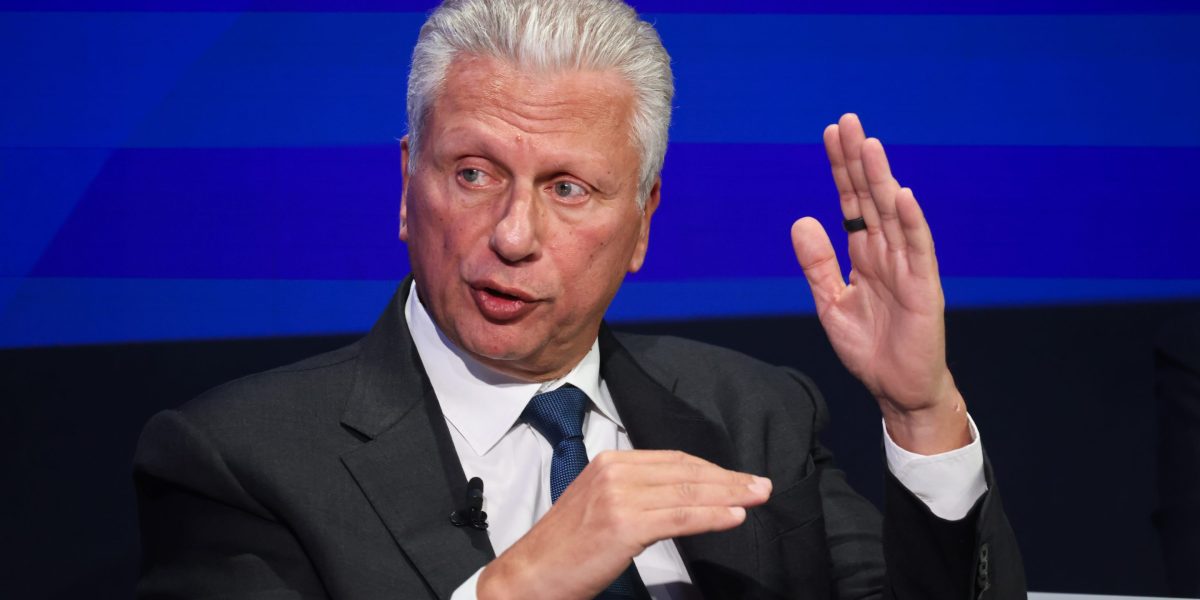
Capgemini CEO Aiman Ezzat told Fortune that leaders should run small AI tests and pilots, not big-bang bets, because no one knows which technologies will mature.
Why it matters
Ezzat frames AI as a whole-business transformation, not just an efficiency tool for separate divisions, and warns against treating it as a black box managed apart from the core business.
What to watch
Capgemini runs labs for 6G, quantum computing and robotics, but Ezzat says nothing is fully ready to mature, so the test is whether those pilots scale when adoption accelerates.
WHO IT HITSCEOs and boards weighing large AI capital expenditures face pressure to show clarity on outcomes; Ezzat's advice suggests IT and strategy teams should favor pilots over big-bang rollouts until adoption patterns mature.
Summaries like this, every morning.
Ezzat's comments come as boards wrestle with AI FOMO and large capital expenditure implications, with outcomes that are shrouded in mystery. He compares the current moment to the metaverse hype, which Capgemini itself experimented with through a metaverse lab, and suggests agility—small tests and pilots—is a better approach than waiting for clarity.
His argument that AI is a business, not a technology, challenges firms that view it primarily as a way to make separate divisions more efficient. He says that approach is a start but not a whole-enterprise strategy that connects data and operations across functions like finance, HR, procurement and supply chains.
Ezzat also pushes back on the phrase "human in the loop," favoring "human in the lead" and "human-centricity," an idea he traces to the 1950s ergonomics movement. The stakes, as he suggests, are higher than bad office chairs: getting AI-human integration wrong could be far more consequential than a bad back, though whether his pilot-first approach proves sufficient hinges on how quickly adoption accelerates.
Pick your industry and the AI tools you use, and get news related to your work every day.
Free · 30 seconds with Google · unsubscribe anytimeWhat is AIToday? →
Ask AI anything about this article. The AI reads this article, earlier AIToday articles, and Wikipedia, and cites its sources. Q&As are published on this page for other readers too.
MUFG and global banks including Barclays, BNP Paribas, Citi Ventures and Societe Generale took strategic stake…
Four Seeds said on November 6 that it apologized over a Pizza-La collaboration ad for the TV anime Dr.STONE, w…

Warby Parker stock rose more than 22% after Co-CEO Dave Gilboa said pre-orders for Intelligent Eyewear, its AI…

Amazon's Smile Sale, running through November 12, cuts the Ray-Ban Meta (2nd gen) HEADLINER to 47,905 yen (35%…

Airbnb CEO Brian Chesky said the company will release a travel-specific AI agent in the first half of 2027
Anthropic's November 5, 2026 update adds a beta Security Center that reviews chat, Cowork, and Claude Code set…