What happened
OpenAI employee Vaibhav Srivastav explained that GPT-5.6 Sol has five reasoning levels—"Light," "Low," "Medium," "High," and "xhigh"—each suited to different task types. "Light" and "Low" handle quick, clear-cut tasks; "Medium" works for planning and analysis; "High" and "xhigh" handle complex, multi-step work or verification. Two additional modes, "Max" and "Ultra," work differently: "Max" lets a model spend more time on a single problem, while "Ultra" deploys multiple sub-agents in parallel.
Why it matters
Higher reasoning levels consume more tokens and time, so users must choose carefully to avoid wasting resources. Srivastav recommends starting low and scaling up only when needed. The levels do not map to GPT-5.5's tiers, so users switching over should start one level lower than they are accustomed to. However, this complexity undercuts OpenAI's stated goal of making ChatGPT so simple that "almost no interface" is needed.
What to watch
OpenAI's Pro tiers for Sol are still missing, having been leaked earlier in a genomics benchmark paper. Even ambitious users may struggle to pick the right level without running their own benchmarks, though the setup may help OpenAI collect usage data.
Summaries like this, in your inbox every morning.
OpenAI's detailed breakdown of Sol's reasoning levels addresses a genuine user need: understanding when to apply heavier computation and which reasoning mode fits a task. By tying effort to token consumption and latency, the company is making explicit a trade-off that users must navigate. Srivastav's recommendation to start low and scale up is practical guidance, but it also implies that most users will need to run experiments to find their optimal setting.
This added operational complexity sits in tension with OpenAI's own stated ambition to simplify ChatGPT's interface. The absence of Pro tiers (leaked in a genomics benchmark paper but still not shipped) further suggests the product is incomplete. More significantly, the guidance reveals an expectation that users will either rely on intuition or conduct benchmarks to discover the right level—a friction point that undermines the "almost no interface" vision. For OpenAI, the setup may serve a secondary purpose: collecting aggregate usage data on which reasoning modes users select and how often, providing signal for future product refinement.
Pick your industry and the AI tools you use, and get news related to your work every day.
Free · 30 seconds with Google · unsubscribe anytimeWhat is AIToday? →
Ask AI anything about this article. The AI reads this article, earlier AIToday articles, and Wikipedia, and cites its sources. Q&As are published on this page for other readers too.
In Q2, billionaires or their funds sold six 'Magnificent Seven' AI stocks

Nvidia was rising early Friday, even as the wider chip sector kept falling, Barron's reported

ElevenLabs completed a $300 million employee tender at a $22 billion valuation, and co-founder Mati Staniszews…

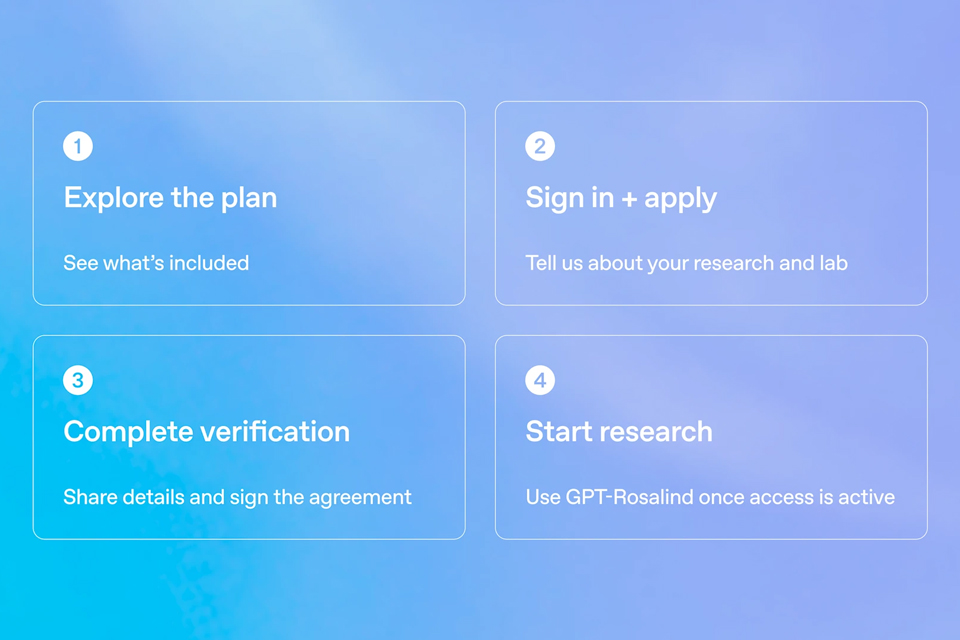
On October 15, OpenAI announced the Rosalind Academic Plan, giving approved US university labs free access to…
Neostellar Capital principal Evan Schlossman said CoreWeave's $103.7 billion in remaining performance obligati…

A Qiita article compared automated red-teaming methods for LLM apps — GCG, PAIR, and TAP — using mock implemen…