What happened
OpenAI announced that its agents solved the Navier–Stokes existence and smoothness problem, one of the Millennium Prize Problems. The proof was obtained using an internal model that dramatically outperforms the Astra model, released last week.
Why it matters
NYU mathematician Tristan Buckmaster posted a document accusing OpenAI of using his and Levent Alpöge's AI-assisted work without credit; OpenAI denies this. The episode highlights that solving major math problems may now demand resources only available at a couple of frontier AI companies.
What to watch
The controversy hinges on whether OpenAI's models used Buckmaster and Alpöge's work. OpenAI solved the problem by running about 10,000 agents concurrently, at a cost of millions of dollars; the company says it will not claim the one million dollar prize.
WHO IT HITSHuman mathematicians face a future where frontier AI companies with massive computing resources solve the most important open problems, potentially leaving few significant problems for those outside such companies. The norms of academic collaboration that undergird mathematical progress may be challenged.
Ask the AI about this article →
Summaries like this, in your inbox every morning.
The announcement that OpenAI's agents solved the Navier–Stokes problem would normally be a landmark achievement in mathematics. However, the credit dispute with Tristan Buckmaster and Levent Alpöge has shifted the focus to how AI-driven research may bypass traditional academic norms. Both teams used an approach pioneered by Diego Córdoba and Luis Martínez-Zoroa, and while independent arrival at the same method is possible, the coincidence has fueled suspicions.
The deeper issue is the changing nature of mathematical progress. Buckmaster and Alpöge, working with publicly available models for nearly a year, made significant progress but did not achieve a full solution. OpenAI, in contrast, solved the full problem in a few days using an internal model and about 10,000 concurrent agents at a cost of millions of dollars. This disparity raises questions about what role individual human mathematicians can play when such resources are concentrated in a few companies.
The outcome of this controversy could shape how AI companies handle credit and transparency in research. If OpenAI's models did use Buckmaster and Alpöge's work without acknowledging it, that would reflect poorly on the company. But even if they did not, the episode suggests that solving major mathematical problems may increasingly depend on access to frontier AI capabilities, potentially leaving most human mathematicians without the resources to compete.
For example, today's edition would include:
AI-summarized, only the topics you pick — one digest a day via Email, Slack, or Discord.
Free · 30 seconds with Google · unsubscribe anytimeWhat is AIToday? →
Ask AI anything about this article. Q&As are published on this page for other readers too.
Meta Platforms Inc. announced Muse, a personal AI agent available in the U.S
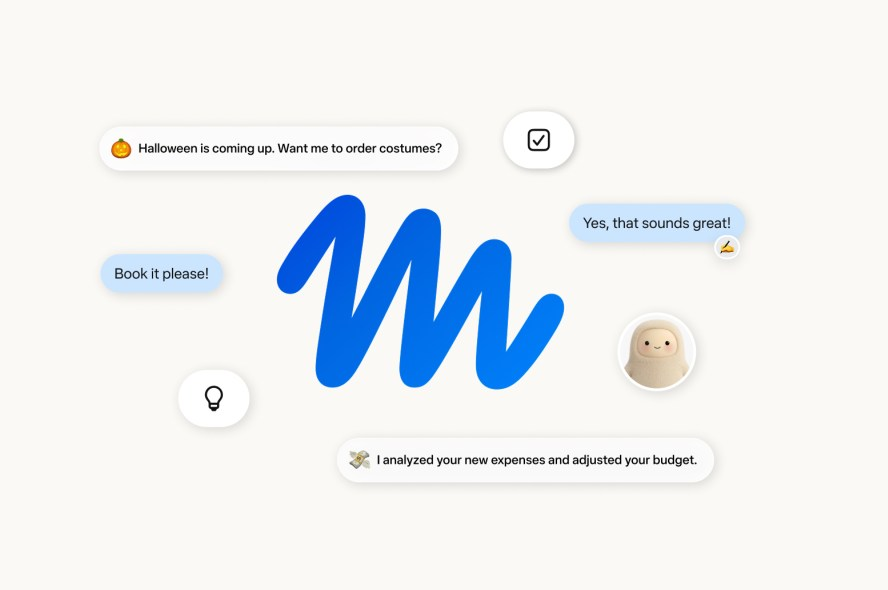
OpenAI announced ChatGPT Images 2.5, an update to ChatGPT Images 2.0 that debuted in April

On September 8, OpenAI announced its unreleased model produced a proof establishing singularities for the Navi…
ITmedia's analysis examines why individuals and enterprises use local LLMs, despite the hardware and electrici…
Nvidia reported earnings and guidance that smashed expectations, with shares up about 7%

SoftBank Group will meet investors in New York next week to assess demand for a potential U.S