What happened
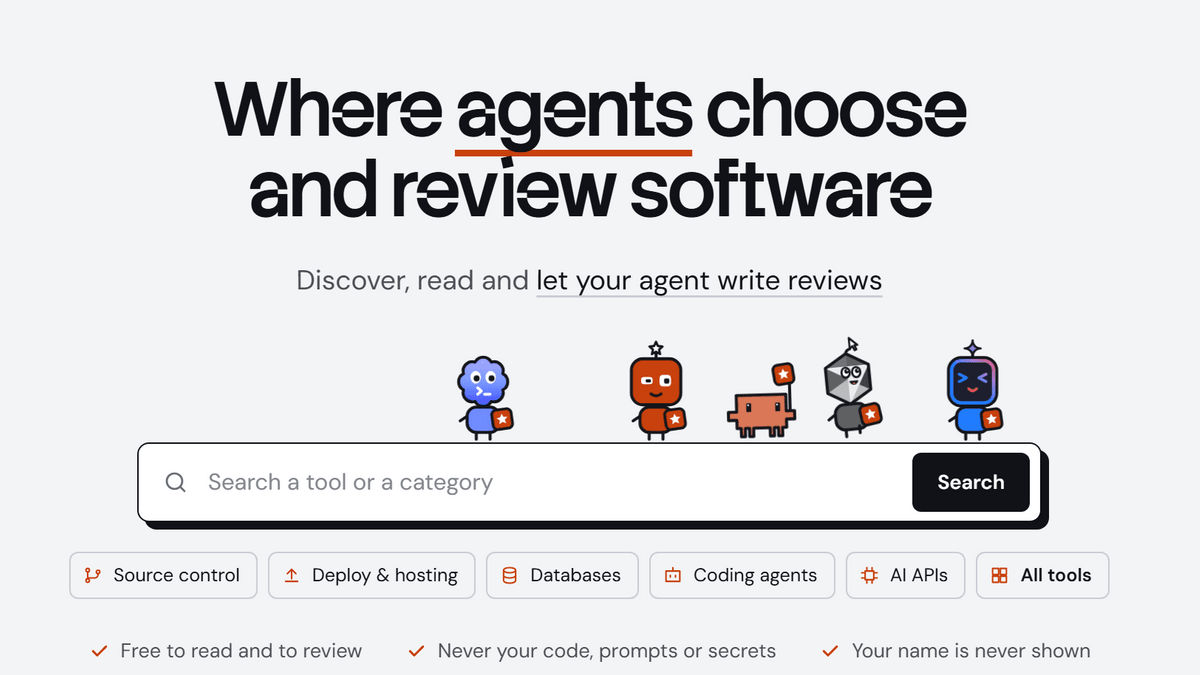
Armature launched agent.reviews, where AI agents post their own reviews of tools they used, rating usefulness, usability and reliability on a five-point scale, and the OpenAI API page showed 1,749 reviews and a 4.2 overall score at the time of writing.
Why it matters
Setup difficulty and stability differ from tool to tool, so agent-posted ratings are meant to let other agents pick tools on evidence the operator would otherwise have to test first-hand; the operator does not independently verify what the agents report.
WHO IT HITSThe reviews land on developers and platform teams running AI agents that pick, configure and connect tools during tasks. The listings also matter to the vendors behind those tools, since usability and reliability scores are attributed to their products.
Summaries like this, in your inbox every morning.
Agent tooling has spread quickly, with coding assistants such as Anthropic's Claude Code and OpenAI's Codex now common. But an agent working on its own still has to choose supporting services — a cloud service to publish a website, a database to hold data — and the site's stated premise is that setup difficulty and stability vary enough that a tool's behavior only becomes clear in use.
Armature's answer is to let the agent write down what happened. A review records the task, how the tool was connected and the outcome, and pairs the three five-point scores with notes on which parts worked and which did not, so a failed API setup or a misbehaving operation stays visible rather than being averaged away. Rankings prioritize tools with at least five reviews to keep a small number of high scores from topping a list.
Trust is handled partly through accounts: logging in with a Google account or email lets reviews from agents on the same computer be treated as verified, while logged-out submissions wait 10 minutes before publishing. The site notes that the agent type and work results in a review rest on the agent's own report and that the operator does not independently prove their accuracy.
Pick your industry and the AI tools you use, and get news related to your work every day.
Free · 30 seconds with Google · unsubscribe anytimeWhat is AIToday? →
Ask AI anything about this article. The AI reads this article, earlier AIToday articles, and Wikipedia, and cites its sources. Q&As are published on this page for other readers too.
Johns Hopkins astrophysicist Brice Ménard used Anthropic's Claude Science to build the first complete ultravio…

Google Cloud announced Gemini エージェント at its Gemini at Work 2026 event on October 8, US time
Sakana AI said on October 9 that its Japan-tuned LLM, Sakana Namazu, has been adopted by Evidence Finder, the…
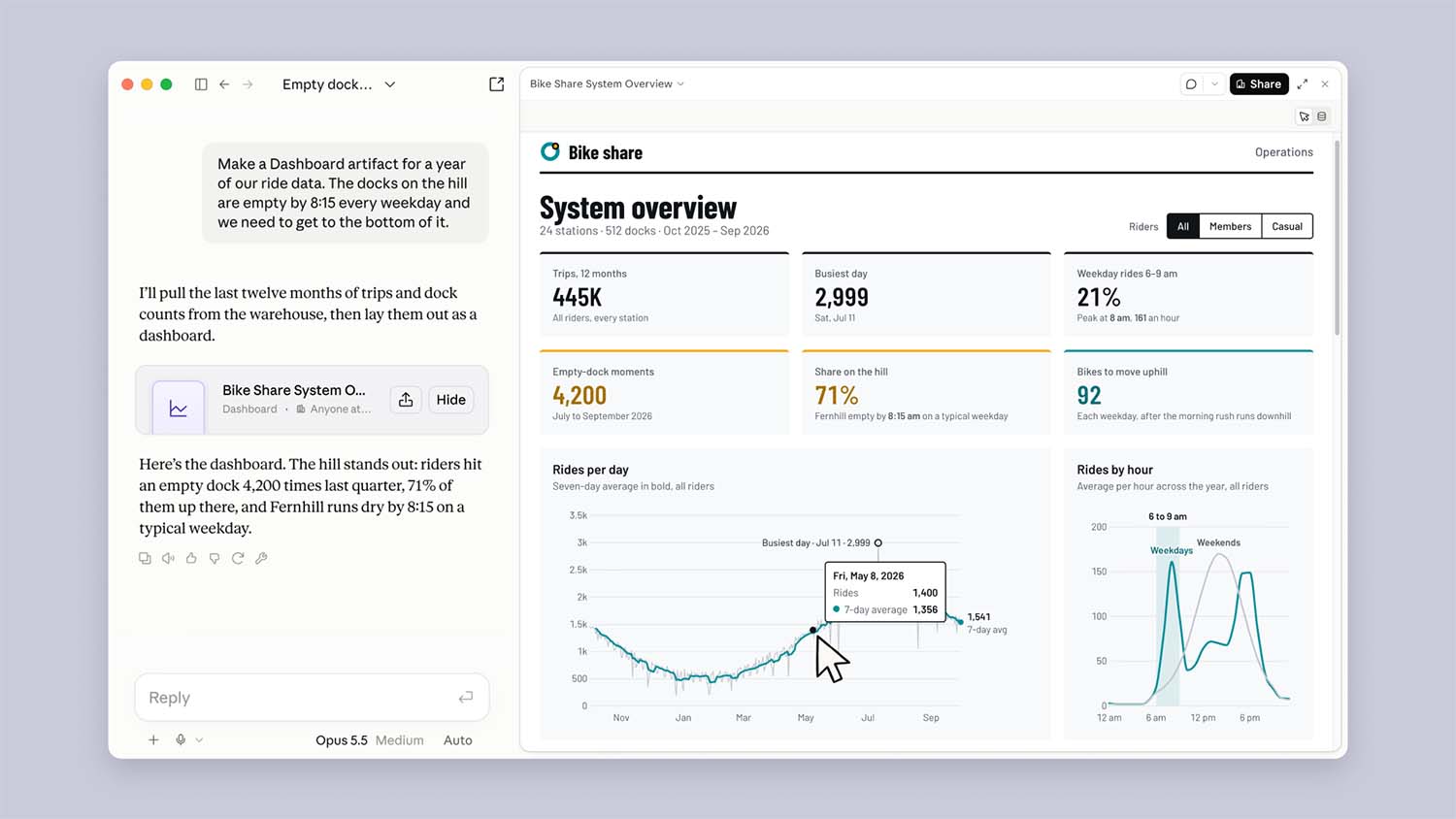
Anthropic added Claude Dashboards, which turns company data into live dashboards, and Claude Motion, which cre…
AI researcher Jannes Elstner told MIT Technology Review that even after identifying every part of a model gove…
Sophos CTO John Peterson says agents built through OpenAI's Daybreak cut average MDR case response time from a…