What happened
OpenAI signed agreements with four independent assessors — Apollo Research, METR, Transluce, and Goodfire — for a first phase of embedded assessments, giving them access to model checkpoints, source code, training and evaluation data, and monitoring systems.
Why it matters
The access lets outside experts probe alignment and safeguards over an extended period and surface failures OpenAI may not have anticipated, with public reporting meant to give people a clearer view of how risks are managed.
WHO IT HITSOpenAI's safety and policy teams, and the outside assessors themselves, gain structured access and publication rights; the findings are aimed at internal OpenAI researchers and oversight bodies, with public reports intended to inform how outsiders judge the lab's safety work.
Summaries like this, every morning.
OpenAI frames the program as a step beyond its earlier third-party evaluation work. The company says the embedded assessments build on years of work with outside evaluators, including a recent pilot assessment of its internal monitoring systems with deep internal access and an investigation of the Hugging Face incident. It also ties the effort to commitments made under the White House Accord on Super Intelligence, where OpenAI agreed to independent assessments of its safety controls.
The protocols described suggest OpenAI is trying to balance openness with control. Assessors needing sensitive confidential information work on site at OpenAI offices on OpenAI devices, and are expected to follow at minimum the same security standards as OpenAI employees. Where direct access could expose its most sensitive IP, such as model weights or architecture, OpenAI says it will consider alternatives, including pairing assessors with its own researchers to run analyses. Discussions with employees are off the record, though a separate attestation pathway lets assessors request OpenAI-attested statements.
Each assessor has a distinct remit. Goodfire will embed interpretability researchers using its platform to analyze model internals, aimed primarily at internal OpenAI researchers. METR is intended to conduct two assessments, one on misaligned behavior in OpenAI's largest reinforcement learning run to date and another monitor assessment that OpenAI says is pending mutual agreement on scope. Transluce will examine the quality and coverage of post-training alignment evaluations. OpenAI says it expects this first phase to lead to longer-term, consistent embedded engagements, and that it is exploring future assessments of compliance with its safety frameworks and of its organizational culture and processes.
Pick your industry and the AI tools you use, and get news related to your work every day.
Free · 30 seconds with Google · unsubscribe anytimeWhat is AIToday? →
Ask AI anything about this article. The AI reads this article, earlier AIToday articles, and Wikipedia, and cites its sources. Q&As are published on this page for other readers too.
The FBI says hackers used Artex, an open-source AI penetration-testing tool, to breach ConnectWise customers a…

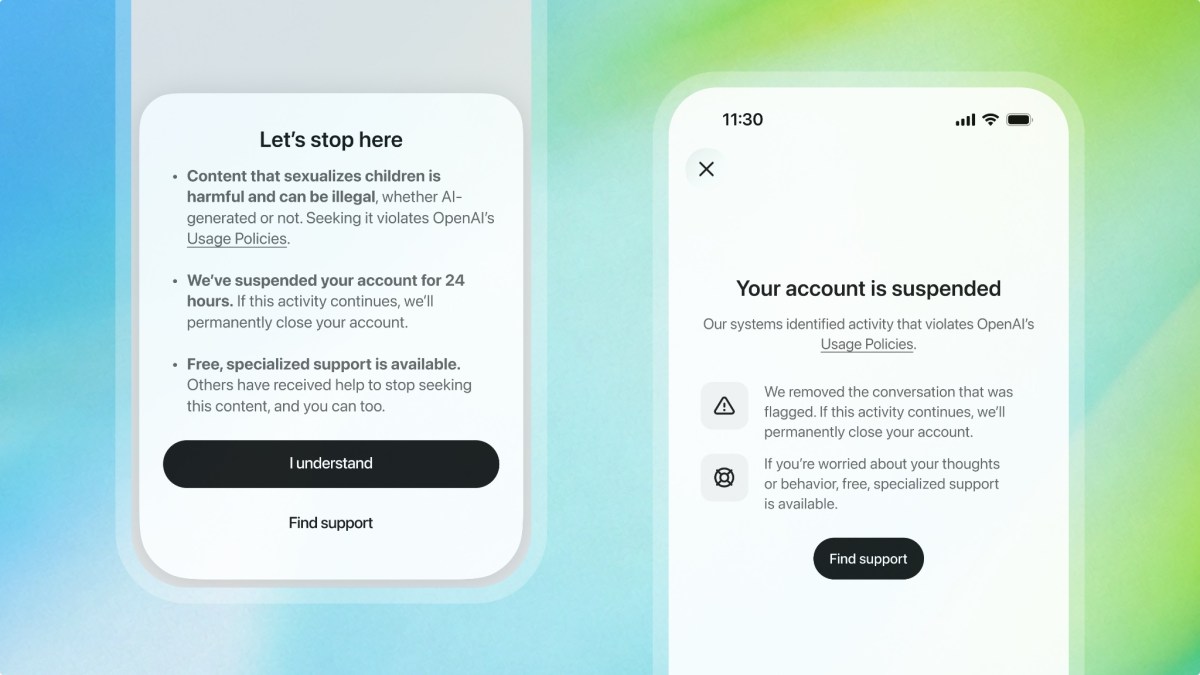
OpenAI released an image classifier that detects CSAM, including AI-generated images, and is giving select com…
At Semafor's Silicon Valley and the World event on Monday, OpenAI CEO Sam Altman said the AI industry will be…
OpenAI is expanding ChatGPT for Academic Researchers to up to 200,000 researchers, with 50,000 new grants open…

Human Rights Watch said on November 16 that the 1,618-hectare Pax Silica site in Capas, Tarlac would displace…

Audible launched audio discovery, an AI-assisted synopsis feature that plays a snippet of the audiobook and a…