
What happened
A technology perspective identifies four foundational elements for reliable AI deployment at scale: data quality, context engineering, governance with observability, and in-house human expertise. The analysis warns that without AI-ready data infrastructure, companies risk abandoning projects—Gartner predicts that companies will abandon 60% of all AI projects through 2026 if they are not supported by AI-ready data.
Why it matters
As organizations move from experimental AI to production systems and autonomous agents, the ability to manage data, control outputs, monitor costs, and retain institutional knowledge becomes the difference between successful deployment and failed initiatives. Poor data quality leads to hallucinations and unreliable outputs; insufficient governance drives up token costs and introduces security risks; and talent shortages mean nearly 70% of tech executives plan to grow teams in response to generative AI.
What to watch
In a 2026 report from Elastic, 85% of IT decision makers expect to enable LLM observability for their internal generative AI apps. The emphasis is on building governance and observability into architecture from the start, not as an afterthought, and on maintaining human oversight as systems become more autonomous.
Summaries like this, in your inbox every morning.
As AI systems mature from single-task assistants toward autonomous agents that can retrieve information, make decisions, and execute workflows, organizations face a critical shift: experimentation alone is no longer sufficient. The article frames this transition as a move from optional governance and ad hoc data practices to mandatory architectural foundations. The tension articulated is real: many enterprises inherit legacy systems, inconsistent data structures, and fragmented data ownership—yet without addressing these gaps first, even powerful models will produce unreliable outputs and squander resources.
The four elements form an interdependent system. Data quality is the foundation; context engineering is the mechanism that delivers the right data to models; governance with observability ensures cost control, security, and compliance; and human expertise orchestrates the entire stack and adapts to change. The article points out that insufficient governance controls are frequently in place, and that organizations often add governance "as a layer to add later"—a pattern the body directly cautions against. Observability is positioned not as a luxury but as essential to measuring return on investment, since AI benefits are often indirect and depend on adoption and usage patterns.
The employment outlook reinforces a broader theme: talent and institutional knowledge are themselves durable assets in a fast-moving AI landscape. Even as individual technologies advance rapidly, the ability to design systems, evaluate outputs, redesign workflows, and maintain continuity across team transitions remains scarce and irreplaceable. Organizations that treat these four elements as cornerstones—rather than as optional refinements—appear better positioned to move from pilots to reliable production deployment and to realize sustainable business value from AI investment.
Pick your industry and the AI tools you use, and get news related to your work every day.
Free · 30 seconds with Google · unsubscribe anytimeWhat is AIToday? →
Ask AI anything about this article. The AI reads this article, earlier AIToday articles, and Wikipedia, and cites its sources. Q&As are published on this page for other readers too.
Amazon introduced Bee Frontier, a wearable personal AI, for $74.99 in Onyx, Lavender and Sage, and Bee Eclipse…

Citi has become the latest US bank to restrict AI agents from accessing accounts, per the Financial Times

Dell says its AI Data Platform uses a four-engine architecture and a Unified Semantic Layer to connect siloed…
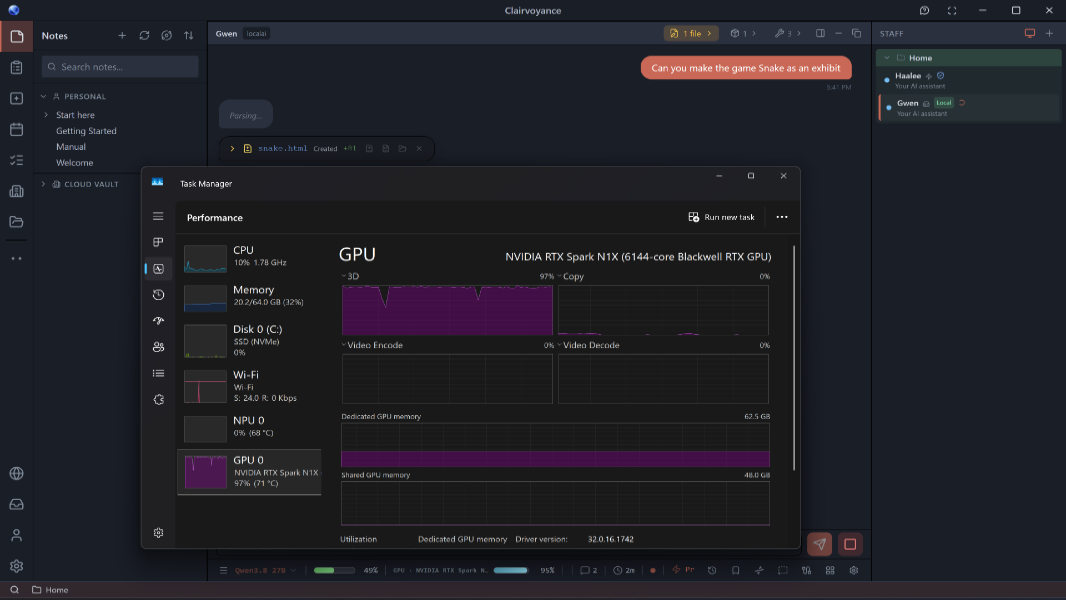
Microsoft and Nvidia are promoting RTX Spark, a new class of Windows PCs for local AI, with a top configuratio…
Microsoft AI CEO Mustafa Suleyman told employees that MAI-Base-2, announced Thursday, is a stronger pre-traine…

Aparna Nair, IBM's chief talent, leadership, and culture officer, said generalists alone "will cut it" in the…