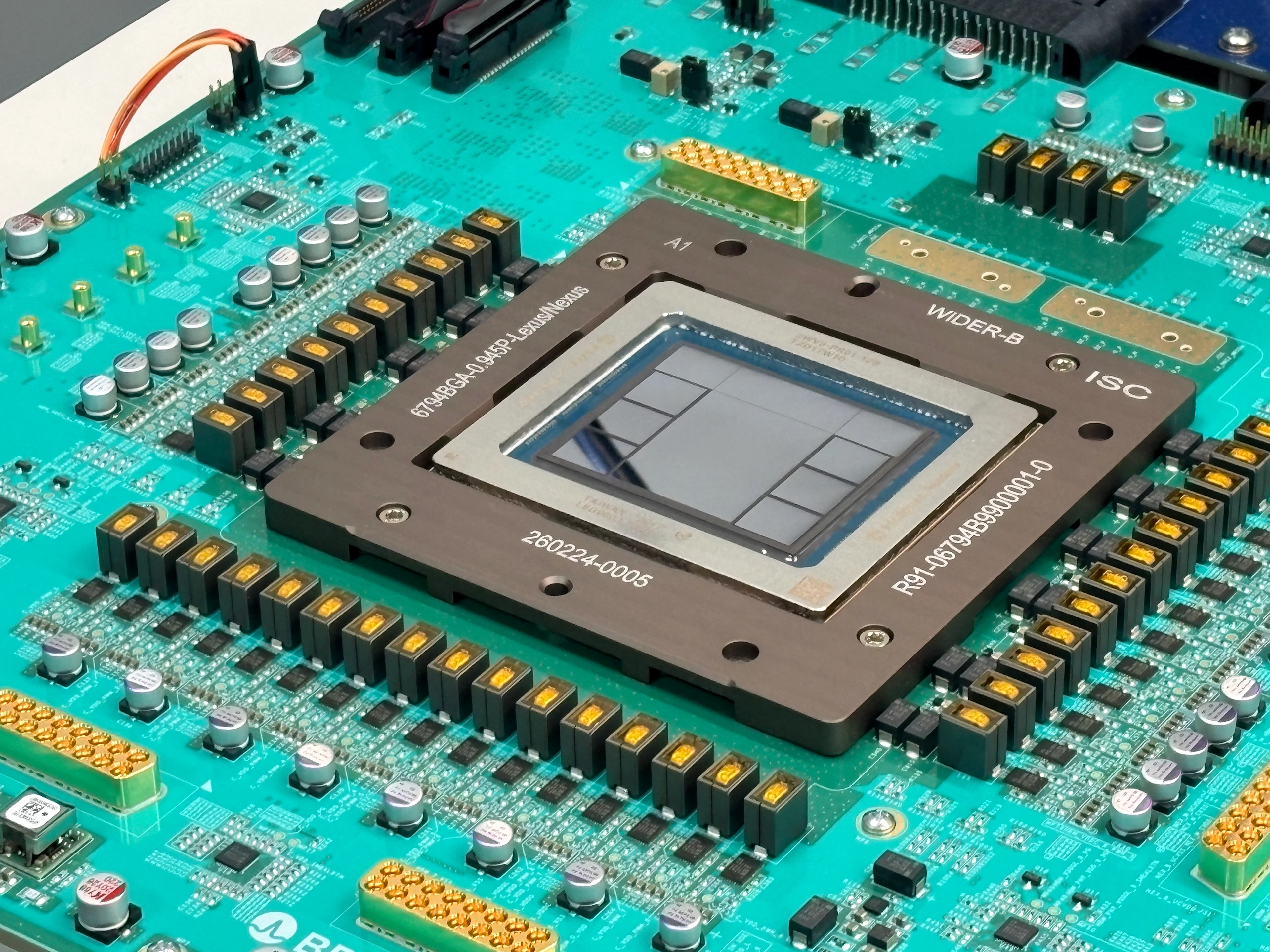
What happened
OpenAI unveiled benchmarks for its Jalapeño inference chip on Tuesday, showing it competes with Nvidia’s best chips. The chip was developed in record time using OpenAI’s own AI models to accelerate design and verification.
Why it matters
This marks a shift where AI companies can use their own models to develop chips, which then run more powerful models to develop the next chip—a self-reinforcing cycle that could speed up capability growth. It also signals that smaller companies may become more ambitious and challenge larger competitors, spreading beyond software into physical industries.
What to watch
OpenAI still relies on Broadcom for building and fabs like TSMC for manufacturing, but the ability to design rapidly could reshape how chips are created. The flywheel effect may lead to even faster acceleration, though bottlenecks in memory, power, and limited fab capacity remain.
Summaries like this, in your inbox every morning.
OpenAI's announcement signals that AI firms are no longer just users of chips but potential designers. By leveraging its own models to accelerate the design and verification process, OpenAI has shown that AI can be a tool for creating the very hardware it runs on. This could shorten development cycles drastically, enabling faster iterations of both models and chips.
The ability to move from concept to competitive chip quickly may also lower barriers for smaller companies. They can adopt similar AI-driven design approaches to challenge incumbents in various industries. While the immediate impact is in software and chip design, the potential for disruption in physical products is noted in the article.
However, significant bottlenecks remain—memory, power, and limited fab capacity. The article suggests the market will resolve these over time, but it may temper the speed of acceleration. The reliance on Broadcom and TSMC also underscores that even with faster design, manufacturing and integration still require established partners.
Pick your industry and the AI tools you use, and get news related to your work every day.
Free · 30 seconds with Google · unsubscribe anytimeWhat is AIToday? →
Ask AI anything about this article. The AI reads this article, earlier AIToday articles, and Wikipedia, and cites its sources. Q&As are published on this page for other readers too.
Chunghwa Telecom president Rong-shy Lin said the shift from conversational AI to autonomous AI agents is resha…
Apple and Meta said they would jointly release a new open-weight AI model designed to run on high-end Macs, ai…

A writer and entrepreneur opened his daily to-do list and found 156 items, and concluded that an AI assistant…

A Zenn contributor sorted AI use into three modes — AI as an assistant, AI running alongside people, and AI th…

The walkthrough points the CLI at a local mock via the ANTHROPIC_BASE_URL environment variable
A non-engineer operator says one person ships four smartphone apps on Google Play, three on the App Store, wit…

