What happened
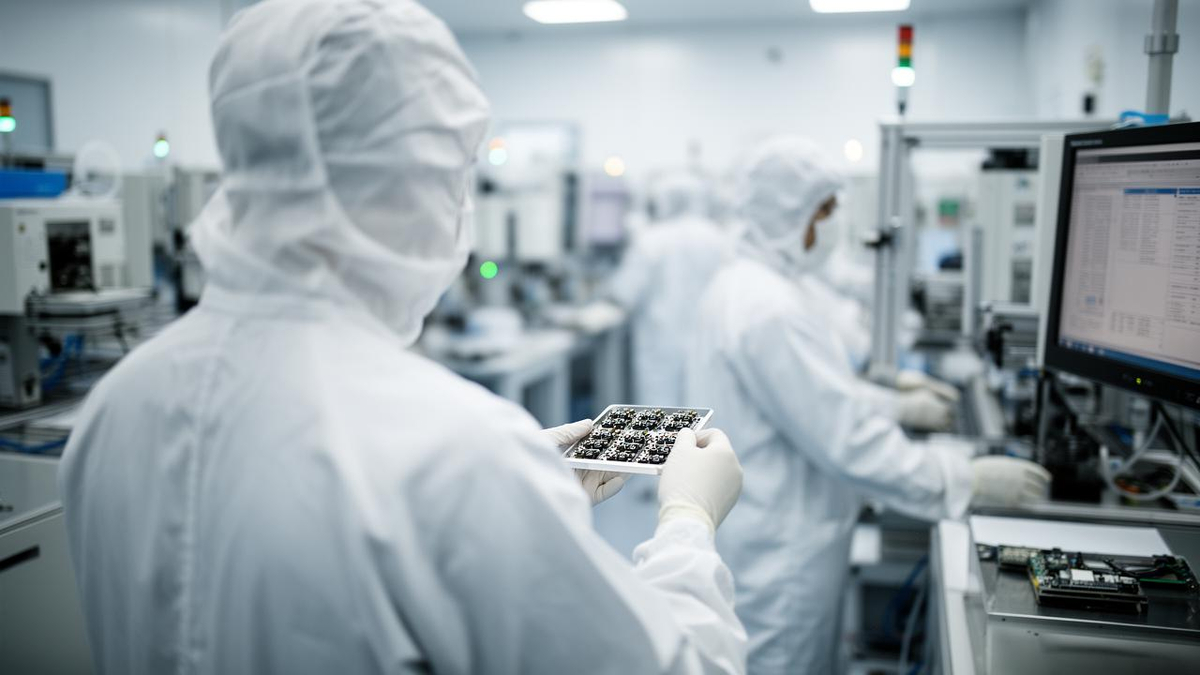
TDK said it will invest $635 million to double TMR sensor capacity by 2031, with a new Niigata plant due to start in 2029.
Why it matters
The expansion shifts a component known for smartphone camera stabilization into robot joints and data-center power management, where TDK says demand already exceeds its current capacity.
What to watch
The new Niigata plant is scheduled to begin operating in 2029.
WHO IT HITSRobot makers and data-center operators could face tighter supply of precision magnetic sensors as demand grows, and may look to diversify suppliers or build inventory. Material and equipment suppliers in the sensor supply chain could also see more orders.
Summaries like this, every morning.
TDK's move is a bet on what it calls physical AI — putting intelligence into hardware such as humanoid robots and data centers. Each humanoid robot carries dozens of TMR sensors, which detect joint position and rotation precisely enough to support motion control and obstacle avoidance. In AI data centers, the same sensors help adjust power flow as computing loads change and monitor the condition of motors and valves in liquid-cooling systems.
The investment also marks a shift in where TDK sees its future. The company, once known for cassette tapes, built its sensor business on magnetic materials expertise dating back to the 1950s. In 2009, three engineers established the core TMR sensor technology after private research. TDK's sensor division head, Takao Tsutsui, said the company is "almost always the sole supplier" of TMR sensors and that current demand exceeds existing capacity. He added that TDK could expand investment further if growth accelerates.
Competition is present: Germany's Infineon has entered the market for low-noise magnetic current sensors. Still, TDK argues its dominant share and process know-how in TMR sensors mean its position will not be shaken in the short term. The new Niigata plant, scheduled to open in 2029, was prompted by customers seeking a production site beyond the existing Nagano plant. The gap until that plant starts means the supply effect will take time to appear, a variable the market is watching.
Pick your industry and the AI tools you use, and get news related to your work every day.
Free · 30 seconds with Google · unsubscribe anytimeWhat is AIToday? →
Ask AI anything about this article. The AI reads this article, earlier AIToday articles, and Wikipedia, and cites its sources. Q&As are published on this page for other readers too.
Sandisk stock is jumping following an AI chip selloff, per the headline

Visa Crypto Labs head Cuy Sheffield unveiled a new Visa Command Line Interface that verifies an agent using a…

Qualcomm finalized its $2.4 billion acquisition of Alphawave Semi, adding SerDes and interconnect IP to its Qu…

Poland's defence ministry signed a $300 million (1.2 billion zloty) five-year contract with Palantir for Maven…

Yahoo Finance reports that DELL's AI server sales surged, raising the question of whether the growth momentum…
A Walmart cashier in southern Oregon, speaking anonymously with United for Respect, said she gets at least 10…