
What happened
Bloom Energy, a fuel cell maker serving AI data centers, has emerged as a critical infrastructure supplier alongside chip makers like Nvidia. The company's revenue surged 130% in its first quarter to $751.1 million, with operating income jumping to $72.2 million; it also generated positive operating cash flow of $73.6 million. Oracle expanded its partnership with Bloom to deploy up to 2.8 gigawatts of fuel cells, and Brookfield Asset Management expanded its strategic partnership with Bloom from $5 billion to $25 billion to fund AI infrastructure deployment.
Why it matters
AI data centers consume massive amounts of power, and forecasters anticipate U.S. AI data centers could surpass 100 GW by 2035. Bloom Energy's on-site fuel cells address a critical bottleneck in data center power supply—61% of data center developers plan to bring their own power if the grid cannot meet their needs. Unlike many of its competitors, Bloom is increasingly profitable and backed by a major capital partner, positioning it as a scaling solution in infrastructure that rivals may struggle to match.
What to watch
Bloom's stock has cooled to around a $62 billion market cap and trades at roughly 16 times forward sales, after climbing nearly 750% in the past year and then falling more than 35% from its peak. The company's ability to deploy fuel cells at the pace Oracle and Brookfield require—such as the 55-day deployment that beat Oracle's original 90-day target—will determine whether it can capture its share of the projected 100+ GW data center build-out by 2035.
Ask the AI about this article →
Summaries like this, in your inbox every morning.
Nvidia's dominance in AI semiconductors is undisputed—it is the largest company by market cap at over $5 trillion and grew revenue 85% in its fiscal 2027 first quarter to $81.6 billion. However, the company faces increasing competition, including from customers developing their own AI chips. This backdrop has opened a complementary investment opportunity in the infrastructure that powers AI data centers, where power supply has emerged as a bottleneck.
Bloom Energy's fuel cell technology addresses this bottleneck directly. The company's partnerships demonstrate the scale of demand: Oracle initially deployed fuel cells in 55 days and has since committed to up to 2.8 gigawatts, while Brookfield Asset Management—which counts Nvidia as a cornerstone investor in its AI Infrastructure Fund—has expanded its commitment to Bloom from $5 billion to $25 billion. These partnerships signal confidence from major players that on-site power solutions are essential to AI infrastructure buildout.
Bloom's financial trajectory also distinguishes it from other fuel cell makers. Its 130% revenue growth to $751.1 million in the first quarter, combined with operating profitability and positive cash flow, positions it as a scaling business rather than a speculative play. Forecasts suggesting U.S. AI data centers could surpass 100 GW by 2035 suggest the addressable market is vast, and the company's early partnerships place it at the center of that opportunity.
For example, today's edition would include:
AI-summarized, only the topics you pick — one digest a day via Email, Slack, or Discord.
Free · 30 seconds with Google · unsubscribe anytimeWhat is AIToday? →
Ask AI anything about this article. Q&As are published on this page for other readers too.
Broadcom's AI chip revenue rose 221% year over year to $16.7 billion, while Nvidia's total revenue climbed 106…

On Nvidia's latest earnings call, CEO Jensen Huang said AI crossed an inflection point last month, with most A…
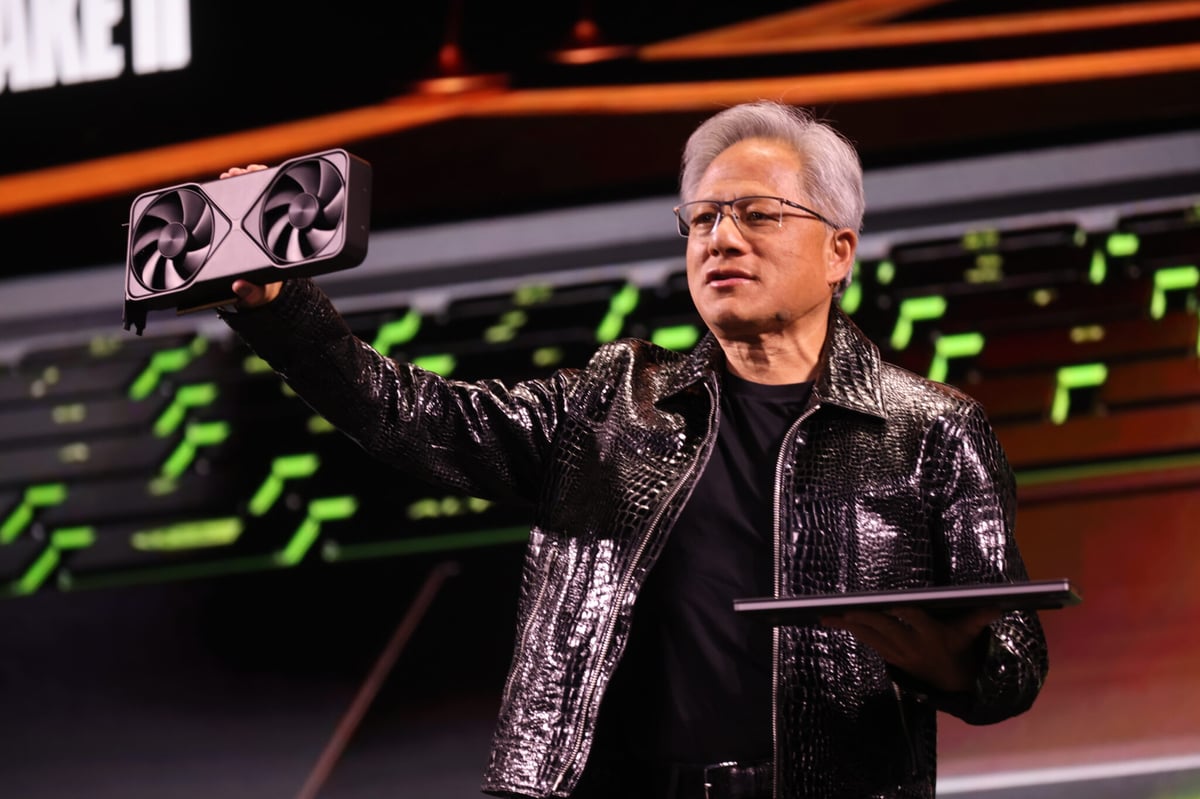
Nvidia is reportedly discussing anchoring Anthropic's planned $100 billion IPO at a valuation near $2 trillion

Reuters reports Nvidia is in talks to invest up to $10 billion in Anthropic's planned IPO as an anchor investo…
ENECHANGE's technical blog reports a web director used AI agents to handle competitive research through LP str…

The Environmental Protection Network, a group of former EPA officials, released a report identifying 30 federa…