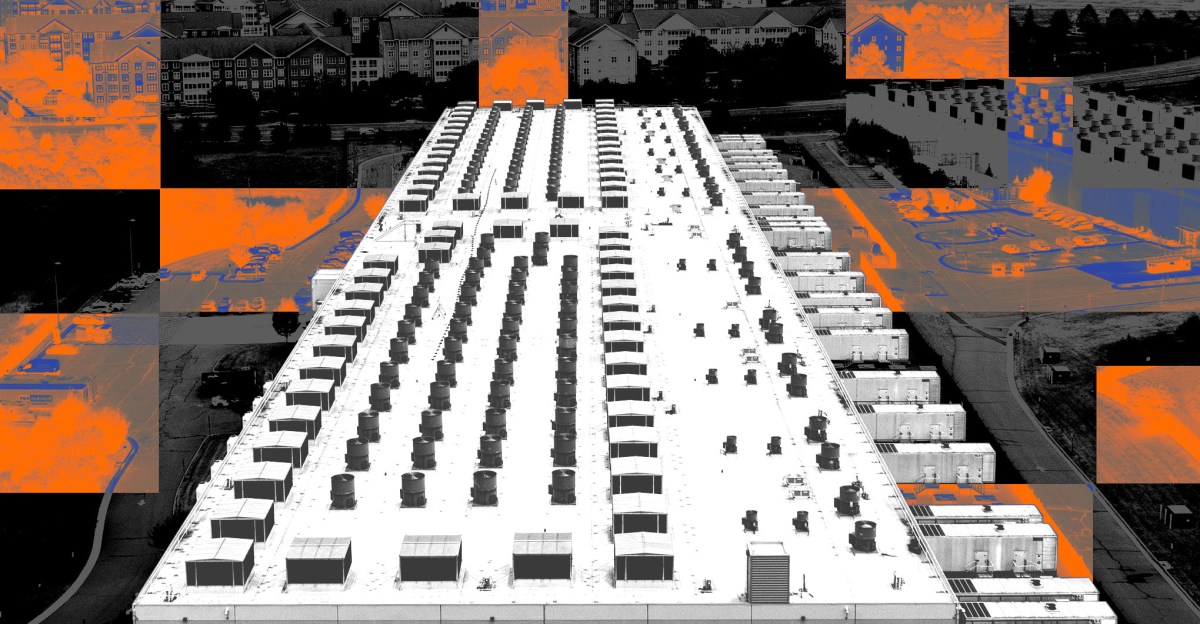
What happened
The Environmental Protection Network, a group of former EPA officials, released a report identifying 30 federal actions since January 2025 that they say exacerbate health risks from data center pollution, and urged Trump to adopt a "Data Center Health Protection Pledge."
Why it matters
The report cites a UC Riverside, Caltech, and Rochester Institute of Technology study finding AI-related air pollution could cause up to 1,300 premature deaths and over $20 billion in public health costs by 2028, a toll the group says could grow under the policy changes.
What to watch
Whether the administration adopts the pledge, which EPN says should mean EPA measuring and publicly reporting how the buildout changes pollution and who is exposed. The group argues the losses are avoidable by restoring clean air and water standards.
WHO IT HITSEnvironmental health researchers and state regulators tracking air and water quality near new gas plants and chip factories may face weaker federal standards. Advocacy groups like Public Citizen and EPN are pushing back, while EPA under Lee Zeldin continues deregulation.
Ask the AI about this article →
Summaries like this, in your inbox every morning.
President Trump's administration has made accelerating AI data center construction a priority. EPA administrator Lee Zeldin said he wants to make America "the AI capital of the world" through deregulation, and since then the White House has rolled back dozens of rules, cut EPA staff and funding, and released an "AI Action Plan" in July 2025 recommending streamlined regulations under the Clean Air Act, Clean Water Act, and Superfund law to expedite permitting.
The Environmental Protection Network's report argues these moves have a direct health cost. It cites a study from UC Riverside, Caltech, and the Rochester Institute of Technology projecting up to 1,300 premature deaths and more than $20 billion in public health costs by 2028 from AI-related air pollution. The group says the toll could be even larger under the policy changes. Former EPA assistant administrator Lynn Goldman said at a briefing that the agency is now "thinking first about industry's needs" rather than acting as a watchdog. EPA spokesperson Cora Mandy responded that the agency is returning regulations to the best reading of the Clean Air Act while prioritizing AI leadership.
The outcome hinges on whether the administration adopts the proposed pledge and whether EPA rebuilds its enforcement capacity. The former officials say a more polluting AI buildout is not inevitable and depends on government choices. For now, the debate sets environmental health advocates against an administration focused on speeding AI infrastructure.
For example, today's edition would include:
AI-summarized, only the topics you pick — one digest a day via Email, Slack, or Discord.
Free · 30 seconds with Google · unsubscribe anytimeWhat is AIToday? →
Ask AI anything about this article. Q&As are published on this page for other readers too.
Broadcom's AI chip revenue rose 221% year over year to $16.7 billion, while Nvidia's total revenue climbed 106…

Anthropic CEO Dario Amodei proposed a three-step plan to 'pace the frontier' — slowing training and developmen…
On Nvidia's latest earnings call, CEO Jensen Huang said AI crossed an inflection point last month, with most A…

Nvidia is reportedly discussing anchoring Anthropic's planned $100 billion IPO at a valuation near $2 trillion

A KAIST and Naver AI Lab study found that reasoning operations like extraction, decomposition, formula recall…

Reuters reports Nvidia is in talks to invest up to $10 billion in Anthropic's planned IPO as an anchor investo…

