What happened
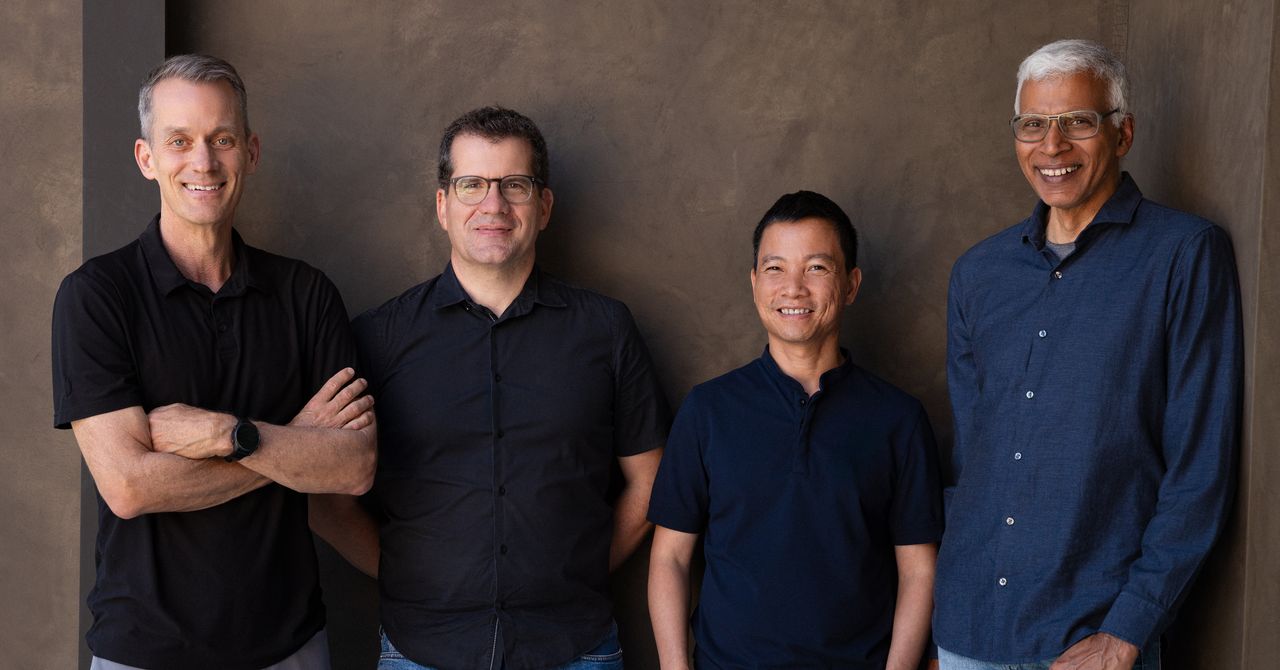
Jeff Dean, cofounder of Google Brain and chief scientist of Google DeepMind, is leaving Google along with three other top AI researchers—Sanjay Ghemawat, Oriol Vinyals, and Quoc Le—to start Discovery Loop, a company focused on automating scientific and engineering experiments using AI. The idea came together only a few weeks ago, and the team has already raised funding from Khosla Ventures and Radical Ventures, among others.
Why it matters
The departure represents a significant loss for Google in its race to compete in AI development. Dean and Ghemawat were among Google's first employees and helped build its core search and computing infrastructure; Vinyals led research at DeepMind; and Le created AutoML-Zero. Discovery Loop's stated goal—using AI to automate the scientific method across domains like chip design, biology, and drug discovery—could, if successful, allow small teams to out-invent large research organizations. Negotiating the exit was difficult enough that CEO Sundar Pichai held multiple meetings to convince them to stay.
What to watch
Discovery Loop is structuring itself as a public benefit corporation and has not yet hired a team or rented office space. Google will take a stake in the company and provide compute power for the first year. The founders are keeping funding amounts and valuation private, but venture capitalists note that individual AI superstars command tens or even hundreds of millions—and this team represents four of them.
Summaries like this, in your inbox every morning.
The departure of Jeff Dean and his team marks one of the most significant exits from Google in the AI era. Dean's resume has become legendary in the tech industry—there is a running joke that the document lists only the things he hasn't done, because listing his accomplishments would be longer. His work on Google's search infrastructure, neural networks, and the flagship Gemini model represents foundational contributions to modern AI. The fact that Alphabet CEO Sundar Pichai held multiple meetings to convince the team to stay underscores the magnitude of the loss for Google's competitive position in AI development.
The timing and structure of Discovery Loop's launch reveals the founders' intent to move quickly and maintain operational autonomy. The idea emerged only weeks before the announcement, yet the team—all long-time colleagues and friends—cohered rapidly around a shared vision. By structuring as a public benefit corporation and positioning Discovery Loop as its own first customer (testing autonomous experiment loops on machine learning improvements before externalizing), the founders are laying groundwork to prove their thesis. Venture capitalists including Vinod Khosla responded not primarily to a polished pitch deck but to the team's track record and the novelty of their core insight: that AI should function as a researcher, not merely as a tool for humans conducting research.
Google's response—investment, compute power for the first year, and public endorsement—suggests the search giant is attempting to maintain both the relationship and optionality on the company's upside. Yet the founders' emphasis on freedom from organizational inertia signals their view that radical innovation requires independence. Discovery Loop's success will ultimately hinge on whether the team can translate their deep expertise into a working system that genuinely automates scientific discovery across multiple domains—a claim many AI leaders have made but few have demonstrated at scale.
Pick your industry and the AI tools you use, and get news related to your work every day.
Free · 30 seconds with Google · unsubscribe anytimeWhat is AIToday? →
Ask AI anything about this article. The AI reads this article, earlier AIToday articles, and Wikipedia, and cites its sources. Q&As are published on this page for other readers too.
OpenAI introduced the Rosalind Academic Plan, giving eligible academic labs at U.S

Santen Pharmaceutical's R&D division reached a 93% weekly usage rate for generative AI, applying it to study p…

Snowflake published a post on agentic AI across oncology's five stages, citing AstraZeneca cutting data produc…

A solo developer built Yurune, a web app that plays synthesized rain, wave and forest sounds and lets users ta…

Pharmaceutical Executive will host a November 4, 2026 webcast introducing the RAIL Score, a framework for eval…

Reuters reports that the pharma sector is doubling down on AI as a way to cut costs and timelines