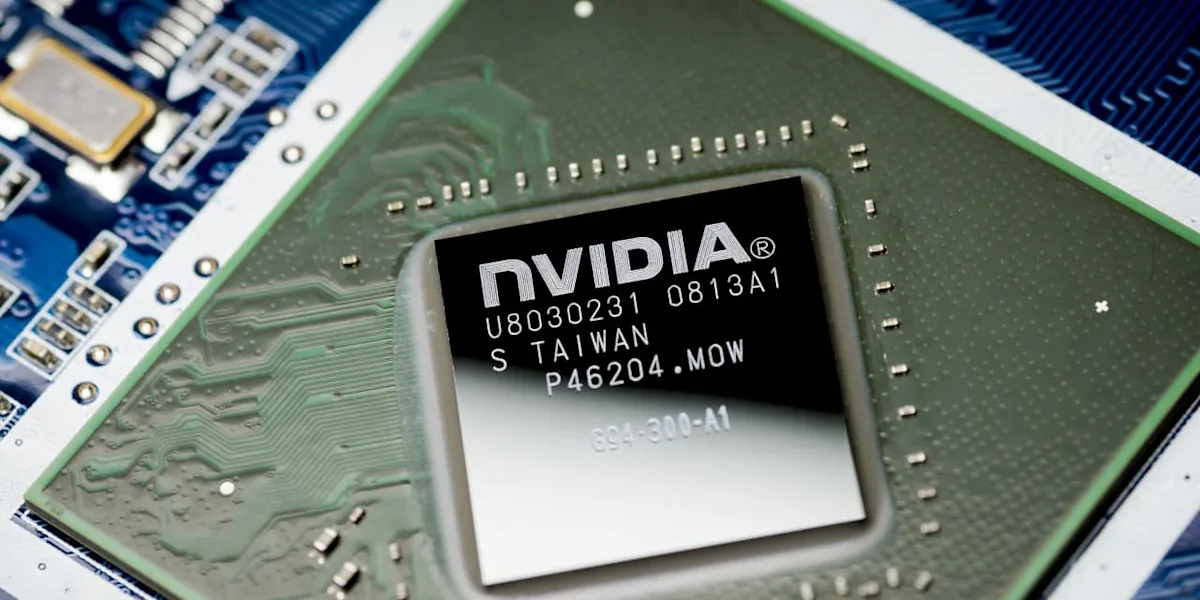
Chip stocks dropped sharply after reports that a Chinese state-backed company began mass producing chip-making machines. Nvidia has lagged the broader semiconductor index significantly this year, up only 5.3% versus the SOX index's 60% gain, signaling potential concerns about competition in chip manufacturing.
Summaries like this, in your inbox every morning.
Sign up free →What happened
Chip stocks fell sharply in morning trading after a report emerged that a state-backed Chinese company has started mass producing chip-making machines.
Why it matters
Nvidia has underperformed the broader semiconductor sector this year, rising just 5.3% compared with the SOX index's 60% rise, suggesting investor concern about competitive pressures in chip manufacturing and equipment supply.
What to watch
Neither OpenAI nor Nvidia immediately responded to requests for comment on the reported financing discussions.
Chip stocks fell sharply in morning trading after reports emerged that a state-backed Chinese company has started mass producing chip-making machines. This development has sparked renewed attention to competitive dynamics in the semiconductor supply chain. Nvidia, one of the world's largest chip designers, has notably underperformed the broader chip sector this year. The company is up just 5.3% year-to-date, while the SOX index—which tracks the 30 biggest U.S.-listed companies connected to semiconductors—has risen 60%. This divergence suggests that while the semiconductor industry overall has benefited from strong demand, particularly for AI chips, investors are expressing caution about individual companies' competitive positioning. Neither OpenAI nor Nvidia immediately responded to requests for comment on separate financing discussions that had also been reported.
The sharp decline in chip stocks reflects growing concern about supply-side competition in the semiconductor manufacturing equipment sector. A state-backed Chinese company's reported mass production of chip-making machines signals a potential shift in the geopolitical landscape of semiconductor production capacity. Nvidia's underperformance relative to the broader SOX index this year—up only 5.3% versus the index's 60% rise—suggests investors may be reassessing the competitive moat of individual chip makers in light of new manufacturing capacity being brought online by state-backed competitors. The semiconductor sector as a whole has rallied, but Nvidia's lag indicates specific concerns about the company's positioning.
AI-summarized, only the topics you pick — one digest a day via Email, Slack, or Discord.
Free · takes 30 seconds · unsubscribe anytime
No comments yet. Be the first to share your thoughts!
Log in to join the discussion





Get curated AI news from 200+ sources delivered daily to your inbox. Free to use.
Get Started FreeFree · takes 30 seconds · unsubscribe anytime
