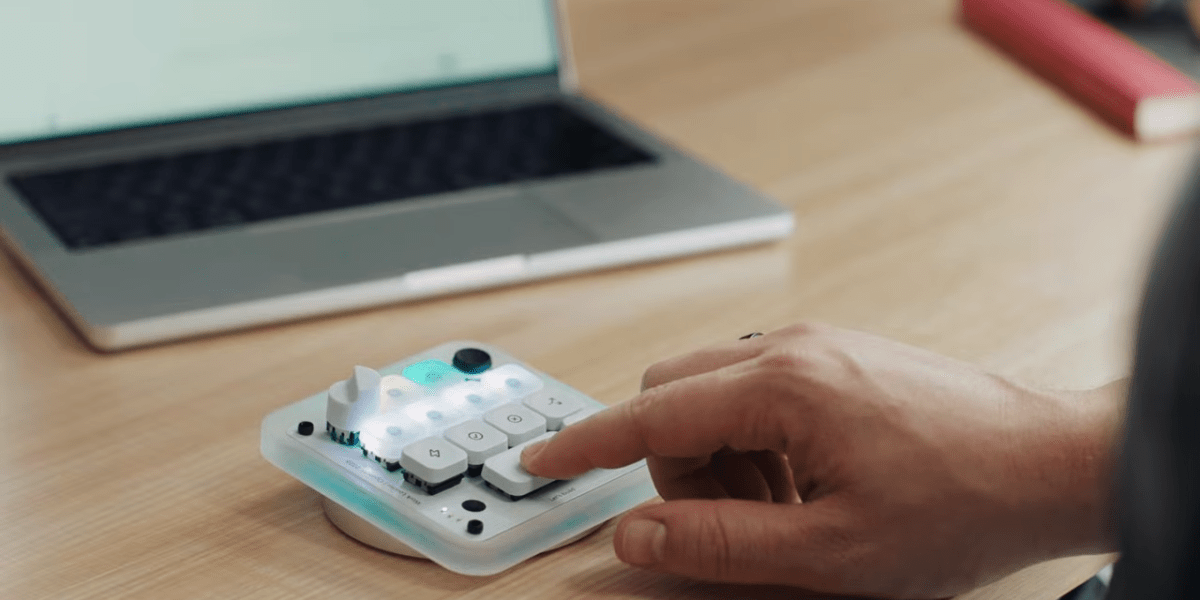
OpenAI's first hardware device, the Codex Micro keyboard priced at $230, sold out in 12 hours after its July 15 debut and is now reselling for $450–$1,850 on eBay. Developed with keyboard maker Work Louder and aimed at developers using Codex, the device features voice commands and LED status indicators—technologies OpenAI is testing for its upcoming consumer AI hardware project with ex-Apple designer Jony Ive. The rapid sellout and secondary-market premium reflect strong early demand for tangible interfaces to AI tools.
Summaries like this, in your inbox every morning.
Sign up free →What happened
OpenAI launched the Codex Micro, a $230 keyboard with a 12-key pad, joystick, and neon lights designed for developers using OpenAI's Codex coding tool. Developed in partnership with boutique keyboard firm Work Louder, it sold out on July 15 in about 12 hours and is now reselling on eBay for $450–$1,850, with a peak asking price of $1,850.
Why it matters
The keyboard includes a microphone button for voice commands and an LED ring that signals AI task status—features OpenAI is testing as precursors to its upcoming consumer AI hardware device (in development with ex-Apple designer Jony Ive). The resale frenzy and scarcity suggest demand for physical interfaces to AI tools, and OpenAI is tracking user feedback in a dedicated Slack channel to refine future products.
What to watch
OpenAI has no plans to restock the device, though Work Louder sells a version on its own website with Codex integration but without OpenAI branding. The Micro serves as a testing ground for hardware and voice interaction—areas OpenAI co-founder Greg Brockman has called the "interface of the future" for computing.
On July 15, OpenAI unveiled the Codex Micro, a $230 keyboard co-developed with Work Louder, a boutique keyboard manufacturer. The device is a compact, square keyboard featuring a 12-key pad, a joystick, and neon lights, designed expressly for developers using OpenAI's Codex tool, the company's flagship coding assistant that competes with Anthropic's Claude Code.
The product addresses a specific developer workflow: an LED ring encircling the keyboard illuminates in red, orange, green, or blue to signal task status—whether an error has occurred, the AI agent is still working, or a task has completed. Turning a dial adjusts the AI's effort level for a given task, while the joystick initiates common operations such as debugging errors or refactoring code. The device also includes a microphone button, enabling developers to issue verbal commands to the AI.
The Codex Micro sold out in approximately 12 hours after launch. Demand has since spilled into the secondary market: units are now reselling on eBay for $450 to $1,850, with one listing asking $1,850. Peak resales occurred on July 16 (one day after release), when the highest completed sale reached $1,250. Within the following week, prices had declined to $800–$1,000. As of the article's reporting, average resale prices hover around $450. Most sellers are based in the United States, though resellers also hail from France, the Netherlands, and Ireland. OpenAI has announced no plans to restock the device, though Work Louder continues to sell a variant on its own website featuring Codex integration but without OpenAI branding.
The keyboard originated from OpenAI's merchandise team, which initially planned to sell it through Supply Co., OpenAI's online store. Supply Co. began as an internal employee swag shop but briefly opened to the public in December 2025 to celebrate OpenAI's tenth anniversary. Social media reactions to the store's minimalist, streetwear-inspired apparel were mocking—some called the hoodies and tote bags "tasteslop" and "nerd merch." This backlash prompted OpenAI to upgrade its merchandise strategy. Later that month, OpenAI approached Mike Di Genova, co-founder of Work Louder, seeking to develop a product aimed at developers, whom the company views as an early adopter demographic. Concept development took a few months; OpenAI then placed a large order. "I thought it was going to take at least a month to sell through the inventory," Di Genova remarked, laughing. "It was limited stock, but they purchased a lot." Neither company disclosed the exact quantity ordered.
The Codex Micro is distinct from OpenAI's highly anticipated consumer AI companion device, currently in development with Jony Ive, the former Apple designer. However, the keyboard serves as a testing ground for two capabilities central to that effort: hardware as a physical interaction layer with OpenAI's software, and voice as a primary input method. Now that all units have been distributed, OpenAI is collecting user feedback in a dedicated Slack channel, which Di Genova also monitors. Last week, OpenAI released a digital microphone button for ChatGPT Work, a desktop application that integrates ChatGPT and Codex, further signaling the company's investment in voice-driven interaction. OpenAI co-founder and president Greg Brockman has called voice the "interface of the future" for computing, arguing that "it means the computer moves closer to you rather than you having to contort yourself around the machine." He predicted that society will one day regard "clicking and typing" as a historical "phase." While the feasibility of voice-only interaction for complex tasks—such as detailed code editing or nuanced prompting—remains unproven, industry observers see hardware differentiation as a strategic lever for AI companies. Work Louder's Di Genova cited a Steve Jobs quote—"If you want to make great hardware, make software"—and inverted it for the AI era: "I think we've quite literally reached the point where now we're on the backswing of that pendulum. If you want to make great software, make hardware, because basically there's no moat anymore."
OpenAI's foray into hardware began as an internal merchandise effort by its Supply Co. store, which reopened to the public in December 2025 for the company's tenth anniversary. Social media backlash over minimalist streetwear-inspired products—dismissed as "tasteslop" and "nerd merch"—prompted OpenAI's leadership to elevate its approach. The company subsequently reached out to Work Louder, a boutique keyboard manufacturer, to develop a tool targeting developers as an early adopter group. The partnership yielded the Codex Micro, which sold out in 12 hours—far faster than Work Louder co-founder Mike Di Genova anticipated. Neither OpenAI nor Work Louder disclosed exact inventory figures, but the surge in secondary-market prices ($450–$1,850) suggests the supply was tightly constrained.
The Codex Micro functions as a proof-of-concept for OpenAI's broader hardware strategy. Although separate from the consumer AI companion device expected in 2025 (being developed with ex-Apple designer Jony Ive), the keyboard tests two core capabilities: a physical interface to OpenAI's software and voice interaction. The microphone button allows verbal task initiation, complementing OpenAI's recent release of a digital microphone button for ChatGPT Work, a desktop app merging ChatGPT and Codex. OpenAI is actively monitoring user feedback through a dedicated Slack channel, signaling intent to iterate on hardware and voice as central to future products. OpenAI co-founder Greg Brockman has positioned voice as the "interface of the future," arguing it shifts the burden from user to machine. The secondary resale market—where units command premiums of 95–705% above list price—reflects a blend of collectible demand (artifacts from "the dawn of the AI age") and genuine scarcity, though some developers have criticized the keyboard as superfluous given cheaper programmable alternatives.
AI-summarized, only the topics you pick — one digest a day via Email, Slack, or Discord.
Free · takes 30 seconds · unsubscribe anytime
No comments yet. Be the first to share your thoughts!
Log in to join the discussion


Get curated AI news from 200+ sources delivered daily to your inbox. Free to use.
Get Started FreeFree · takes 30 seconds · unsubscribe anytime
