What happened
The article argues that AI models are increasingly becoming closed products controlled by major labs (like OpenAI and Anthropic), with behavior locked into weights rather than editable layers—a shift from treating models as composable components to treating them as rented appliances.
Why it matters
When computing platforms stay modular and open (as Apache web server did versus Netscape and Microsoft), they spark distributed innovation and allow developers to build without asking permission. If AI follows the same closed-platform pattern as past dominant tech, it risks stifling the diversity and experimentation that drive real breakthroughs, and concentrating power in the hands of a few labs.
What to watch
Open initiatives like Anthropic's Model Context Protocol (now housed at the Agentic AI Foundation, a Linux Foundation subproject) and Current AI's AI Potluck project (backed by roughly $400 million of a five-year, $2.5 billion commitment from the French government and tech companies) are building protocol-centric, composable alternatives that let developers modify harnesses, skills, and context independently of model weights.
Summaries like this, in your inbox every morning.
The article draws a historical parallel between the dominance battles of the 1990s and today's AI landscape. Netscape and Microsoft both tried to lock users into monolithic products, but Apache succeeded by staying modular—offering a clean extension layer so anyone could add features without permission or waiting for a release cycle. The author, who studied this pattern in 2004 as the "architecture of participation," argues that open source victory was never about source code availability alone; it was about architectural freedom. Red Hat founder Bob Young put it simply: "What we really sell to our customers is control." That control enabled companies like Google and Amazon to build without bowing to Microsoft's dominance. Today's AI labs are making the same mistake Netscape and Microsoft did: locking desired behavior into model weights rather than keeping it in editable layers. The stakes are not merely about fairness or license philosophy—they are about innovation velocity. As Drew Breunig notes in the article, labs optimize for "distribution convergence," making models reliably good for lazy prompts, which creates a monoculture of outputs. Open protocols and modular harnesses, by contrast, let developers push models deliberately out of distribution to ship genuinely novel work. Current AI's AI Potluck and Anthropic's Model Context Protocol represent real progress on this front, but success requires that models remain infrastructure—tools developers can extend and modify—rather than appliances locked behind corporate guardrails.
Pick your industry and the AI tools you use, and get news related to your work every day.
Free · 30 seconds with Google · unsubscribe anytimeWhat is AIToday? →
Ask AI anything about this article. The AI reads this article, earlier AIToday articles, and Wikipedia, and cites its sources. Q&As are published on this page for other readers too.
Circlia started a proof-of-concept for TASTE SIGNAL: visitors to Holland Village Cafe FUKUOKA taste cookies an…

In a webinar hosted by French Mathematical Society president Isabelle Gallagher, Fields Medal winner Hugo Dumi…

NVIDIA released Nemotron 3.5 Super VL, an open-weight model with 120 billion parameters that handles text, ima…

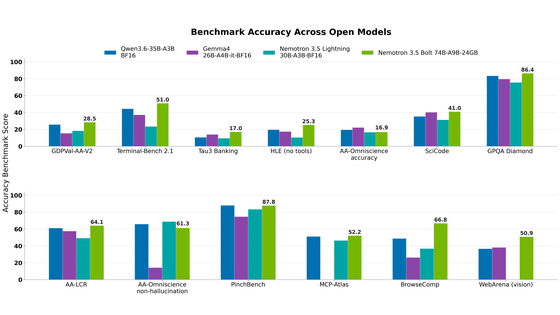
NVIDIA released Nemotron 3.5 Bolt 74B-A9B 24GB, an AI model for local agents that hits over 80 tokens per seco…
NVIDIA published a blog post titled "AI Security Is an Engineering Problem - How to Solve It at Every Layer of…

In the test, Haiku 5.5 on medium setting averaged scores close to Sonnet 5.5 on routine documents at about 1/1…