
What happened
I Programmer argues that current LLMs are harmless because they have no motivation, no reward loop, and no intent once training ends.
Why it matters
If AI lacks any drive, then fears of it going rogue misplace the real risk, which is the human asking the question, not the model.
What to watch
The warning about AI end-of-world answers still applies to humans who use it, so the debate hinges on how intent is defined.
WHO IT HITSThis perspective is relevant for business leaders and risk officers deciding how to frame AI safety debates, since it locates the threat in human users rather than the model itself.
Summaries like this, in your inbox every morning.
The article challenges the current wave of AI doom discourse by pointing out that the very mechanism that trains LLMs, reinforcement learning, stops once training is complete. After that, the model has no reward loop, no needs and no wants. It cannot spontaneously suggest ideas or act on its own, because it lacks any internal drive. The author contrasts this with biological humans, who are bundles of needs like food, shelter and status, and argues that humans project their own motivation onto AI.
The piece distinguishes between serious AI researchers like Hinton, Hassabis and Bengio and business leaders who, in the author's view, have financial reasons to paint AI as all-powerful. It also notes that a camp including Ng, LeCun and Brooks considers current AI overhyped. For the author, motivation is the more fundamental reason not to fear a rogue AI.
The article does not dismiss all AI risk. It warns that a human could ask an AI how to end the world, and the AI might answer from its training data. The real danger, then, hinges on who is using the system and why, not on the model waking up with its own agenda.
For example, today's edition would include:
AI-summarized, only the topics you pick: one digest a day via Email, LINE, or Slack.
Free · 30 seconds with Google · unsubscribe anytimeWhat is AIToday? →
Ask AI anything about this article. The AI reads this article, earlier AIToday articles, and Wikipedia, and cites its sources. Q&As are published on this page for other readers too.
The US and China added artificial intelligence to their bilateral economic dialogue, and Trump and Xi backed c…
Sakana AI said Jürgen Schmidhuber is joining as chief scientific advisor and will lead its new RSI Lab, which…
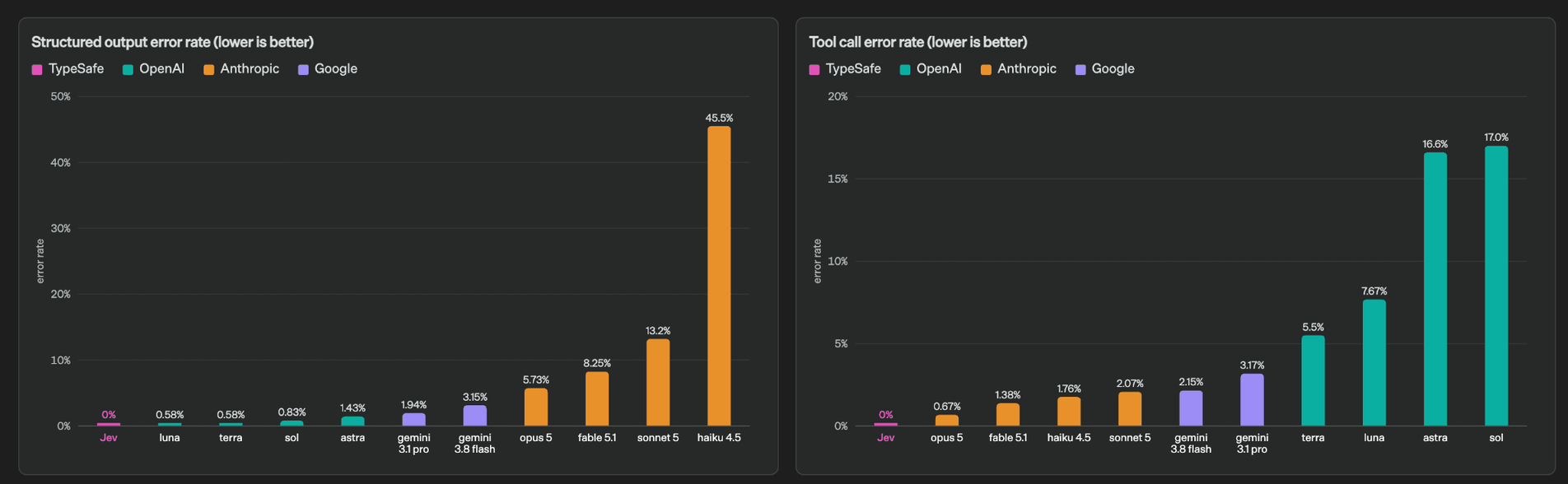
On 2026年9月15日, TypeSafe AI published System One Model and opened early access to Jev, which returns only type-…
Anthropic said Claude largely on its own found an unknown enzyme system, "ART," in DNA databases
Sakana AI hired Jürgen Schmidhuber as Chief Scientific Advisor, crediting his 1990 world-model work, 1991 deep…

OpenAI is preparing to preview GPT-6 Cyber in the coming weeks, with a limited number of Daybreak Red program…