What happened
A new platform called frontier.fast has launched an open competition where anyone can submit code patches to make large language model inference faster. Submissions are tested on dedicated hardware against the current record, and only accepted if they are genuinely faster and the model still produces identical outputs.
Why it matters
Inference speed—how quickly an AI model produces answers—is a critical bottleneck for real-world AI applications. By creating a transparent, reproducible leaderboard with standardized benchmarks across different GPUs and model families, the platform makes performance gains measurable and verifiable, rather than claimed in marketing materials.
What to watch
The scoring formula weights decode speed (65%), prefill (20%), and time-to-first-token latency (15%), with correctness verified by perplexity equivalence within 0.5%. Submissions are free; the platform is currently seeking hardware and funding to expand from its initial dedicated GPU boxes (a DGX Spark GB10, a Radeon AI PRO R9700, and more).
Summaries like this, in your inbox every morning.
Inference optimization has emerged as a critical frontier in AI deployment. While model pretraining and fine-tuning capture most research attention, the speed at which a deployed model produces outputs directly affects cost-per-inference, user experience, and real-world viability. Frontier.fast addresses a measurement credibility problem: claims of speedup are often opaque, hardware-specific, or difficult to reproduce independently. By pinning the model, GPU, engine, and benchmark window while leaving optimization approach free, the platform creates a controlled environment where improvements can be verified. The scoring formula (65% decode, 20% prefill, 15% first-token latency) reflects different usage patterns—decode speed matters most for long-output tasks like code generation, while latency-sensitive applications prioritize first-token time. The requirement that faster submissions maintain "behavioural identity" (perplexity equivalence within 0.5%) guards against optimization tricks that degrade output quality. The platform's reliance on dedicated hardware running around the clock and its openness to any contributor model this as an infrastructure investment rather than a one-time benchmark.
Pick your industry and the AI tools you use, and get news related to your work every day.
Free · 30 seconds with Google · unsubscribe anytimeWhat is AIToday? →
Ask AI anything about this article. The AI reads this article, earlier AIToday articles, and Wikipedia, and cites its sources. Q&As are published on this page for other readers too.
Cammarata reinterprets InceptionV1's cat-car neuron as a V-shape detector, not two unrelated concepts

Google Deepmind's Gemini 4 Argon scored 97.5 percent on ARC-AGI-3 at a cost of $4,800, second only to GPT-6 As…

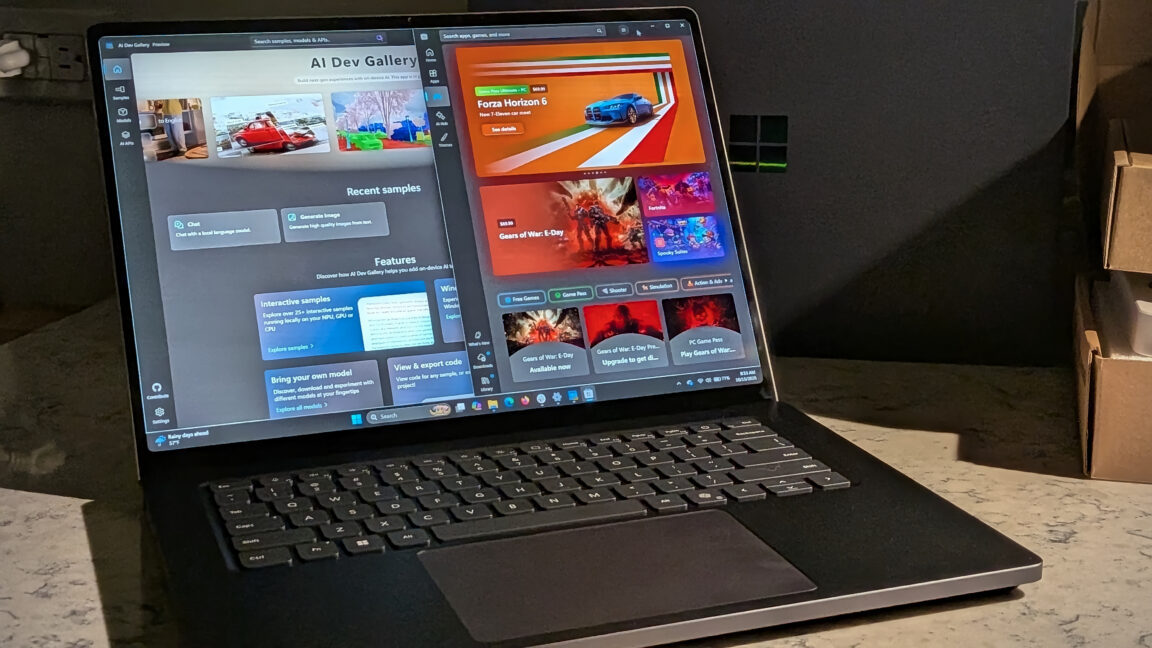
Microsoft's Surface Laptop Ultra, using Nvidia's RTX Spark platform, starts at $2,599 (up to $5,899)
Meta's new commercial terms, effective October 30th, appear to let it crawl and train AI on content from websi…

Vercel data published Thursday shows TypeSafe AI's Jev, a lightweight decision model for choosing among predet…

Reflection AI introduced Beam, an open-weight model for agentic coding and long-horizon tasks, with 501 billio…