
What happened
A Fortune commentary cites that 80% of employees say AI makes them more productive, yet only 37% of organizations see any EBIT impact, with nearly two in three banking none of the value employees feel.
Why it matters
The commentary attributes that gap to people, not systems — past decisions hardened into rules and bonus plans that reward the past, so leaders must shift incentives and lead the change themselves before value is captured.
Summaries like this, every morning.
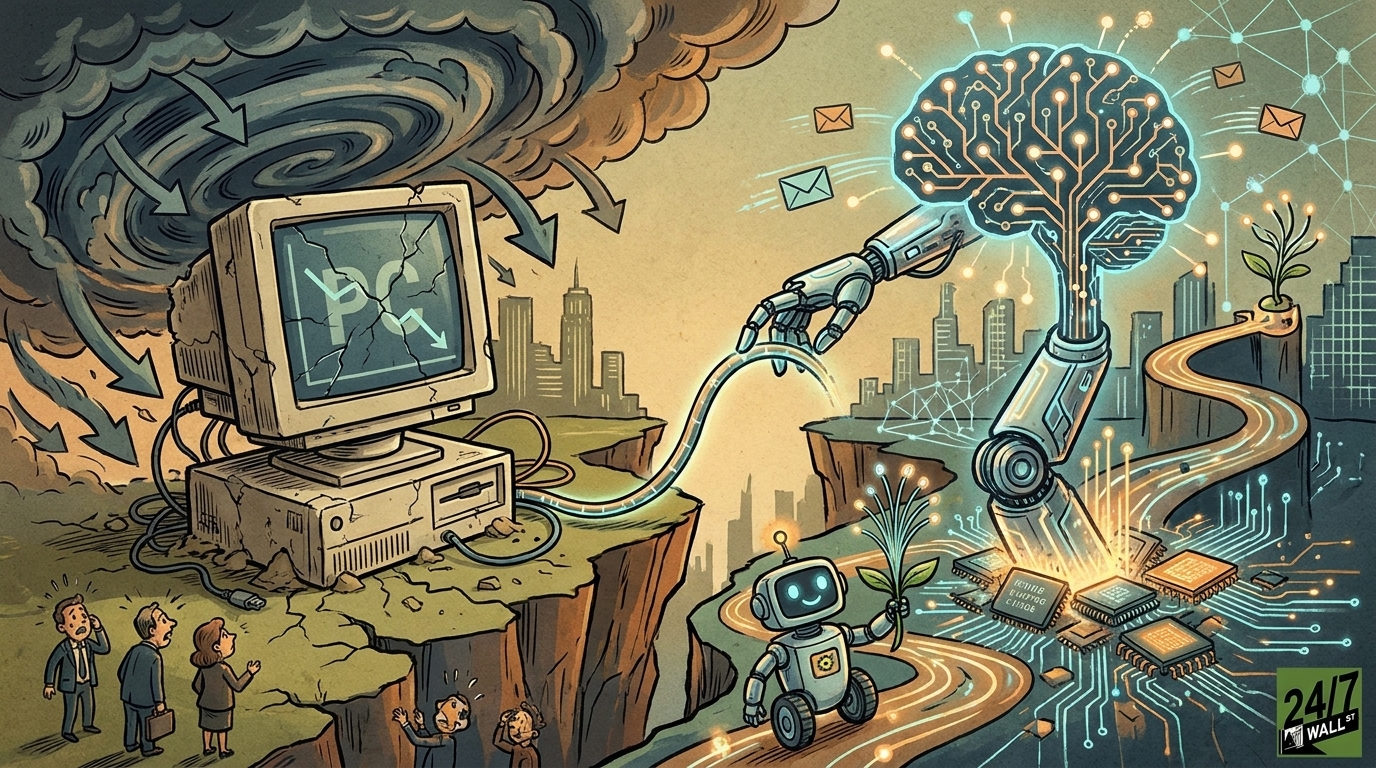
The commentary opens with a contrast that has become familiar in boardrooms: employees feel faster, but the profit and loss statement does not show it. It then spends most of its space explaining why the felt value does not become banked value. The first explanation is organizational inertia: constraints that look like rules are often just past decisions that no one with authority has revisited. The second is incentives. The Diageo example shows a model that could move marketing money across countries by brand and weather, but every euro moved affected which country manager hit a target and earned a bonus, so the tool stayed a lagging indicator.
The commentary also connects the gap to personal fear. When AI is cited as the reason for cutting headcount, showing how much time it saves can feel like drafting your own redundancy. That makes employees cautious about revealing the full extent of their AI use, which in turn keeps the value invisible to finance. The Maersk example is offered as a counterpoint: an incumbent that owned ships had to prove it would choose the best carrier for the customer, not its own fleet, and the commentary says integrated logistics paid off through the pandemic, with Maersk earning $3.5 billion in operating profit last year.
The closing advice is less about technology than about leadership behavior. The commentary recommends starting from an ideal ambition rather than today's outcome, auditing constraints including mental ones, tying targets to shared results so people see how they participate in the next decade, and living the change before asking others to. It notes that 69% of executives use AI less than an hour a week, which suggests the gap may close first at the top — or not at all.
Pick your industry and the AI tools you use, and get news related to your work every day.
Free · 30 seconds with Google · unsubscribe anytimeWhat is AIToday? →
Ask AI anything about this article. The AI reads this article, earlier AIToday articles, and Wikipedia, and cites its sources. Q&As are published on this page for other readers too.
Z Creative Partners said it will validate pairing OpenAI's "Businesses in ChatGPT" official metrics, such as B…

Intel traded at $56.96 premarket, down 42.0% over one month, as it pivots to edge AI with 130+ customers testi…
Bob Morse of Strattam Capital and Michael Quoia of KSE Leadership propose that new graduates become managers o…

GHGSat CEO Stéphane Germain wrote in Fortune that AI is built into GHGSat's data processing to flag likely met…
Nvidia CEO Jensen Huang has been ousted, with CFO Colette Kress taking over, as AMD's AI chip market share ros…

Dreamteam, led by CEO Anand Venkatraman, raised $53 million in seed and Series A funding from Together Fund an…