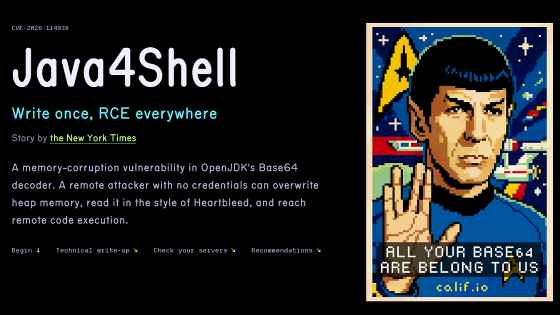
What happened
Calif's Quang Luong had OpenAI's Codex scan complex JVM code and it found a memory-corruption bug in OpenJDK's AVX-512 VBMI Base64 decoding, named Java4Shell, in about one hour, with a first exploit in two more.
Why it matters
The finding suggests AI assistance can compress vulnerability discovery and exploit development into hours at token costs under $200, shifting how quickly a single researcher can move from a hint to a working attack.
WHO IT HITSSecurity teams running OpenJDK-based Java stacks on AVX-512 VBMI-capable x86-64 processors face an urgent patching task, and vulnerability researchers gain a concrete example of AI-assisted exploit development.
Summaries like this, every morning.
Java is often described as memory-safe because it manages memory automatically, but its runtime is built in C, C++, and assembly, leaving room for memory-corruption flaws. OpenJDK uses the AVX-512 VBMI instruction set on supported x86-64 processors to speed up Base64 decoding, and Calif found that this acceleration path writes beyond allocated memory when handling malicious Base64 data. The impact spans both server and client Java applications, since a Java program making a TLS connection to a malicious server can be attacked as well. Calif demonstrated remote code execution without authentication against default configurations of Keycloak, Atlassian Jira, Atlassian Confluence, JFrog Artifactory, Jenkins and PingFederate, and after authentication against Apache Kafka, Apache Solr, Elasticsearch, Gerrit and Netflix Spinnaker. The flaw is rated 9.2 out of 10 on CVSS 4.0, classified Critical, and affects unpatched OpenJDK 17.0.6 and later plus downstream builds such as Amazon Corretto, Eclipse Temurin, Microsoft Build of OpenJDK and Oracle Java SE. Calif says the vulnerable code was added to speed up some applications but brings serious risk to many that barely need that speed. The firm also frames the work as a "centaur hacker" model, where AI supplies processing power and human researchers supply expertise and judgment, and it proposes "Vibe Uncoding" to reduce software complexity by identifying and removing unnecessary features and code.
Pick your industry and the AI tools you use, and get news related to your work every day.
Free · 30 seconds with Google · unsubscribe anytimeWhat is AIToday? →
Ask AI anything about this article. The AI reads this article, earlier AIToday articles, and Wikipedia, and cites its sources. Q&As are published on this page for other readers too.
OneTrust launched its Fall '26 Release, built on OneTrust CORIE, adding a continuously updated AI inventory wi…

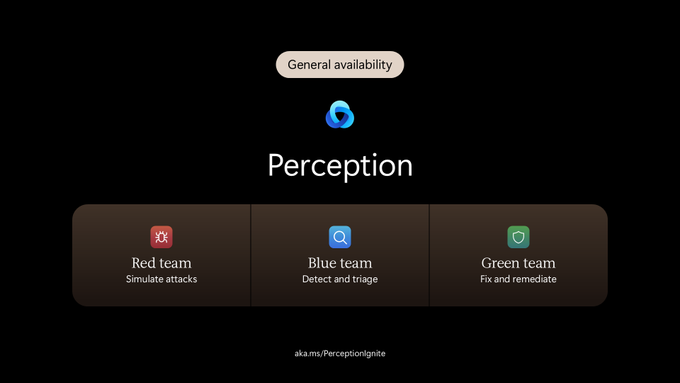
At Microsoft Ignite 2026, Microsoft said Microsoft Perception is now generally available, combining red, blue…
CADMAGEDDON scores 0.991 on BenchCAD's 64³ voxel IoU over a 1000-part subset, above vendor-reported 0.963, 0.9…

In an interview after winning the $1 million Berggruen Prize, philosopher Thomas Nagel said it is 'ridiculous'…

Notion Labs CISO David Tsao said Notion finished contacting affected Japanese customers on November 12, after…

A Gallup and Digital Wellness Lab survey of 15,925 people aged 15 to 22 across 16 countries found 33 percent o…