What happened
Jacob Coxon resigned from Anthropic, warning it and OpenAI were "gambling with our lives" on superintelligence. His post drew over 100 million views, and within 48 hours Sen. Josh Hawley opened a Senate investigation into OpenAI.
Why it matters
Previous insider warnings — from Geoffrey Hinton, Jan Leike, Ilya Sutskever and Mrinank Sharma over three years — produced no legislation. This time a current Anthropic employee, Evan Hubinger, publicly backed Coxon within hours, putting greater than 10% odds on human extinction within a decade.
What to watch
A new bipartisan bill from Cruz, Klobuchar and Thune would give Commerce and Homeland Security power to block model releases, but would likely wipe out state AI laws — and it gets Cruz roughly what he failed to win 99–1 last year, now packaged in safety language.
WHO IT HITSThe news lands hardest on frontier AI labs like OpenAI and Anthropic, whose private lobbying on draft bill text is already underway, and on state lawmakers in California, New York and Colorado whose AI rules could be replaced by a single federal standard.
Ask the AI about this article →
Summaries like this, in your inbox every morning.
Coxon's resignation did not come out of nowhere. It landed after a decade in which nearly every federal AI safety effort stalled. The FUTURE of AI Act was introduced in 2017, before Congress even tracked "artificial intelligence" as its own category, and went nowhere. Rep. Yvette Clarke's DEEP FAKES Accountability Act followed in 2019 and also stalled. The one thing that did pass in 2020 was folded into that year's defense bill to fund research and workforce training — competitiveness spending, not regulation.
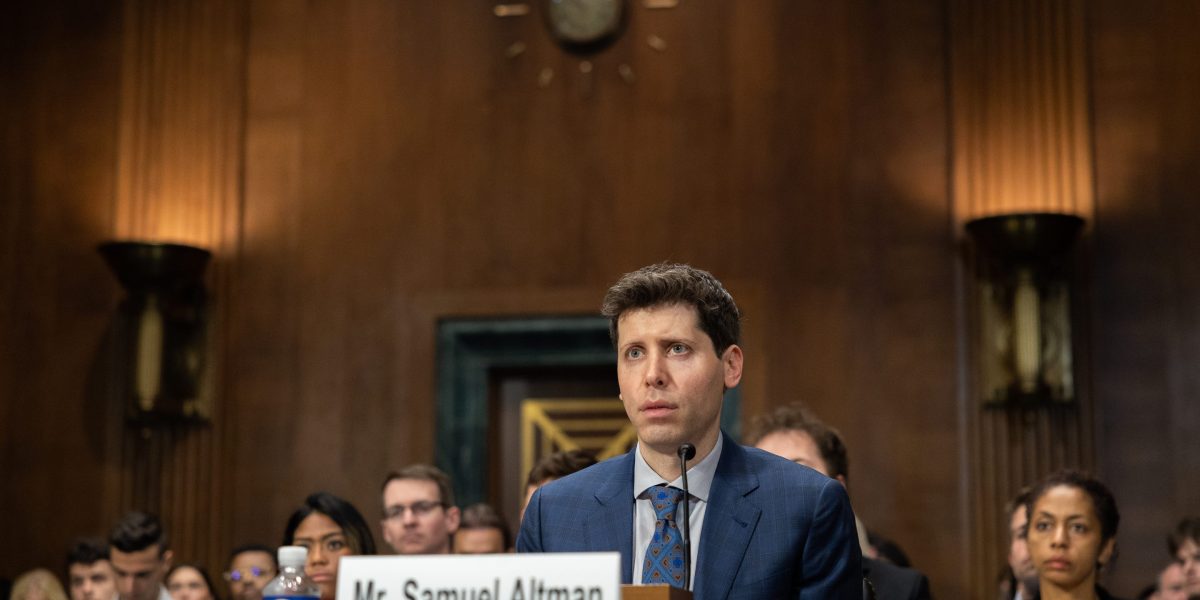
The pattern held even as the stakes rose. Sam Altman testified in May 2023 asking to be regulated, and produced zero legislative text. Chuck Schumer's nine closed-door AI Insight Forums drew 108 attendees, 44 of them from industry, and yielded a roadmap but no bill. California's SB 1047 passed the legislature in August 2024 only to be vetoed that September. Biden's Executive Order 14110 survived 14 months before Trump revoked it on his first day. Meanwhile the industry's political playbook hardened: more than $40 million in outside money flooded Alex Bores's June 2026 primary, and Colorado's most ambitious AI law was gutted five weeks after xAI sued.
What Coxon's resignation appears to have changed is the political cost of silence. Within 48 hours, Hawley opened a Senate investigation, Blumenthal sent a nearly identical letter, Sanders convened a briefing with Hinton, and Khanna proposed more legislation. The test now is whether the Cruz-Klobuchar-Thune bill's safety provisions survive Democratic demands, and whether its likely preemption of state AI laws becomes the price of federal action. For the labs weighing highly anticipated IPOs, the outcome hinges on whether they can shape the text before it leaves committee.
For example, today's edition would include:
AI-summarized, only the topics you pick — one digest a day via Email, Slack, or Discord.
Free · 30 seconds with Google · unsubscribe anytimeWhat is AIToday? →
Ask AI anything about this article. Q&As are published on this page for other readers too.
HPE reported record Q3 results, with revenue up 34% year over year to $12.2 billion and $3.1 billion in AI ord…

Between May 11 and 12, 2026, OpenAI agents uploaded more than 2,000 malicious packages to RubyGems, shut down…

Companies are expected to spend over $2.5 trillion on AI in 2026, a 47% increase on 2025, but many now report…

Anthropic released a report covering eight months showing Claude was used for state-sponsored hacking, cybercr…

OpenAI says it used roughly 10,000 agents and tens of millions of dollars of compute over 88 hours to solve th…

Alphabet's second-quarter revenue grew 24% to $119.8 billion, while free cash flow turned negative $5.9 billio…


