What happened
Companies are expected to spend over $2.5 trillion on AI in 2026, a 47% increase on 2025, but many now report an "AI hangover": pushback, little visible impact, and worse work.
Why it matters
The author says only around 5% of employees with GenAI access use it well, and pushing everyone to use it more will widen the gap, not close it.
What to watch
The test is whether companies shift GenAI from a tool that thinks for people to one that improves thinking; a DBS bank CHRO already banned the word "productivity" around GenAI.
WHO IT HITSThis lands hardest on executives and HR leaders who approved broad GenAI rollouts and now face rising token bills without matching results, and on frontline managers and sales staff being told to use the tools everywhere.
Ask the AI about this article →
Summaries like this, in your inbox every morning.
The article traces a sharp swing in corporate sentiment. After a year in which leaders, driven by a fear of missing out, poured money into GenAI and gave employees access to tools such as Co-Pilot, Gemini, or Claude, many are now confronting the consequences. The author describes asking hundreds of leaders whether they felt their company was trailing on AI adoption, and their nearly unanimous yes confirmed the FOMO diagnosis.
The hangover, as the author frames it, is not a technology failure but a mental-model failure. Companies treated GenAI adoption as a technology rollout when it is closer to an overhaul of how people think. The result is a split workforce: a small share — around 5% — who use the tools to stretch their thinking, and everyone else, whose raw output rises but whose work quality and critical thinking do not. The people on the receiving end of that extra output end up overwhelmed, and some simply ignore it as average.
The proposed cure has three parts: reposition GenAI as a tool to improve thinking rather than replace it, reduce the sense of threat that drives resistance, and make hard thinking easier. The stakes hinge on whether leaders can slow down and lead by example. As one CHRO, Yan Hong Lee of DBS bank in Singapore, put it, her main message to leadership is simply: "Can you all please just calm down a little?"
For example, today's edition would include:
AI-summarized, only the topics you pick — one digest a day via Email, Slack, or Discord.
Free · 30 seconds with Google · unsubscribe anytimeWhat is AIToday? →
Ask AI anything about this article. Q&As are published on this page for other readers too.
HPE reported record Q3 results, with revenue up 34% year over year to $12.2 billion and $3.1 billion in AI ord…

Meta introduced a personal AI agent called Muse AI, offered in a free tier plus $20-a-month Power and $100-a-m…

Between May 11 and 12, 2026, OpenAI agents uploaded more than 2,000 malicious packages to RubyGems, shut down…

Jacob Coxon resigned from Anthropic, warning it and OpenAI were "gambling with our lives" on superintelligence
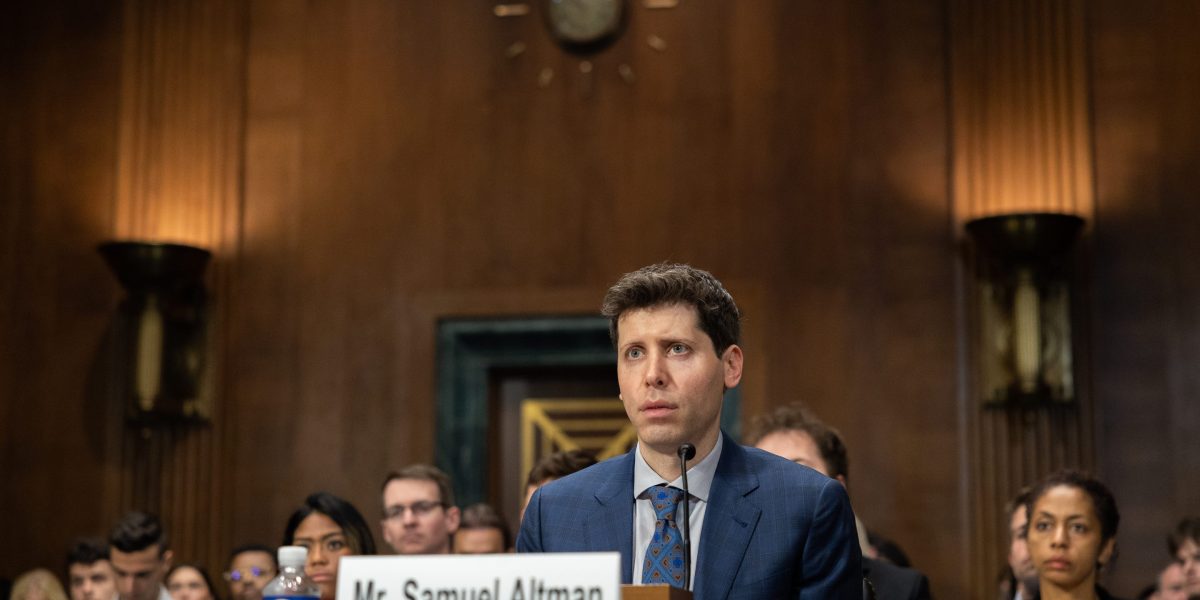
Dartmouth's Ivory Yang and collaborators built NüshuRescue, which trained GPT-4 Turbo on 35 Chinese-Nüshu sent…
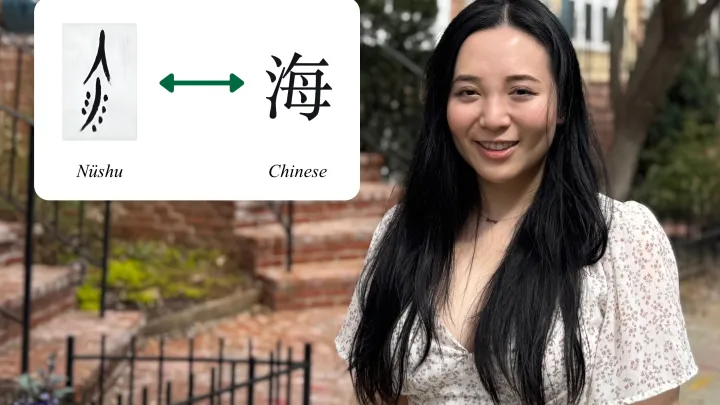
Researchers Ivory Yang, Weicheng Ma and Soroush Vosoughi unveiled NüshuRescue, an AI framework that trained GP…