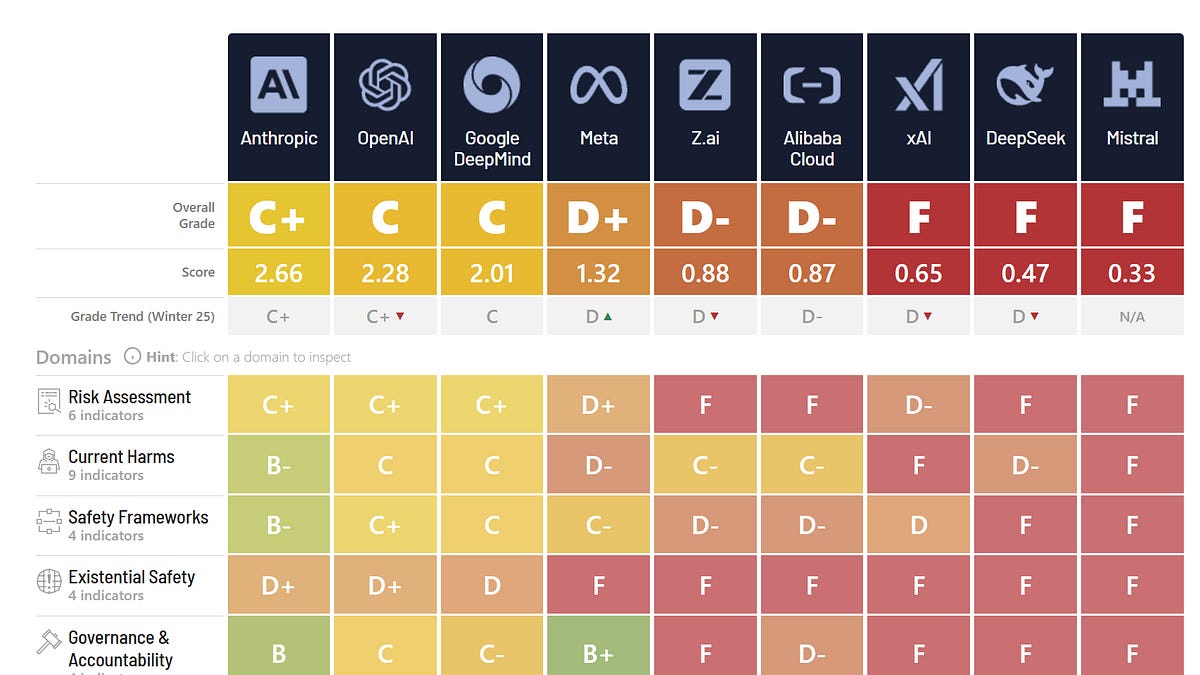
The Trump administration has decided against formal AI licensing, opting instead for a fully ad hoc regulatory approach based on the whims of the administration.
White House AI adviser Sriram Krishnan stated that a centralized licensing agency would slow innovation and that the administration is focused on avoiding regulatory "red tape." This shift means AI companies will face an opaque, arbitrary process rather than consistent rules, and the author suggests this partly reflects policymakers' reluctance to acknowledge the capabilities of existing AI systems.
What happened
Sriram Krishnan, the White House's outgoing AI adviser, stated that President Trump will not establish a formal licensing regime for AI, instead maintaining an entirely ad hoc approach to regulation. Krishnan argued that a centralized agency requiring lawyers before model release would hamper innovation.
Why it matters
The shift from rule-based regulation to arbitrary, opaque case-by-case decisions concentrates power in the administration's hands and creates unpredictable conditions for AI developers. This approach allows the government to wield emergency powers to delay advanced models and extract equity from major AI companies according to political whim rather than consistent policy.
What to watch
The article flags a critical gap in AI policy understanding: several influential figures in government refuse to acknowledge the actual capabilities of existing closed frontier models, which the author argues has led to poor decision-making. The text emphasizes that policymakers need to grasp what current AI can already do (the 'AI pill'), what it will likely do next (the 'AGI pill'), and only then make sound long-term strategy.
Ask the AI about this article →
The article presents a sharp critique of the Trump administration's approach to AI policy. Rather than adopting formal, transparent licensing rules, the administration has chosen to regulate AI through ad hoc decisions—a framework that the author argues amounts to regulatory arbitrariness masked as deregulation. Krishnan's statement that he thinks only "about this government and this moment in time" rather than how future administrations might exploit these precedents suggests a short-term orientation that could invite political abuse of emergency powers.
Underlying this policy choice, the author identifies a deeper problem: influential figures shaping White House policy flatly refuse to acknowledge the capabilities of existing closed frontier models and have done so for years. This disconnect between reality and policy understanding is presented as a root cause of poor regulatory decisions. The author outlines three conceptual "pills" that policymakers must swallow: first, understanding what current AI can already do (the "AI pill"); second, grasping what it will likely do in the near future (the "AGI pill"); and third, reckoning with superintelligence (the "ASI pill"). Without at least the first two, the author contends, AI policy cannot be coherent. The framing suggests that the administration's anti-licensing stance may partly stem from denial about existing model capabilities rather than genuine confidence in market-driven alternatives.
For example, today's edition would include:
AI-summarized, only the topics you pick — one digest a day via Email, Slack, or Discord.
Free · takes 30 seconds · unsubscribe anytimeWhat is AIToday? →
Ask AI anything about this article. Q&As are published on this page for other readers too.
Bank of England governor Andrew Bailey warned that advanced AI poses risks to financial infrastructure in a le…

Andrew Bailey, head of the world's financial stability watchdog, warned in a letter to G20 finance ministers a…
The European Union is expanding regulation of ChatGPT and will mandate protections for minors
Apple filed what it calls 'shocking evidence' in its lawsuit against OpenAI, alleging that former employee Cha…

Max Rose, a former Democratic congressman and top adviser to the veterans' group VoteVets, also advises Leadin…
Sony's lawsuit against Anthropic cites internal chats where staff praised the pirated-book site Zlibrary, alon…