AIToday
Large Language ModelsDIGITIMES AsiaPublished: Aug 3, 2026, 10:01 JST3 min read

Beijing AI hub draws Moonshot, Z.ai, with US$14B in funding

Beijing AI hub draws Moonshot, Z.ai, with US$14B in funding

Key takeaway

  • Beijing is emerging as a major artificial intelligence hub in China, with companies like Moonshot AI, Z.ai, and DeepSeek expanding in the region and drawing US$14B in funding.

  • The concentration of talent, capital, policy support, and technical resources around China's political center is positioning Beijing as a significant player in the intensifying global competition over large language models.

3 Key Points

  1. What happened

    Beijing is becoming a major artificial intelligence cluster in China as competition in large language models intensifies. Moonshot AI's open-source Kimi K3 model has climbed global open-source rankings, while companies including Z.ai and DeepSeek continue to expand in the region.

  2. Why it matters

    Talent, capital, policy support, and technical resources are increasingly concentrated in Beijing around China's political decision-making center, positioning the city as a significant AI hub that may shape the trajectory of China's AI sector and its competitive position globally.

  3. What to watch

    The article notes US$14B in funding flowing into Beijing's AI cluster, though specific funding timelines, individual company valuations, or product launch dates are not detailed in the reporting.

In Depth

Read the full story

Beijing is establishing itself as one of China's most prominent artificial intelligence clusters, driven by intensifying competition in large language models. The city's emergence as an AI hub is underpinned by the concentration of talent, capital, policy support, and technical resources around China's political decision-making center, creating conditions for rapid growth and specialization in the sector.

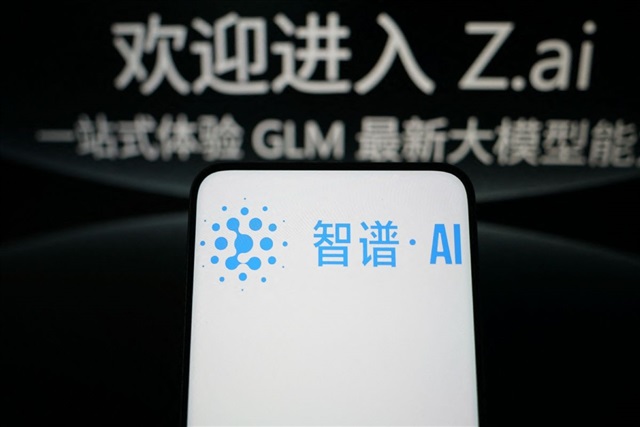
Moonshot AI has played a visible role in this development, recently releasing Kimi K3, an open-source model that has climbed global open-source rankings—demonstrating that Beijing-based firms are producing competitive models on the international stage. Beyond Moonshot, companies including Z.ai and DeepSeek are continuing to expand their operations in the region, attracted by the ecosystem forming around Beijing. The city is drawing US$14B in funding into its AI cluster, reflecting confidence among investors in the concentration of resources and capabilities there.

The positioning of Beijing as a major AI hub reflects how policy support, proximity to decision-making power, and the availability of technical talent and capital create self-reinforcing conditions for sector growth. As competition in large language models intensifies globally, Beijing's structural advantages—rooted in state support and resource concentration—are enabling it to attract and retain both companies and investment capital at a significant scale.

Context & Analysis

Beijing's emergence as an artificial intelligence cluster reflects deeper structural advantages the city enjoys within China's political economy. The concentration of talent, capital, policy support, and technical resources around China's political decision-making center creates a feedback loop: capital and talent follow proximity to power and resources, which in turn attracts more companies and investors seeking favorable conditions. This dynamic mirrors how Silicon Valley accumulated dominance, though with Beijing's advantage rooted in state coordination rather than venture capital clustering alone.

The intensity of large language model competition—a globally contested space—is pulling companies toward Beijing specifically, suggesting the city is becoming a focal point not just for domestic Chinese AI development but for competition against international players. Moonshot AI's Kimi K3 climbing global open-source rankings indicates that companies based in this hub are producing models that compete on the world stage, not merely within China. The continued expansion of Z.ai and DeepSeek in the region reinforces this trend.

FAQ

Which AI companies are operating in Beijing's AI cluster?
Moonshot AI, Z.ai, and DeepSeek are among the companies continuing to expand in Beijing's AI cluster. Moonshot AI has released an open-source model called Kimi K3 that has climbed global open-source rankings.
How much funding is flowing into Beijing's AI sector?
US$14B in funding is being drawn into Beijing's AI cluster as the city positions itself as a major hub.
DIGITIMES AsiaRead Original Article

Get the latest Large Language Models news every morning

AI-summarized, only the topics you pick — one digest a day via Email, Slack, or Discord.

Free · takes 30 seconds · unsubscribe anytime

Ask AI

Ask AI anything about this article. Q&As are published on this page for other readers too.

Related Articles

Next articleSalesforce handles 4.31M support cases with AI agents, reveals the ROI problem

The AI news that matters, in one minute each morning.

Sign up free