
What happened
Anthropic reported that junior/entry-level technical hires dropped from 27% to 9% of its technical new hires over the past year, with junior postings falling sharply after December 2025, while agent working hours surpassed employees by March 2026.
Why it matters
Anthropic says AI adoption carries a risk of displacing workers, and its remedies, including an early-warning system and early reassignment, cannot directly offset the junior hiring decline, so it argues government policy on retraining and income support is also needed.
WHO IT HITSJunior engineers and entry-level technical candidates face shrinking openings at AI-forward employers, while hiring managers are shifting priorities toward autonomy and judgment over technical expertise and implementation ability.
Summaries like this, in your inbox every morning.
Anthropic frames itself as an extreme case of AI adoption, not a typical one. Its report traces how that adoption reshaped the company's own hiring: technical junior and entry-level roles fell from 27% to 9% of technical new hires over the past year, with junior postings dropping sharply after December 2025, and the share of technical staff also declined.
The same period saw agents take on far more work. By March 2026, agents' working hours surpassed those of employees, and by August they reached 6 times employee hours. Output per person rose accordingly: code generated per person increased, sales representatives closed more deals, and more contracts were processed, with employee output rising as AI tool adoption grew.
That acceleration has made human attention the company's biggest bottleneck. Non-engineers would spend half their workweek just reading all the output of the Claude agents they manage, so staff focus on "meta work" such as building visualization tools and monitoring agent pipelines. Employees now view their job as managing a team of Claudes, widening roles to product development, agent management, and strategic and interpersonal work beyond the LLM's scope, and hiring now prizes autonomy and judgment over technical expertise and implementation ability. Anthropic says it runs an early-warning system for roles facing AI-driven change and does early reassignment, but acknowledges these do not directly address the junior hiring decline. In an August survey, Anthropic staff expected AI progress to come faster than a representative sample of US adults did, yet both groups shared concern about rising unemployment.
Pick your industry and the AI tools you use, and get news related to your work every day.
Free · 30 seconds with Google · unsubscribe anytimeWhat is AIToday? →
Ask AI anything about this article. The AI reads this article, earlier AIToday articles, and Wikipedia, and cites its sources. Q&As are published on this page for other readers too.
At a Berlin industry summit on October 19, Nvidia CEO Jensen Huang and German Chancellor Friedrich Merz urged…
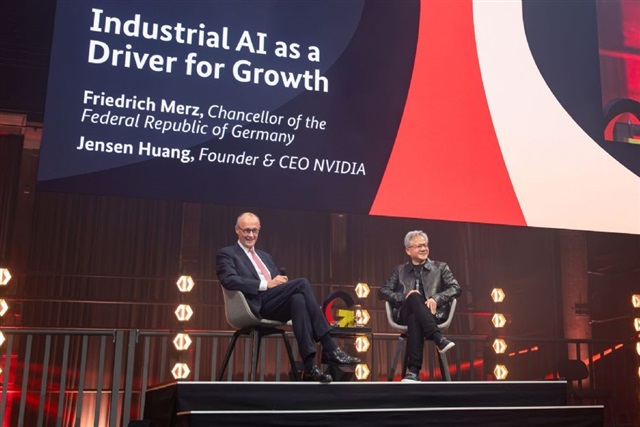
The Digital Agency began rolling out Agent Chat to ministries on October 20 and aims to deploy Genai Kobo, whi…

Bank of America analysts led by Christopher Nardone argued Monday that Walmart is well positioned for agent-le…

Bloom Energy reported strong demand for its solid oxide fuel cells from AI and cloud data centers, backed by l…
Karakuri and Highlanders announced on October 20 a joint "AI Street Performer" project where the humanoid "N"…

Meta released Muse Wonder, the first frontier-class model from Alexandr Wang's superintelligence lab, on Oct