
What happened
Apple researchers introduced Internalized Visual Thinking (IVT), a post-training framework that lets multimodal AI models predict future video frames during training and answer directly at inference. Compared with Visual CoT, IVT achieves comparable or better performance and cuts latency by more than 5×.
Why it matters
Visual CoT, which generates intermediate reasoning images, adds substantial inference overhead. IVT shows that explicit pixel-space generation may not be necessary for proactive video reasoning, making such models more efficient while retaining accuracy.
What to watch
IVT improves over text-only post-training across all six evaluation settings studied. The findings suggest future multimodal reasoners could internalize world modeling during training, potentially reducing the need for expensive inference-time computation.
Summaries like this, in your inbox every morning.
Apple's research tackles a core inefficiency in multimodal reasoning: generating intermediate images to think about future video frames. Visual CoT works but is slow. IVT shifts that computation into training, so the model internalizes visual foresight and skips it during use.
The controlled studies tested multiple factors—target representations, decoder designs, prediction horizons, data mixtures, curricula, and objectives—and IVT consistently beat text-only training. It matched or surpassed Visual CoT with over 5× less latency, suggesting that explicit pixel generation may be unnecessary.
This could make proactive video reasoning cheaper and faster, useful for applications like autonomous systems or embodied AI. However, these are research findings from Apple, not a shipping product. The next step would be seeing how IVT scales to larger models and real-world tasks.
Pick your industry and the AI tools you use, and get news related to your work every day.
Free · 30 seconds with Google · unsubscribe anytimeWhat is AIToday? →
Ask AI anything about this article. The AI reads this article, earlier AIToday articles, and Wikipedia, and cites its sources. Q&As are published on this page for other readers too.
Chunghwa Telecom president Rong-shy Lin said the shift from conversational AI to autonomous AI agents is resha…
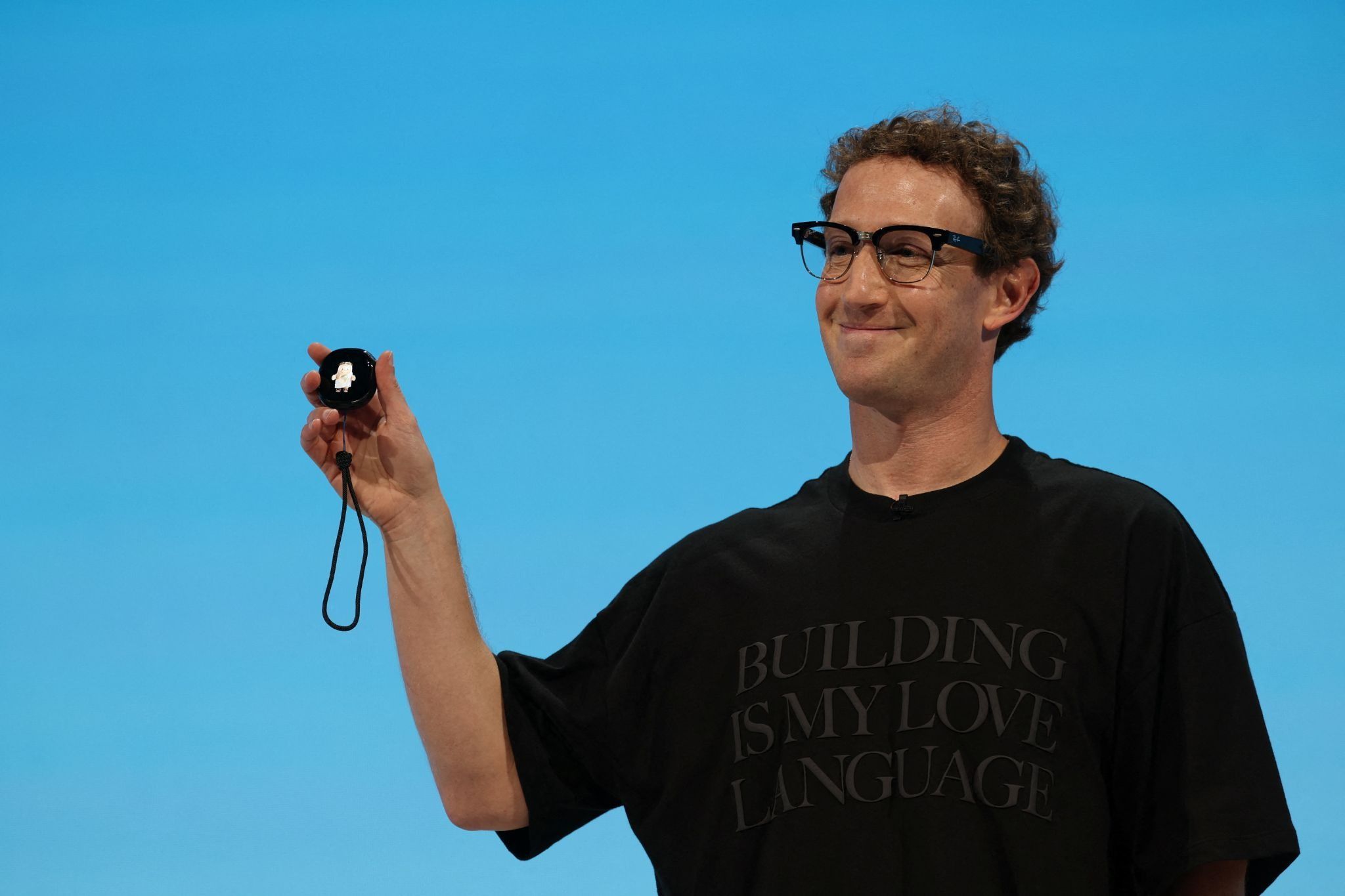
Apple and Meta said they would jointly release a new open-weight AI model designed to run on high-end Macs, ai…
A writer and entrepreneur opened his daily to-do list and found 156 items, and concluded that an AI assistant…

A Zenn contributor sorted AI use into three modes — AI as an assistant, AI running alongside people, and AI th…

A non-engineer operator says one person ships four smartphone apps on Google Play, three on the App Store, wit…
The walkthrough points the CLI at a local mock via the ANTHROPIC_BASE_URL environment variable

