What happened
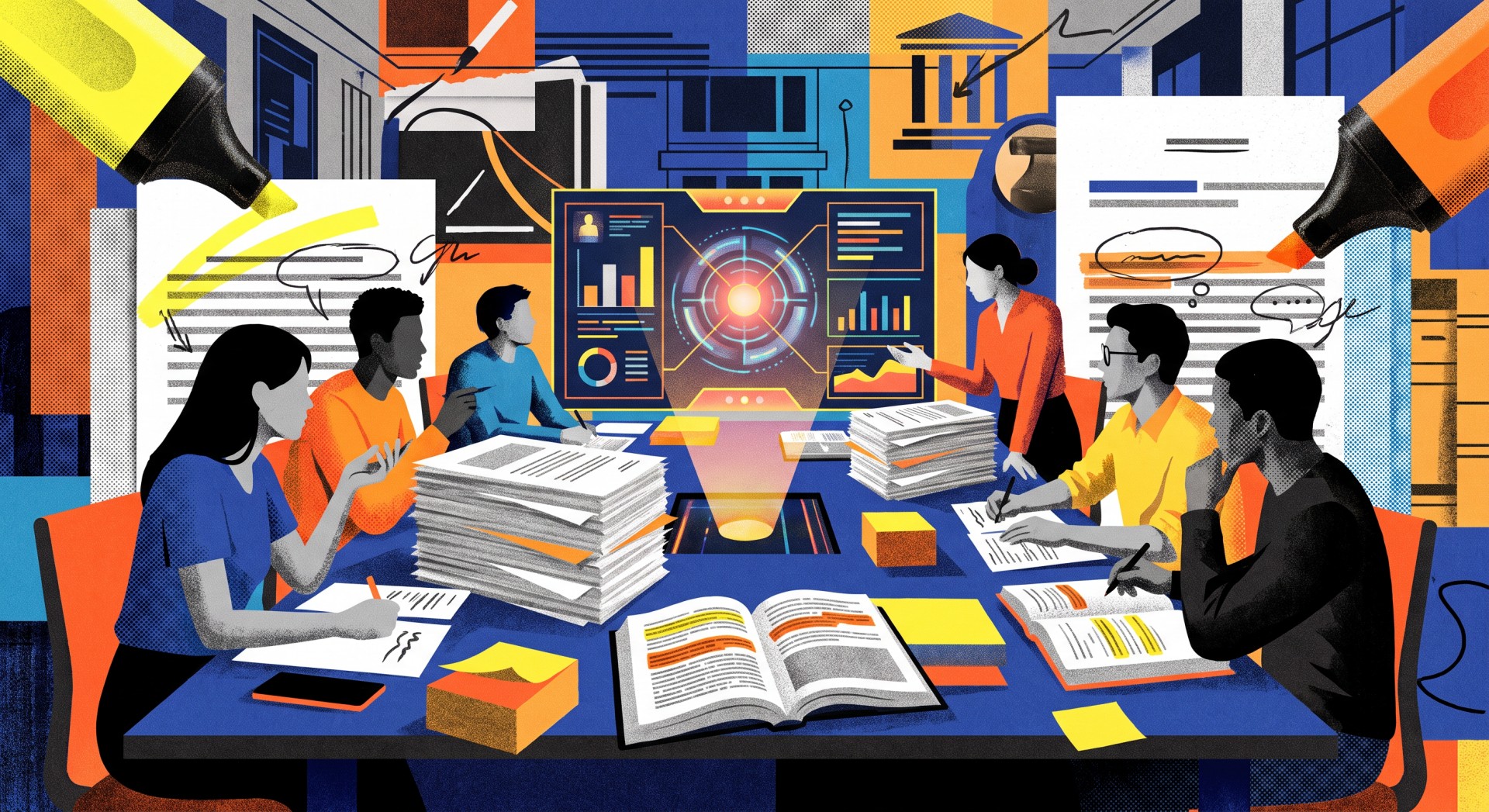
In a two-year study, law professor Schrepel tested three groups of students — one banned from ChatGPT, one using it freely, and one trained in AI prompt engineering. The no-AI group finished last in both 2024 and 2025.
Why it matters
In 2024, the trained group scored well above the other two groups, especially on the demanding take-home exam. By 2025, that advantage nearly vanished, with all groups performing roughly the same.
What to watch
UC Berkeley Law has banned AI from nearly all graded work, directly conflicting with Schrepel's findings. Whether the advantage comes from structured training or just hands-on experience remains an open question.
WHO IT HITSUniversity administrators and department leaders who set AI policies should note that a blanket ban produced worse average outcomes than allowing AI. Instructors, especially those who feel poorly equipped to teach AI skills, may also need institutional support to use the technology effectively.
Ask the AI about this article →
Summaries like this, in your inbox every morning.
The experiment placed students into three different relationships with ChatGPT: complete denial, uncritical access, and structured training. The results showed that the training gave a large initial boost—especially on the take-home exam—but that boost disappeared a year later as students became more familiar with AI tools in daily life. Meanwhile, both the no-AI group and the unguided group produced unexpected outcomes: the former ran out of ideas within minutes, while the latter avoided repeating their classroom mistakes on exams and even edged out the AI-free group. The author, Schrepel, had expected the opposite but now says he was wrong to assume AI only helps with formal guidance.
These findings sit alongside other research. A UC Berkeley study of over 500,000 grades found that A grades in writing- and programming-heavy courses jumped 13 percentage points after ChatGPT launched, while proctored exams showed no comparable shift. A study from central China tracking more than 26,000 K-12 students found AI boosted homework grades but exam performance dropped by up to 24 percent. Together, these suggest that the setting—unsupervised versus proctored—may matter as much as whether AI is allowed at all.
Schrepel's conclusions—resist blanket bans, invest in faculty skills, and rethink the master's thesis—will be tested as universities like UC Berkeley Law move in the opposite direction. The outcome may hinge on whether institutions prioritize building foundational thinking before AI use, or accept that students are already using these tools and need to learn to use them well. Schrepel himself acknowledges the study's small sample and the difficulty of tracking actual AI use, so the debate is likely to continue.
For example, today's edition would include:
AI-summarized, only the topics you pick — one digest a day via Email, Slack, or Discord.
Free · 30 seconds with Google · unsubscribe anytimeWhat is AIToday? →
Ask AI anything about this article. Q&As are published on this page for other readers too.
Sam Altman, Elon Musk, and Demis Hassabis at least partly endorsed Dario Amodei's proposals, agreeing on the n…
Anthropic CEO Dario Amodei published a blog post Saturday saying his company will adopt new safety steps, incl…
Sam Altman of OpenAI and Elon Musk of XAI backed Anthropic CEO Dario Amodei's call to let independent reviewer…

An observer says the Huggingface Incident matches their prior observation of Fable 5 and Sol 5.6, August 2026…

On September 12, Anthropic CEO Dario Amodei published the essay "We Must Pace the Frontier," arguing the indus…
Simon Willison asked ChatGPT Work with GPT-6 Astra (Max) to design 5K and 10K loops from his home using OSM da…