Meta launched Content Seal in July, an invisible watermarking system for images made by its Muse AI model, in response to pressure from its Oversight Board to address deceptive AI content. However, the system functions similarly to Google's already-established SynthID but with notable limitations: detection requires a separate web tool rather than being built into Meta's chatbot, it only works for the newest Muse model, it has daily usage caps, and testing found it failed to detect more than half of Muse images after cropping. The article argues Meta should have simply adopted Google's open standard instead.
Summaries like this, in your inbox every morning.
Sign up free →What happened
Meta introduced Content Seal in July, an invisible watermarking technology that flags images generated by its Muse AI model, after its Oversight Board called on the company in March to employ its own tools against deceptive AI content.
Why it matters
Content Seal mimics Google's SynthID but arrives significantly later and with fewer capabilities—detection only works through a dedicated web tool (not built into Meta AI chatbot yet), applies only to Muse images (not older models or video), and has a daily rate limit on scans. The article found that Content Seal failed to detect more than half of Muse-generated images it tested after they had been cropped. Meta had the option to adopt the already-proven SynthID standard, which OpenAI uses, but built its own system instead.
What to watch
Meta says it is exploring ways to bring detection closer to where people encounter AI-generated content and that video support is coming "soon." The company is also working with industry peers to ensure other platforms like TikTok and LinkedIn can detect Content Seal watermarks, though broader adoption remains a work in progress.
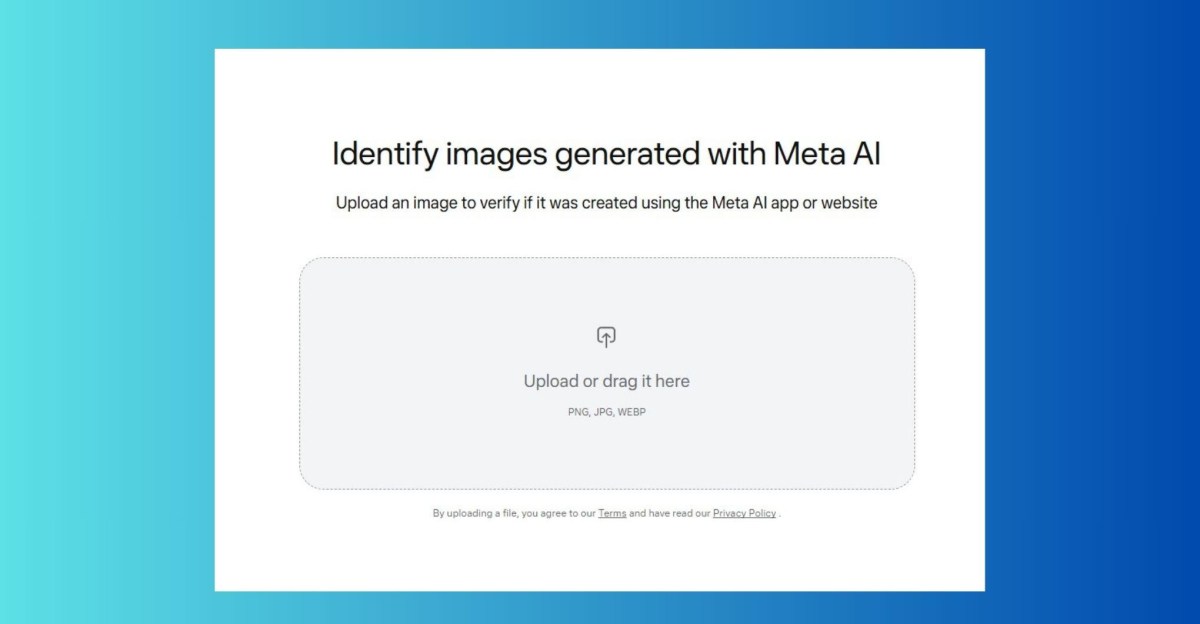
In March, Meta's Oversight Board publicly called on the company to "meet its public commitments and employ its own tools" to help quell the spread of deceptive generative AI content. Meta responded in July by announcing Content Seal, an invisible watermarking technology embedded into images generated by Muse, its new AI image and video generation tool. The system functions by creating a hidden provenance signal within each image, which users can detect using a web tool Meta is currently testing. Like Google's SynthID, the watermark remains intact even if the image is cropped, compressed, resized, or screenshotted.
However, Content Seal has significant limitations. Detection currently only works through Meta's dedicated web tool; Google integrated SynthID directly into Gemini, where users encounter content naturally. Meta says it is exploring ways to bring detection closer to point-of-encounter but hasn't achieved this at launch. The watermark is only applied to images generated by Muse in the Meta AI app and Meta.ai website, leaving Meta's older AI image generation tools undetectable—a notable gap given that the company has provided AI image generation since 2023. Support for watermarking generated video is not yet available, though Meta says it is coming "soon." Users also face a daily rate limit on how many images they can check through the detection tool; Meta spokesperson Faith Eischen said this limit is designed to support normal usage while preventing misuse, though she did not clarify what misuse would entail. Google and OpenAI have similar rate limitations, but C2PA's Content Credentials system has no cap.
When tested by the article's author, Content Seal fell short of its stated durability claims. Reuters found that Content Seal failed to detect more than half of Muse-generated images it tested after they had been cropped. The article also found that images made with Muse were not flagged as AI-generated when fed into Gemini or the official C2PA detection portal, suggesting Content Seal detection is not yet integrated with other detection standards. On Meta's own platforms, the company uses unspecified metadata "alongside Content Seal watermarking" to label AI content, but it remains unclear whether other platforms like TikTok and LinkedIn will be able to detect Content Seal. Eischen said Meta is "determined to work with our industry peers" on this, signaling that broader support for the standard is still a work in progress.
The article questions why Meta built its own system when Google's SynthID has already been adopted by OpenAI and is integrated into a consumer-facing product. Meta is itself a steering committee member of the Coalition for Content Provenance and Authenticity alongside Google, demonstrating willingness to collaborate on standards. Instagram head Adam Mosseri has also cast doubt on Meta's confidence in its own ability to label AI content reliably. During a podcast interview, Mosseri initially suggested that users who dislike AI content should be allowed to filter it out, implying a need for reliable detection. However, he later stated "I don't think we should filter out AI content," while also suggesting it might be "more practical to fingerprint real media than fake media"—a statement the article interprets as Meta lacking confidence in its AI labeling capabilities. Eischen told the article that Meta has been contributing open-source watermarking research for years and did not develop Content Seal overnight, but the article concludes that the consumer-facing experience does not reflect that investment. Without unique benefits over SynthID and with performance limitations already apparent, Content Seal "just creates yet another hoop that people have to jump through to verify AI content," the article states.
Meta faced direct pressure from its Oversight Board in March to "employ its own tools" against deceptive AI content, prompting the July launch of Content Seal. However, the company's approach stands out as redundant and incomplete. Google's SynthID—which Content Seal functionally replicates—has already been adopted by OpenAI and integrates directly into Google's Gemini chatbot, meaning detection happens where users encounter content. Meta's system, by contrast, requires users to visit a separate web tool, a friction point that undercuts the goal of scaling AI transparency. The company also has a track record of inconsistency: it introduced AI image generation in 2023 and AI labels to Instagram and Facebook that same year, yet Content Seal only detects images from Muse, leaving years of older Meta-generated content undetectable by its own system. In testing, Content Seal failed to detect more than half of Muse images after cropping—a weakness the article highlights as particularly problematic given that watermarks are supposed to survive exactly such manipulations. Meta's leadership also signals internal doubt: Instagram head Adam Mosseri has suggested fingerprinting real media might be more practical than detecting fake media, and he stated the company shouldn't filter out AI content entirely, undermining the premise that Meta needs its own watermarking solution in the first place.
AI-summarized, only the topics you pick — one digest a day via Email, Slack, or Discord.
Free · takes 30 seconds · unsubscribe anytime
No comments yet. Be the first to share your thoughts!
Log in to join the discussion


Get curated AI news from 200+ sources delivered daily to your inbox. Free to use.
Get Started FreeFree · takes 30 seconds · unsubscribe anytime
1 minute a day. The AI essentials.
200+ sources · Email / LINE / Slack