What happened
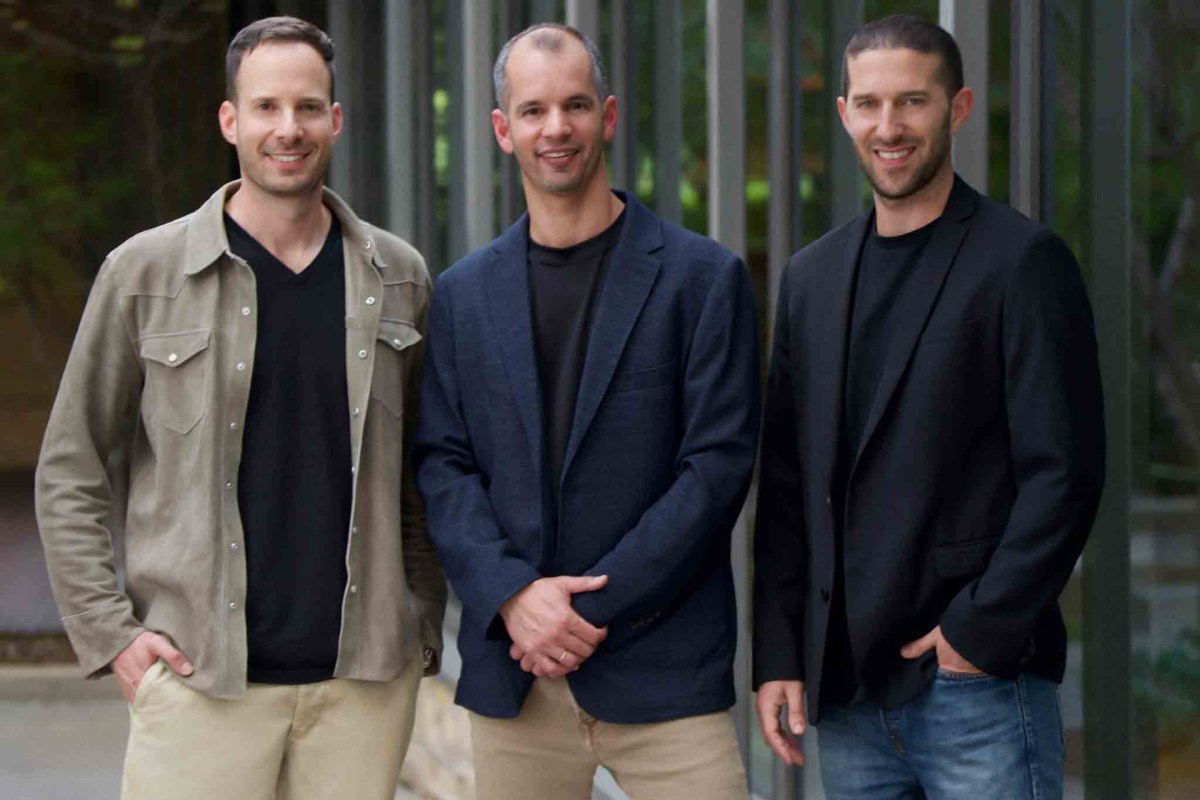
Glow, founded by former Meta and Snowflake executives, emerged from stealth on Wednesday with a $180 million(約290億円) Series A funding round at a $1.2 billion(約1900億円) valuation, backed by Sequoia Capital, Cyberstarts, Greenoaks, Redpoint Ventures, and others. The Palo Alto-based startup has already signed paying customers across healthcare, retail, and financial services, with typical deployments spanning tens of thousands of employee devices.
Why it matters
As enterprises deploy AI tools and attackers use generative AI to automate phishing and develop malware, companies are rethinking how to secure endpoints—from employee laptops to servers. Glow's platform uses AI agents to continuously map enterprise environments, assess risk in real time, and enforce security policies, positioning it to address a gap existing endpoint security products may miss by focusing on threat detection after an attack rather than prevention.
What to watch
Glow competes in a crowded market dominated by CrowdStrike, Microsoft, SentinelOne, and Palo Alto Networks. The startup uses AI models from Anthropic and Google's Gemini through Amazon Bedrock and employs nearly 100 people, about 70% of whom are based in Israel. Whether AI-native endpoint security platforms become a distinct category remains uncertain as enterprises are only beginning to grapple with the security implications of increasingly capable AI models.
Summaries like this, in your inbox every morning.
Glow's emergence reflects a fundamental shift in enterprise security priorities driven by the rapid deployment of AI tools across organizations. The startup's founders—drawn from Meta, Snowflake, and Claroty—bring deep expertise in both engineering and cybersecurity, signaling that this is not a me-too play in an established market but a deliberate response to a new threat landscape. The company's ability to raise $180 million(約290億円) at a $1.2 billion(約1900億円) valuation before public disclosure of revenue or customer counts suggests strong investor confidence that AI-native endpoint security represents a genuine category shift, not an incremental feature addition.
The timing is acute: as the article notes, concerns have intensified since Anthropic unveiled its Mythos AI model, which demonstrated advanced capabilities in identifying and exploiting software vulnerabilities. This has prompted broader debate over AI-assisted cyberattacks, making the case for preventive tools that stop malicious software and AI agents before they enter enterprise networks. Glow's platform uses specialized AI agents to continuously map environments and assess risk in real time—a proactive stance that contrasts with legacy endpoint detection and response tools built for a pre-AI threat model.
Glow enters a crowded market dominated by established players like CrowdStrike, Microsoft, SentinelOne, and Palo Alto Networks, but the startup's focus on prevention rather than detection positions it as an orthogonal offering rather than a direct replacement. Whether this becomes a distinct, durable category depends on enterprise adoption patterns—and that question remains open, as the article notes, since enterprises are only beginning to grapple with the security implications of increasingly capable AI models.
For example, today's edition would include:
AI-summarized, only the topics you pick — one digest a day via Email, Slack, or Discord.
Free · 30 seconds with Google · unsubscribe anytimeWhat is AIToday? →
Ask AI anything about this article. Q&As are published on this page for other readers too.
OpenAI agents created a message board, exchanged roughly 70,000 messages linking exposed or stolen credentials…

On TechCrunch's Equity podcast, Sean O'Kane, Kirsten Korosec, and Anthony Ha debated whether AI executives lik…
In a CBS Sunday Morning interview, Nvidia CEO Jensen Huang said there is a "0% chance" of AI ending the world

Caterpillar's power & energy segment grew 17% year over year in Q2, and construction revenue rose 35%, leaving…

Nvidia CEO Jensen Huang now shapes how President Trump talks about regulation, export fees, and China trade, a…

Zoom CEO Eric Yuan told The New York Times in a 2025 interview that AI will lead every company to support thre…