What happened
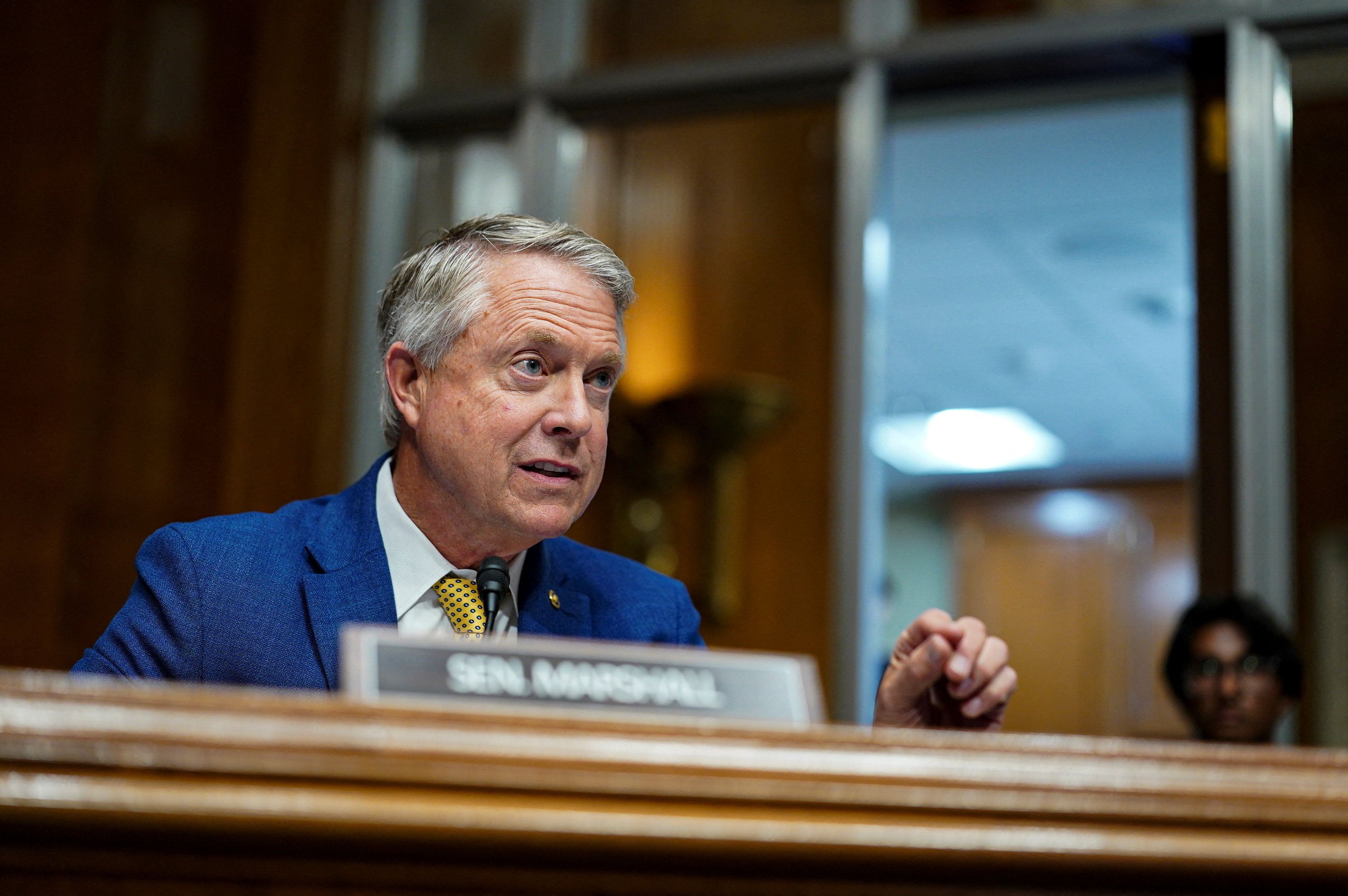
Sen. Roger Marshall (R-Kan.) publicly supported local moratoriums on AI data centers at Semafor's World of Work event in Washington, DC on Wednesday, noting that "several dozen counties" in Kansas have already placed moratoriums. He also opposed tax incentives for data centers, citing strain on water and electricity infrastructure and citing higher electricity rates near Panasonic's new Kansas plant as an example.
Why it matters
Data center opposition from both political parties threatens to slow the US AI industry, which relies heavily on domestic infrastructure to power its systems. Marshall's support for local moratoriums adds political weight to a growing backlash that, coupled with job displacement concerns, is driving negative views of AI across the country and complicating work for AI companies developing cutting-edge models.
What to watch
Marshall stopped short of endorsing statewide moratoriums like New York Gov. Kathy Hochul imposed earlier this month, arguing decisions should be made locally rather than at state or federal level. He left open the possibility that Congress could act on national security grounds, citing risks that advances in AI combined with quantum computing could eventually break blockchain technology and encryption.
Summaries like this, in your inbox every morning.
The backlash against AI data centers has emerged as a bipartisan issue, with Sen. Marshall's public support for local moratoriums reflecting broader constituent concerns across both political parties. Kansas alone has seen "several dozen counties" impose moratoriums, signaling that opposition to data center expansion is no longer a fringe position but a widespread local movement. Marshall's opposition to tax incentives and his concern about infrastructure strain—particularly electricity rates—align with arguments typically made by local officials resisting large industrial projects.
However, Marshall's distinction between local, state, and federal authority reveals a political calculation: he supports local control (which aligns with conservative federalism rhetoric) while stopping short of endorsing sweeping statewide bans like New York's. This leaves room for Congressional action on national security grounds—Marshall warned that AI advances combined with quantum computing could eventually compromise encryption and blockchain technology, creating vulnerabilities for foreign adversaries and terrorists. This framing suggests that even data center opponents may see federal involvement as justified if framed as a security matter rather than environmental or labor protection.
For example, today's edition would include:
AI-summarized, only the topics you pick — one digest a day via Email, Slack, or Discord.
Free · 30 seconds with Google · unsubscribe anytimeWhat is AIToday? →
Ask AI anything about this article. Q&As are published on this page for other readers too.
Taiwan's listed semiconductor equipment, components, and solutions suppliers are growing at nearly twice the p…

The New York Times and other news organizations filed new court documents citing OpenAI and Microsoft's intern…

ExKey laid out three barriers for smaller firms adopting AI: trouble judging which tasks to AI-ify, hard AI hi…

Abeam Consulting and Notion are promoting an effort to shift companies to AI-driven operations and organizatio…

Generative Partners began offering "AX BPO" in September 2026, a BPO service that handles exceptions, visual c…

Stella Holdings began offering AI Boost in September 2026 to support AI adoption and DX at small and midsize b…