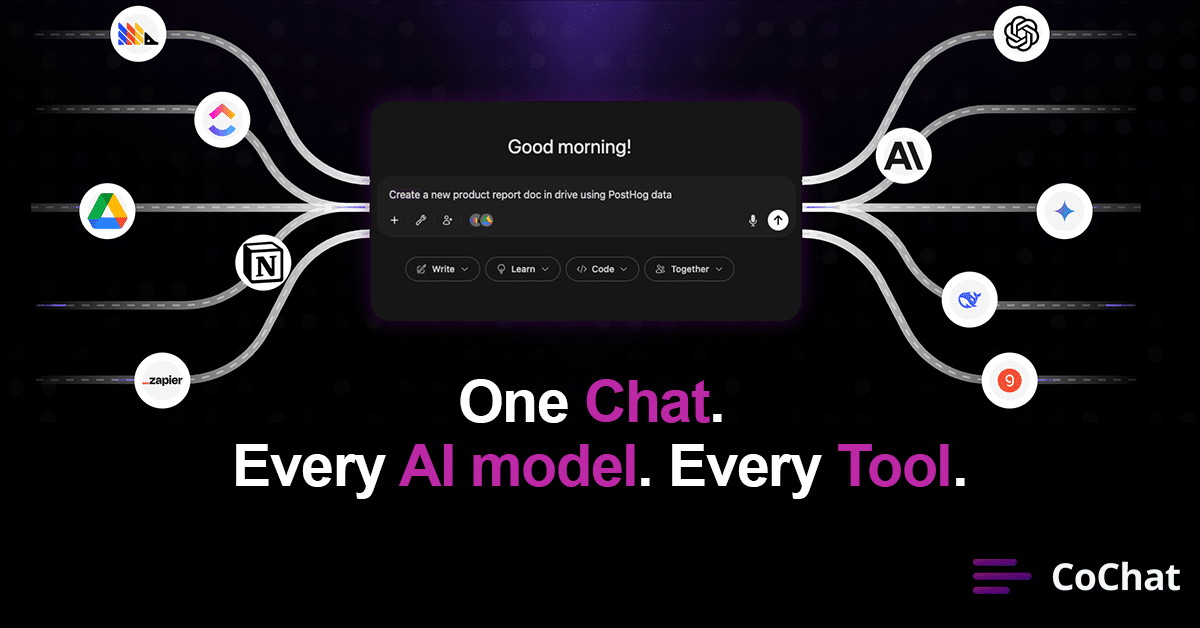
CoChat is an AI research assistant that verifies every citation against its original paper to prevent researchers from citing misquoted or fabricated sources.
Built on the open-source Open WebUI platform (which has 130k+ GitHub stars and 230M+ downloads), the tool searches across 200M+ real academic papers and flags claims that don't match their sources—addressing a problem where one in four citations in published research misrepresents what the paper actually says.
What happened
CoChat, an AI research assistant built on Open WebUI, launched with features to search across 200M+ academic papers, verify citations against original sources, and flag misrepresented claims before they enter a researcher's bibliography.
Why it matters
One in four citations in published research misrepresents its source, according to the product. By filtering fabricated and misquoted sources, CoChat aims to prevent researchers from building on false claims and passing them forward to others who cite their work.
What to watch
The tool includes side-by-side comparison of answers from Claude, GPT, and Gemini; shared workspaces for advisors and co-authors; and automation agents that monitor new publications and deliver weekly reading summaries. It integrates with 200+ tools including arXiv, PubMed, and Semantic Scholar.
Ask the AI about this article →
CoChat addresses a well-documented problem in academic publishing: citation misrepresentation. The product cites a statistic that one in four citations in published research misrepresents its source, and frames this as a cascading problem—researchers build on those flawed references, and then others cite them in turn, spreading the error forward. The tool's core innovation is real-time verification, filtering out claims that don't match the actual content of the papers they cite.
The product is built on Open WebUI, an established open-source AI interface with substantial adoption (130k+ GitHub stars, 230M+ downloads, 700+ contributors). CoChat extends this foundation by adding team collaboration features—shared workspaces, live editing, and agent-based automation—positioning itself not as a standalone tool but as a research platform teams can run on. The inclusion of cross-model comparison (Claude, GPT, Gemini side-by-side) suggests the creators view hallucination detection as a multi-AI problem, requiring verification across different models rather than trust in any single AI.
For example, today's edition would include:
AI-summarized, only the topics you pick — one digest a day via Email, Slack, or Discord.
Free · takes 30 seconds · unsubscribe anytimeWhat is AIToday? →
Ask AI anything about this article. Q&As are published on this page for other readers too.
CBTS Technology Solutions LLC launched Forge Agents, a platform that turns a plain-language job description in…

Imec CEO Patrick Vandenameele said at SEMICON Taiwan 2026 that the Belgian research center is broadening its c…
Alphabet's AI Overviews now reach over 2.5 billion monthly users through Google Search, and its ad business ge…
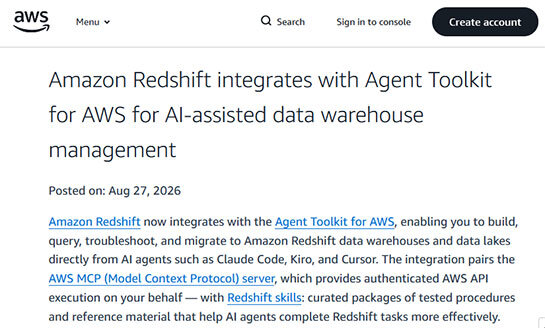
Amazon Web Services (AWS) has integrated its fully managed data warehouse service, Amazon Redshift, with Agent…
Visual Studio Code 1.135 now includes an experimental 'Rubber Duck' feature that lets developers request a sec…
Sonos announced a new app update with generative AI features, a new soundbar called the Beam Ultra, and its se…