
Researchers demonstrated that structuring an AI agent's memory into five organized layers—instead of appending every past observation to the prompt—cuts token costs by 66 to 90 times and reduces inference time by four times compared to traditional growing-transcript agents.
The agent won 6 out of 10 games at the lowest difficulty level of Slay the Spire 2, while frontier models used in AGI-Eval testing failed to win any games, suggesting that explicit memory architecture unlocks better decision-making without ballooning computational expense.
What happened
Researchers built AgenticSTS, an AI agent that organizes memory into five fixed layers instead of appending every past observation to the prompt. On the lowest difficulty (A0), it won 6 out of 10 games when equipped with a skill library; frontier models used in AGI-Eval testing won zero games across five setups.
Why it matters
The typical approach—where prompts grow with every decision until context overflows—makes AI agents slower, more expensive, and less accurate. AgenticSTS uses 66 to 90 times fewer tokens per decision than two publicly available Slay the Spire 2 agents following the traditional growing-transcript pattern, and runs four times faster, with 96 percent of the time gain coming from reduced model latency rather than control software.
What to watch
The team is publishing 298 complete game runs, frozen memory snapshots, and evaluation scripts on Hugging Face so other researchers can test alternative memory architectures. The authors acknowledge they have not yet run a clean comparison of accumulating context within the same codebase, and testing remains limited to one character (Silent) on a single game version.
Ask the AI about this article →
The core problem AgenticSTS addresses is 'context rot'—the growing cost and degradation in model accuracy when prompts swell with every new decision. Traditional agentic frameworks like ReAct and Reflexion append observations and reflections linearly, which works for short tasks but becomes prohibitively expensive for long, complex sequences. Slay the Spire 2 is an ideal test bed because a single playthrough involves hundreds of decisions across card selection, combat, route planning, and item purchases, with high randomness and rules that translate fully into text. Frontier models failed outright, suggesting the game's length and open-endedness expose architectural weaknesses. AgenticSTS's layered approach—separating protocol, state, retrieval, episodic memory, and learned skills—allows researchers to isolate which component drives which behavior. The token-cost comparison is particularly telling: a single call near the end of a game in competitor STS2MCP hit about 527,000 tokens because the entire game history gets resent with every decision, whereas AgenticSTS holds steady around 5,000 tokens. This efficiency gap reflects not just the memory architecture but the broader challenge of managing context in long-horizon tasks. The team's own acknowledgment that they have not yet run a clean ablation study within the same codebase suggests the performance gap versus public agents partly reflects current state-of-the-art differences in routing and decision batching rather than isolated proof of the memory concept. Other research groups (Anthropic, the GAM framework, Mastra) are tackling context efficiency through different mechanisms—automated stripping of outdated results, multi-agent archiving, and condensing conversations into external notes—indicating this is an active frontier as AI systems scale to longer horizons.
For example, today's edition would include:
AI-summarized, only the topics you pick — one digest a day via Email, Slack, or Discord.
Free · takes 30 seconds · unsubscribe anytimeWhat is AIToday? →
Ask AI anything about this article. Q&As are published on this page for other readers too.
Google DeepMind chief Koray Kavukcuoglu said being at the frontier of AI is the only thing that matters to the…

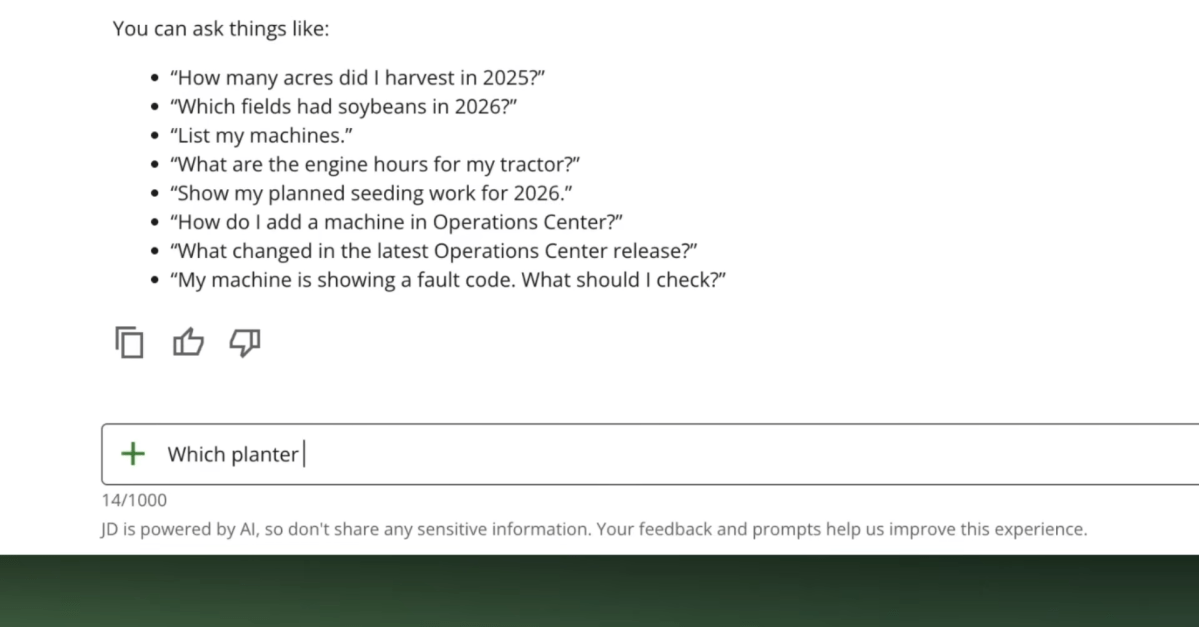
John Deere is testing an AI assistant called “JD” that answers farmers' questions on topics like equipment set…
Google has launched Google Pics, a new suite of creative design tools for Workspace users, built around Gemini…

OpenAI said today that it is integrating ChatGPT Health with Epic's electronic health record (EHR) system, whi…

Google is launching Google Pics, an AI-powered image creation and editing tool that will be part of Google Wor…

Google DeepMind launched agentic video understanding across Gemini 3.7 Flash, 3.6 Flash, and 3.5 Flash-Lite