
What happened
Apple researchers introduced Normalizing Trajectory Models (NTM), which model each reverse step as a conditional normalizing flow with exact likelihood training. On text-to-image benchmarks, NTM matches or outperforms strong image generation baselines in just four sampling steps.
Why it matters
Existing few-step methods rely on distillation, consistency training, or adversarial objectives but sacrifice the likelihood framework, according to the authors. NTM keeps exact trajectory likelihood, which also enables self-distillation, a lightweight denoiser trained on the model's own score function.
WHO IT HITSAI researchers and teams working on generative image models who care about fast sampling with likelihood-based training could see a new option that avoids distillation trade-offs. Product teams evaluating text-to-image generation may find four-step sampling relevant for reducing generation cost, if the approach holds up in practice.
Summaries like this, in your inbox every morning.
Diffusion-based models break generation into many small Gaussian denoising steps, an assumption that weakens when generation is compressed to a few coarse transitions. Existing few-step approaches, such as distillation, consistency training, and adversarial objectives, address this compression but give up the likelihood framework in the process.
NTM keeps that likelihood framework by modeling each reverse step as an expressive conditional normalizing flow with exact likelihood training. Architecturally, it pairs shallow invertible blocks within each step with a deep parallel predictor across the trajectory, so the whole network can be trained end-to-end from scratch or initialized from pretrained flow-matching models.
The exact trajectory likelihood also opens the door to self-distillation, where a lightweight denoiser is trained on the score function induced by the model itself. According to the authors, this produces high-quality samples in four steps, and on text-to-image benchmarks NTM matches or outperforms strong image generation baselines at that step count.
Pick your industry and the AI tools you use, and get news related to your work every day.
Free · 30 seconds with Google · unsubscribe anytimeWhat is AIToday? →
Ask AI anything about this article. The AI reads this article, earlier AIToday articles, and Wikipedia, and cites its sources. Q&As are published on this page for other readers too.
Valuence's "Generative AI User Trends Survey" (June 2024–May 2026) tracked six services including ChatGPT, Gem…
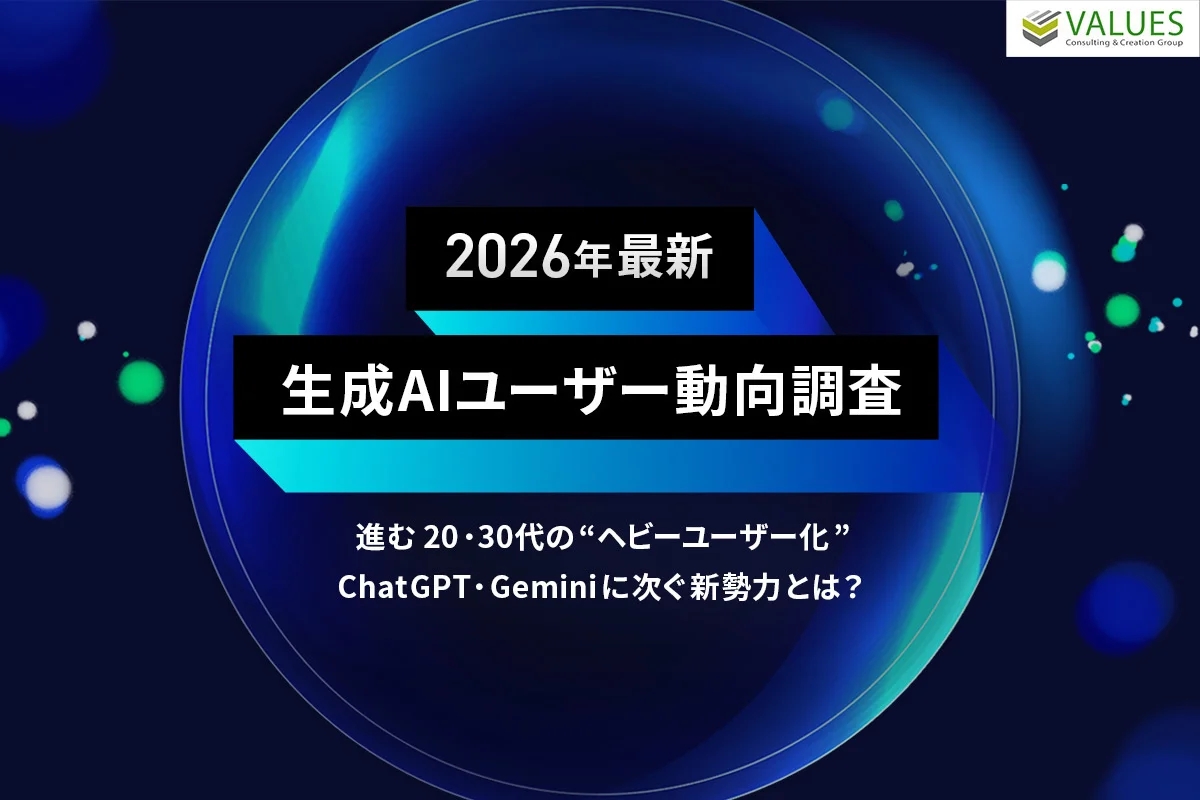
OpenAI began offering a ChatGPT feature that accepts uploaded audio files and can transcribe them, summarize t…

On a self-built 76-question Jev-format set, six trained 3B–9B open-weight models (Imajev-4B, Clef-Flash 9B, Je…

At Gemini at Work, Google introduced the Gemini agent, built into Gemini Enterprise, which gathers information…
Google released Google AI Edge Foresight, a free macOS Labs app that uses EmbeddingGemma 2 and Gemma 4 to tran…

The Association for Human Mathematics said OpenAI's release of 722 AI-generated "mathematical results" is not…