What happened
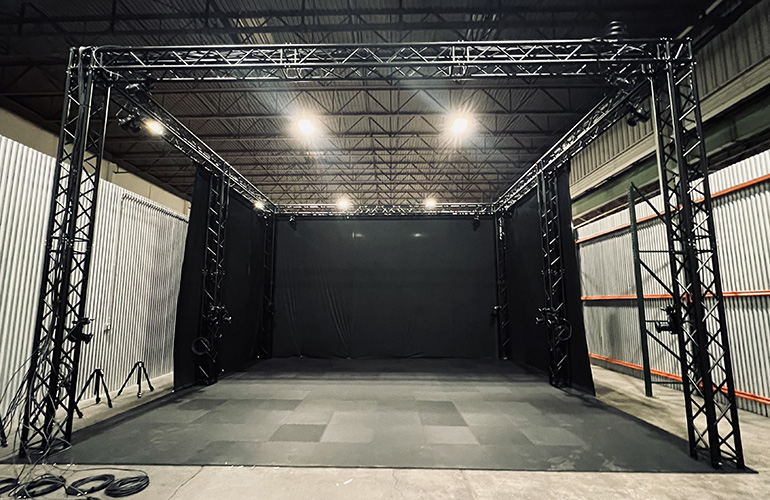
Innodata opened a New Jersey motion-capture lab built with Vicon, whose infrared cameras measure movement at sub-millimeter accuracy, and will sell off-the-shelf or custom robot training data.
Why it matters
The lab gives physical AI teams a way to collect real-world motion data and independently check robot performance, which Innodata says can compress development cycles and get safer robots out sooner.
What to watch
The lab's value hinges on whether customers trust its exocentric measurements over their own noisy telemetry, and on whether Innodata can truly cut the share of data that gets thrown out.
WHO IT HITSRobotics developers building humanoids and industrial robots, along with physical AI teams that need training data or third-party performance validation, are the ones affected.
Summaries like this, in your inbox every morning.
Innodata, a data engineering company founded in 1988, is positioning its new laboratory as a response to a shortage it sees in physical AI. The company describes large language models as having benefited from the vast amount of data on the Internet, while robots have no equivalent corpus of real-world interaction data. Its vice president of robotics and physical AI, Franklin Tanner, framed the problem as earning tokens one deliberate interaction at a time.
The lab's approach differs from inferring 3D motion out of 2D video. Innodata says it captures 3D data directly from human or mechanical bodies, and it has equipped the facility with high-precision, low-latency infrared optical tracking cameras alongside Vicon's technical consulting. Tanner acknowledged real-world data remains the gold standard but is super expensive, and pointed to simulation as a way to seed edge cases, naming NVIDIA's Cosmos environment as becoming really good at real-to-sim translation. He also flagged a gap the lab is working on: training data where humans and robots interact, and instrumenting setups so multiple agents can work together.
The stakes appear to hinge on whether buyers accept the lab's outside-in measurements as ground truth and whether its data can shrink the volume that gets discarded. One internal example cited the practice of throwing out 80% of a million hours of requested egocentric data, leaving 200,000 useful hours. For robot developers weighing their own telemetry against third-party benchmarks, that gap is likely where the lab's value will be tested.
Pick your industry and the AI tools you use, and get news related to your work every day.
Free · 30 seconds with Google · unsubscribe anytimeWhat is AIToday? →
Ask AI anything about this article. The AI reads this article, earlier AIToday articles, and Wikipedia, and cites its sources. Q&As are published on this page for other readers too.
SAIL generates a trajectory with a VLM, runs it in a simulator, scores progress from video, and sends the corr…

The Medical Device and Diagnostic industry is navigating regulatory changes as AI moves from screen to surgica…

Daifuku CEO Tomoaki Terai said at the International Logistics Exhibition 2026 that the company is developing a…

NXHD has begun accepting applications for the second round of its startup co-creation program, targeting AI an…

Matternet unveiled M3 on September 28, 2026 — a three-part system of aircraft, dock and drop-box portal, with…
Skydio announced the F10 Lightrunner on September 24, 2026 at its Ascend conference