Portugal's government announced AMÁLIA (Assistente Multimodal Automático de Linguagem com Inteligência Artificial), the country's first large language model (AI trained on massive text data to understand and generate language) optimized for Portuguese. Development began November 11, 2024, with a €5.5 million investment and will deliver three versions: a beta version by Q1 2025, a base version by Q3 2025, and a multimodal version (handling text, images, and video) by Q2 2026.
Unlike most commercial AI models that perform poorly outside English, AMÁLIA distinguishes between Portuguese language variants, understands Portuguese culture and history, and keeps sensitive data stored locally—meaning government agencies and hospitals won't need to share private patient or citizen records with foreign tech companies to use the system.
Portuguese businesses, researchers, schools, and public services can use AMÁLIA for free, in open-source form. This gives companies in education, healthcare, and public administration a tool they can customize for their own needs without licensing fees or vendor lock-in—similar to how Spain built ALIA for Spanish, Catalan, Galician, and Basque.
The first beta version arrives in Q1 2025 as a text-only chatbot trained on data from Arquivo.pt (Portugal's web archive). All code and training data will be publicly released, letting Portuguese developers build on it rather than relying solely on OpenAI's or Google's models.
Summaries like this, in your inbox every morning.
Pick your industry and the AI tools you use, and get news related to your work every day.
Free · 30 seconds with Google · unsubscribe anytimeWhat is AIToday? →
Ask AI anything about this article. The AI reads this article, earlier AIToday articles, and Wikipedia, and cites its sources. Q&As are published on this page for other readers too.
Cammarata reinterprets InceptionV1's cat-car neuron as a V-shape detector, not two unrelated concepts

Google Deepmind's Gemini 4 Argon scored 97.5 percent on ARC-AGI-3 at a cost of $4,800, second only to GPT-6 As…
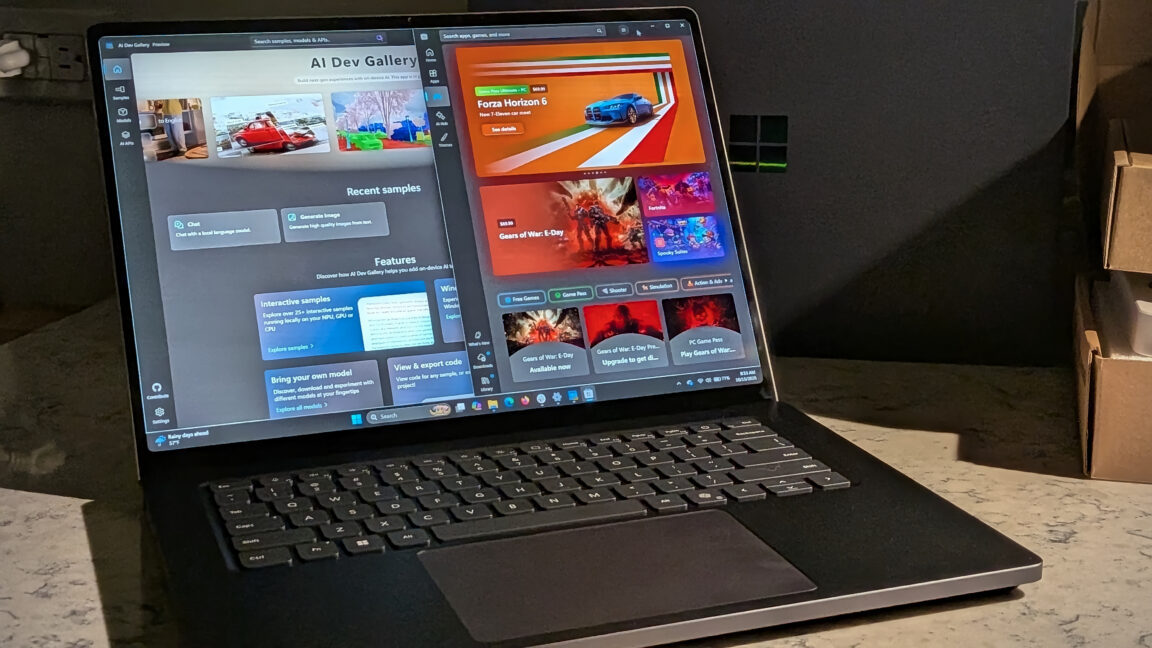
Microsoft's Surface Laptop Ultra, using Nvidia's RTX Spark platform, starts at $2,599 (up to $5,899)
Meta's new commercial terms, effective October 30th, appear to let it crawl and train AI on content from websi…
Vercel data published Thursday shows TypeSafe AI's Jev, a lightweight decision model for choosing among predet…

Reflection AI introduced Beam, an open-weight model for agentic coding and long-horizon tasks, with 501 billio…