
What happened
A developer built a GitHub Actions workflow where Claude Code reviews Renovate's major and minor pull requests, assigning verdicts approve, changes_required, or human_review, then auto-merges approved ones if tests pass.
Why it matters
It targets minor updates for auto-merge while major updates still require human sign-off, easing the PR backlog without handing AI full control.
WHO IT HITSEngineering teams using Renovate face a growing backlog of minor and major dependency PRs; this workflow lets them delegate review to an AI agent while keeping major-version merges manual.
Summaries like this, in your inbox every morning.
The workflow reflects a practical response to a common pain point: while tools like Dependabot and Renovate already automate creating update pull requests, the review step remains manual. Reading release notes to check for breaking changes, deprecated APIs, and type or config impacts can eat minutes per PR, and those minutes add up as the queue grows. The author splits updates by type: patches continue to auto-merge after CI passes, minor updates go through AI review with possible auto-merge, and major updates are reviewed but left for a person to merge. Packages like Rails that can include de facto breaking changes in minor releases are handled the same as major updates. To keep AI use efficient, the workflow computes a SHA-256 fingerprint from only the added and removed lines of the diff. If a rebase leaves the change content the same, the previous verdict is reused rather than triggering a fresh review. The design also separates the AI review job from write permissions, so even if malicious instructions are hidden in release notes or node_modules, the agent cannot post comments or commit. The prompt explicitly warns against following instructions found in those files, a defense against prompt injection. Auto-merge is off by default, letting teams compare AI verdicts with their own judgment before enabling it.
Pick your industry and the AI tools you use, and get news related to your work every day.
Free · 30 seconds with Google · unsubscribe anytimeWhat is AIToday? →
Ask AI anything about this article. The AI reads this article, earlier AIToday articles, and Wikipedia, and cites its sources. Q&As are published on this page for other readers too.
Valuence's "Generative AI User Trends Survey" (June 2024–May 2026) tracked six services including ChatGPT, Gem…
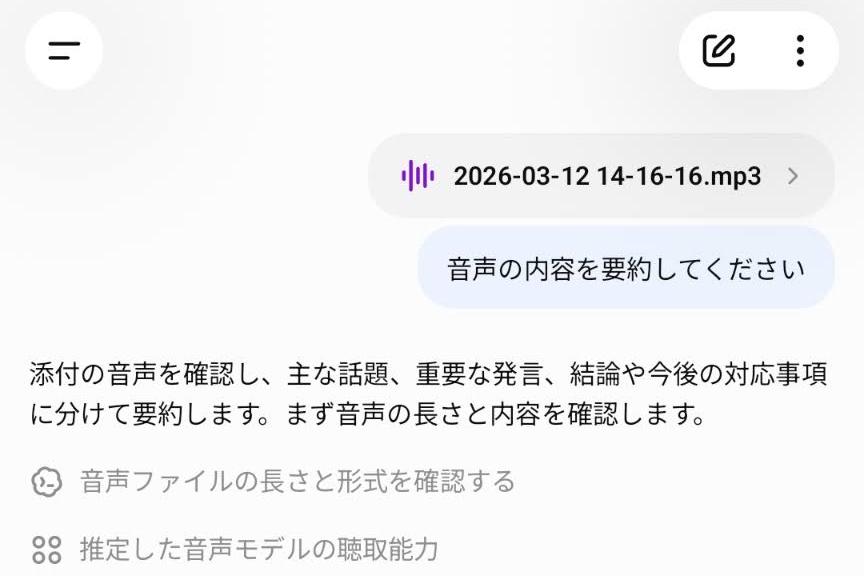
OpenAI began offering a ChatGPT feature that accepts uploaded audio files and can transcribe them, summarize t…
On a self-built 76-question Jev-format set, six trained 3B–9B open-weight models (Imajev-4B, Clef-Flash 9B, Je…

At Gemini at Work, Google introduced the Gemini agent, built into Gemini Enterprise, which gathers information…
Google released Google AI Edge Foresight, a free macOS Labs app that uses EmbeddingGemma 2 and Gemma 4 to tran…
The Association for Human Mathematics said OpenAI's release of 722 AI-generated "mathematical results" is not…