What happened
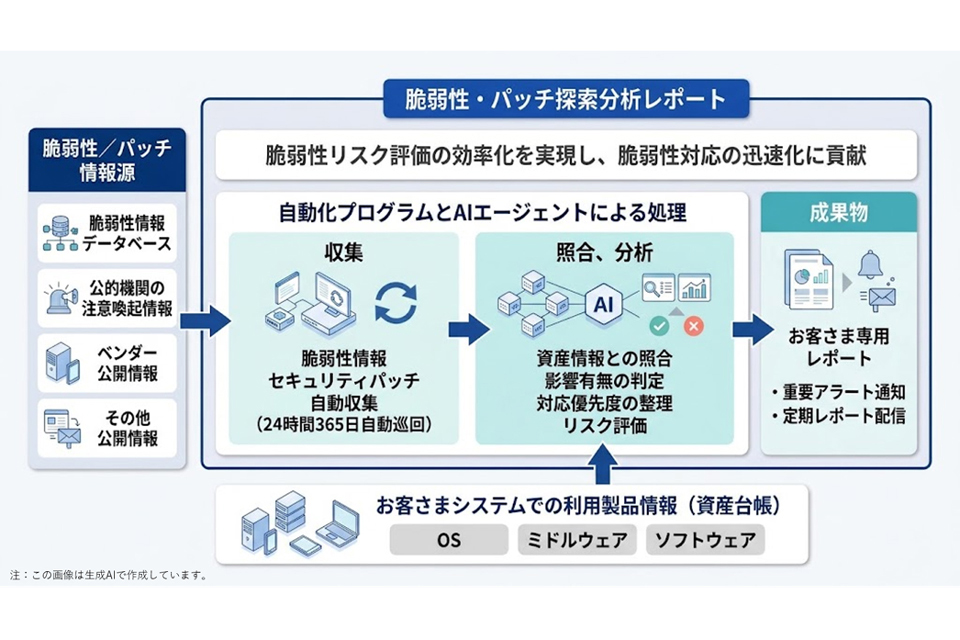
Hitachi began offering its "Vulnerability/Patch Discovery & Analysis Report Service" on September 28, and JPX adopted it early, testing it from July to September, the body says.
Why it matters
JPX's trial found automated programs could cut vulnerability-intelligence collection from about 2.5 hours a day to roughly 0.5 hours, and confirm the data was good enough for work use, suggesting less manual effort.
What to watch
Hitachi says it will expand the service to financial institutions and then to power, transport, and telecom infrastructure. The test is whether that broader rollout follows the same quality results.
WHO IT HITSEnterprise security and vulnerability-management teams, especially at financial institutions and critical-infrastructure operators, may see less manual intelligence-gathering work if the service scales as described.
Summaries like this, in your inbox every morning.
Hitachi positions the new service inside "HMAX Cyber", an operational-resilience lineup aimed at protecting companies and social infrastructure from increasingly sophisticated cyberattacks. Within that lineup, the vulnerability and patch discovery service sits in the "Govern & Identify" category, which is meant to help organizations foresee and prepare for potential risks. The pitch is that a company can grasp cyber risks earlier and act on them by combining vulnerability intelligence with its own system analysis.
The mechanics the body describes are straightforward. Automated programs patrol vulnerability databases, software vendors' official sites, and security advisories around the clock, every day of the year, gathering newly published vulnerability and patch information. AI agents then help match that information to each organization's system configuration, flag vulnerabilities and patches that affect its own systems, and organize the material needed to assess severity and the likelihood of exploitation.
JPX's early adoption and July-to-September validation are the concrete evidence offered so far. The reported reduction in collection time, and the confirmation that the gathered information was usable, is what the service's appeal rests on for now. Whether the same results hold for the financial institutions Hitachi says it will target next, and then for power, transport, and telecommunications operators, is the open question — especially since the value case rests heavily on automating work that the body says previously depended on the experience and knowledge of specialized personnel.
For example, today's edition would include:
AI-summarized, only the topics you pick: one digest a day via Email, LINE, or Slack.
Free · 30 seconds with Google · unsubscribe anytimeWhat is AIToday? →
Ask AI anything about this article. The AI reads this article, earlier AIToday articles, and Wikipedia, and cites its sources. Q&As are published on this page for other readers too.
A security researcher identified a zero-day vulnerability in the macOS version of Meta's Muse AI agent
Adobe announced in September 2026 it is expanding its connector for Google Gemini and its plugin for Claude, s…

Elon Musk reposted Gizmodo senior editor Ray Wong's criticism that Meta's Muse AI agent allegedly gave a Faceb…
At the WTR Insights Conference, CEO Jay Chandan said Gorilla completed the first of four Yotta India phases —…

A buyer named Usman arrived around 9:15 for an MX Keys Mini pickup, waited and messaged, then left angry at 9:…

Google Japan said September marks 25 years since its Japanese unit began, and it has opened a special site plu…