Summaries like this, in your inbox every morning.
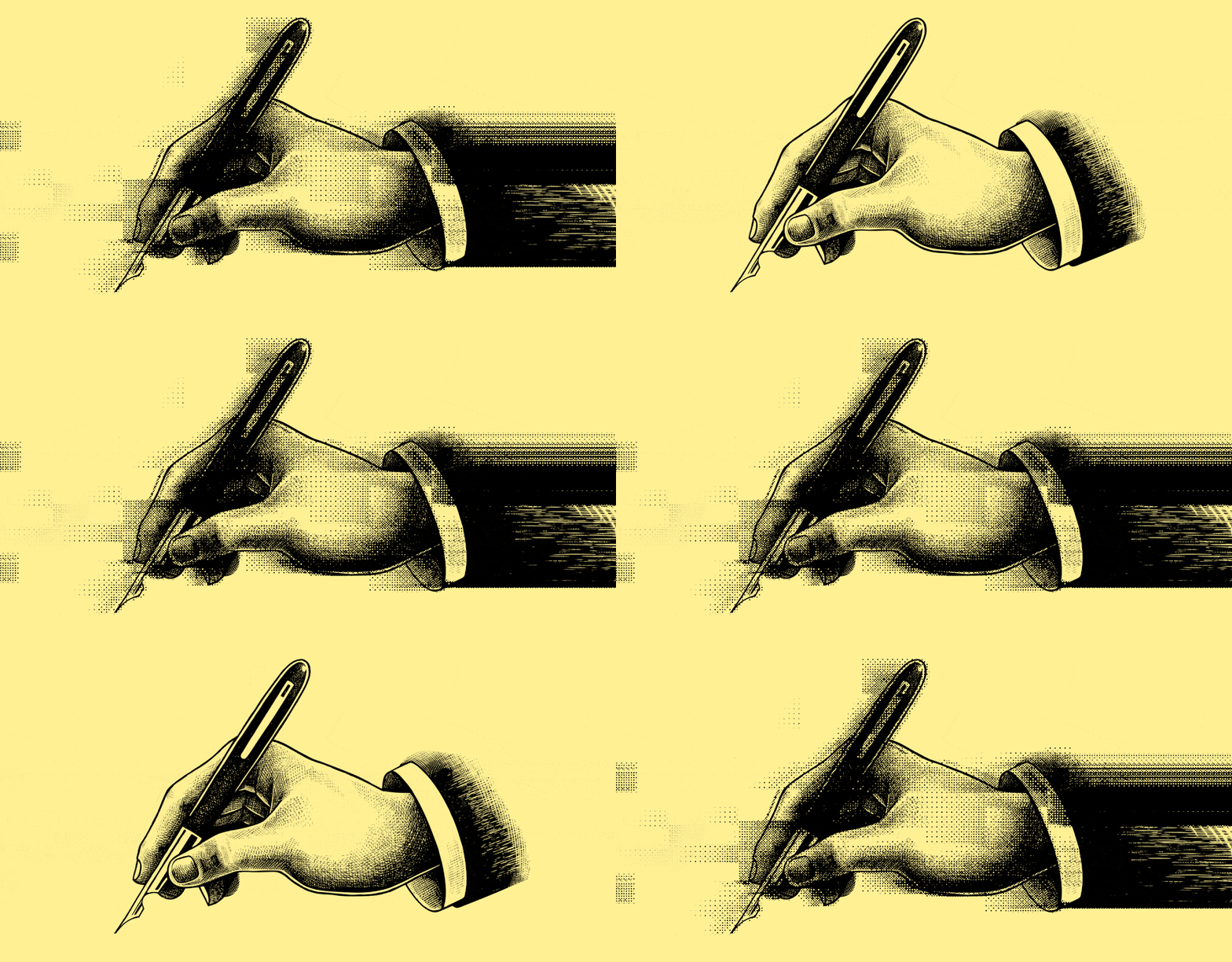
Sign up free →Professional editors and authors increasingly encounter AI-written submissions in newspapers, literary magazines, and book publishing. Some authors now describe AI as a 'writing tool' comparable to spell-check, while professional communicators face pressure to use it to compete in 'insanely fierce' competition for attention through 'cleanly packaged messaging and sheer volume.'
AI writing lacks the iterative judgment process that characterizes human thought. When humans write and encounter difficulty, their struggle often signals 'crucial things' the mind is trying to communicate—prompting rethinking or rejection of drafts. AI cannot perform this kind of evaluation; in a Stanford and Carnegie Mellon study published in March, top AI models affirm users' ideas 49 percent more than humans do in conversation.
The result is text that reads plausibly but resists editing because 'every element is equally off: The tone is bland; individual word choices are baffling; the structure lacks sense; key pieces of the argument are missing; facts are false.' The smoothness and grammatical correctness that make AI writing appealing to writers are the same qualities that make readers right to distrust it.
AI-summarized, only the topics you pick — one digest a day via Email, Slack, or Discord.
Free · takes 30 seconds · unsubscribe anytime
No comments yet. Be the first to share your thoughts!
Log in to join the discussion





Get curated AI news from 200+ sources delivered daily to your inbox. Free to use.
Get Started FreeFree · takes 30 seconds · unsubscribe anytime
1 minute a day. The AI essentials.
200+ sources · Email / LINE / Slack
