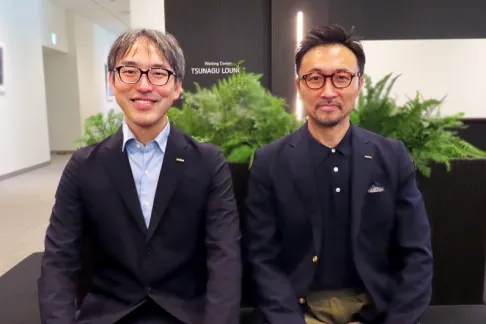
What happened
Fujifilm, in joint research with Osaka University and others, discovered a new inhibitor aimed at a protein involved in bacterial pathogenicity and drug resistance, generated through its AI drug-discovery support service "drug2drugs."
Why it matters
The achievement indicates that starting from known compounds and using the AI service can lead to highly active new inhibitors, suggesting a path from existing compounds to new drug candidates.
WHO IT HITSPharmaceutical R&D teams at drugmakers using AI drug-discovery platforms may see this as evidence that established compound libraries can be mined for new antibacterial candidates; the finding hinges on whether such inhibitors can be further developed.
Summaries like this, in your inbox every morning.
Fujifilm's discovery came through joint research with Osaka University and others, and it centered on a protein tied to how pathogenic bacteria cause disease and resist drugs. The starting point was existing known compounds, and the AI drug-discovery support service "drug2drugs" was used to produce the new inhibitor. This places the work at the intersection of Fujifilm's AI service and antibacterial drug discovery, where finding new hits is difficult.
The body states that the outcome was highly active and was achieved through drug2drugs, which suggests the service can contribute to identifying candidate compounds from known chemical matter. That said, the article does not describe later stages such as optimization or testing. The significance for drugmakers and research partners is therefore likely to depend on whether this discovery can be translated into further development, an inference the body does not confirm.
Pick your industry and the AI tools you use, and get news related to your work every day.
Free · 30 seconds with Google · unsubscribe anytimeWhat is AIToday? →
Ask AI anything about this article. The AI reads this article, earlier AIToday articles, and Wikipedia, and cites its sources. Q&As are published on this page for other readers too.
Google DeepMind unveiled SynthID Bio, which slightly steers amino acid choices or atomic coordinates so AI-des…
At the UN General Assembly (UNGA), Mastercard said AI can support inclusive growth and cited its work with gov…

Seeking Alpha published an analysis of KLA Corporation (NASDAQ:KLAC) arguing that the company has strong AI ex…
KLA shares closed at $196.53, up 3.89% in a day and 11.96% over 30 days, after a 26.17% drop over 90 days
Amazon is blocking Meta's Muse AI agent from shopping on its site, serving users a warning that 'unauthorized…
Google announced Gemini 4 Argon, rolling out to trusted cyber defenders via its Fairwind Program, at $2 per mi…