TSMC and ASML are the two most critical stocks in the semiconductor value chain powering the AI boom—TSMC manufactures the advanced chips while ASML supplies the machines to make them. Despite both holding dominant positions, TSMC delivered stronger growth in Q2 (34% revenue growth and 910 basis point margin expansion) and trades at a cheaper valuation (19× forward P/E versus ASML's 30.5×), making it the preferred choice for long-term investors.
Summaries like this, in your inbox every morning.
Sign up free →What happened
TSMC and ASML dominate the semiconductor value chain—TSMC manufactures advanced chips for AI, while ASML is the sole maker of the extreme ultraviolet lithography machines that produce them. In Q2, TSMC's revenue jumped 34% and gross margins expanded 910 basis points to 67.6%, while ASML's revenue grew 21% with gross margins up 30 basis points to 54%.
Why it matters
Both companies hold near-monopolies in their segments and benefit from surging AI demand, but TSMC trades at a forward P/E of 19 times 2027 estimates versus ASML's 30.5 times. TSMC's stronger revenue growth and margin expansion, combined with lower valuation, make it the more attractive long-term buy for investors betting on the AI chip ecosystem.
What to watch
ASML plans to increase capacity by 30% this year and 30% in 2027, with potential for another 30% bump in 2028, signaling confidence in sustained demand for its lithography machines.
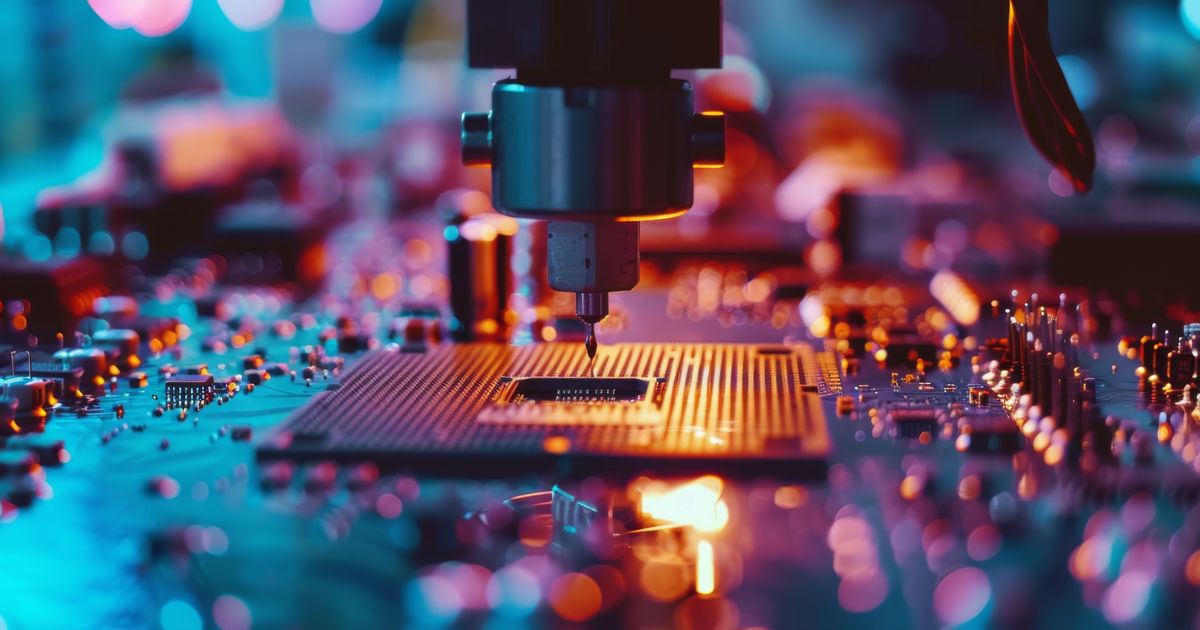
TSMC and ASML are the two linchpins of the semiconductor value chain underpinning the AI revolution. TSMC manufactures advanced logic chips—including graphics processing units (GPUs), central processing units (CPUs), and application-specific integrated circuits (ASICs)—for companies like Nvidia and AMD. ASML manufactures the extreme ultraviolet lithography (EUV) machines that make those advanced chips possible; it is the only company in the world that has developed this technology, making it arguably the most critical technology provider on the planet. ASML's EUV machines are also used to produce high-bandwidth memory (HBM), a specialized form of dynamic random access memory (DRAM) that is packaged alongside GPUs and other AI chips to optimize performance.
TSMC's competitive edge rests on its manufacturing excellence. The company is the only manufacturer to have achieved high yields—producing chips with few defects—at scale. Rivals Samsung and Intel have struggled with yields, a challenge so severe that Nvidia CEO Jensen Huang warned Elon Musk that his TerraFab semiconductor manufacturing project would be very difficult to execute. Huang has publicly celebrated TSMC's importance, calling the company "one of the greatest companies in the history of humanity" and adding that "anybody who wants to buy TSMC stock is a very smart person." TSMC's technological lead has given it strong pricing power, which has lifted its gross margins and boosted profitability. The company benefits from manufacturing most types of advanced logic chips regardless of which technology wins market share, from Nvidia and AMD GPUs to AI ASICs and CPUs.
In the second quarter, the growth disparity between the two companies became stark. TSMC's revenue jumped 34% while its gross margins ballooned by 910 basis points to 67.6%, reflecting both strong demand and pricing power. ASML's revenue grew a solid 21%, but its gross margins ticked up only 30 basis points to 54%—a much more modest margin expansion. ASML is ramping production aggressively; the company plans to increase capacity by 30% this year and 30% again in 2027, with potential for another 30% increase in 2028, signaling confidence in sustained high demand for its machines. Despite this growth, ASML trades at a forward price-to-earnings (P/E) ratio of 30.5 times 2027 analyst estimates, while TSMC trades at only 19 times 2027 estimates. The analysis suggests TSMC's lower valuation, combined with its faster revenue growth and stronger margin expansion, makes it the more attractive investment, even though both companies hold dominant positions within the semiconductor ecosystem.
TSMC and ASML occupy the two most defensible positions in the semiconductor ecosystem—one at the manufacturing layer, the other at the equipment layer. Both companies have near-monopolies: TSMC's dominance stems from its superior yield performance and scale, while ASML's monopoly is technological; without EUV, the entire advanced chip industry cannot function. The analyst commentary reflects a clear preference for TSMC despite ASML's vital role, grounded in two concrete metrics: growth disparity and valuation. In Q2, TSMC's 34% revenue growth and 910 basis point margin expansion significantly outpaced ASML's 21% revenue growth and 30 basis point margin gain. The valuation gap—TSMC at 19× forward P/E versus ASML at 30.5×—suggests the market is pricing ASML's monopoly status more richly, even though TSMC is delivering faster growth and stronger profitability gains. Both companies are seeing record demand for AI chips and the equipment to make them, but the data indicates TSMC is capturing more value from that boom.
AI-summarized, only the topics you pick — one digest a day via Email, Slack, or Discord.
Free · takes 30 seconds · unsubscribe anytime
No comments yet. Be the first to share your thoughts!
Log in to join the discussion

Get curated AI news from 200+ sources delivered daily to your inbox. Free to use.
Get Started FreeFree · takes 30 seconds · unsubscribe anytime
1 minute a day. The AI essentials.
200+ sources · Email / LINE / Slack
