What happened
The llm-gemini plugin released version 0.33, adding support for Gemini 3.7 Flash and three other Gemini models (gemini-3.6-flash, gemini-3.5-flash-lite, plus embedding models gemini-embedding-2 and gemini-embedding-001), alongside compatibility with LLM 0.32.
Why it matters
Developers working with the LLM tool (a command-line interface for AI models) can now access Google's latest Flash reasoning model and view reasoning traces—the step-by-step logic the model uses to reach conclusions. The plugin supports server-side tools, letting developers execute code directly within model calls (for example, running Python to compute a factorial).
What to watch
The 3.7 Flash release removes the "minimal" thinking-effort option that existed in 3.6 Flash, leaving only high and medium. Developers should also be aware of browser compatibility quirks: Safari renders SVG images correctly while Firefox and Chrome render them differently due to differing tolerances for empty SVG filter elements.
Summaries like this, in your inbox every morning.
The llm-gemini 0.33 release marks a maintenance update to keep the plugin current with Google's Gemini model lineup. The addition of Gemini 3.7 Flash—Google's latest reasoning-capable model in the Flash family—reflects the ongoing evolution of the Gemini model family and gives developers access to the most recent inference capabilities via the command-line LLM tool.
Compatibility with LLM 0.32 is a key enabler: it unlocks reasoning-trace visibility and server-side tool execution. Reasoning traces are significant for developers who want to understand or debug how the model arrived at a conclusion, while server-side tools allow code execution (such as Python calculations) to happen within the model's context, reducing round-trips and enabling more complex workflows from the command line.
One minor friction point is the removal of the "minimal" thinking-effort option in 3.7 Flash, which slightly narrows the tuning options compared to 3.6 Flash and may affect workflows that relied on minimal-cost inference. Additionally, the SVG rendering inconsistency across browsers (Safari tolerating empty filter elements while Firefox and Chrome do not) suggests that developers generating SVG output via Gemini should test across browsers to catch display differences.
Pick your industry and the AI tools you use, and get news related to your work every day.
Free · 30 seconds with Google · unsubscribe anytimeWhat is AIToday? →
Ask AI anything about this article. The AI reads this article, earlier AIToday articles, and Wikipedia, and cites its sources. Q&As are published on this page for other readers too.
Cammarata reinterprets InceptionV1's cat-car neuron as a V-shape detector, not two unrelated concepts

Google Deepmind's Gemini 4 Argon scored 97.5 percent on ARC-AGI-3 at a cost of $4,800, second only to GPT-6 As…
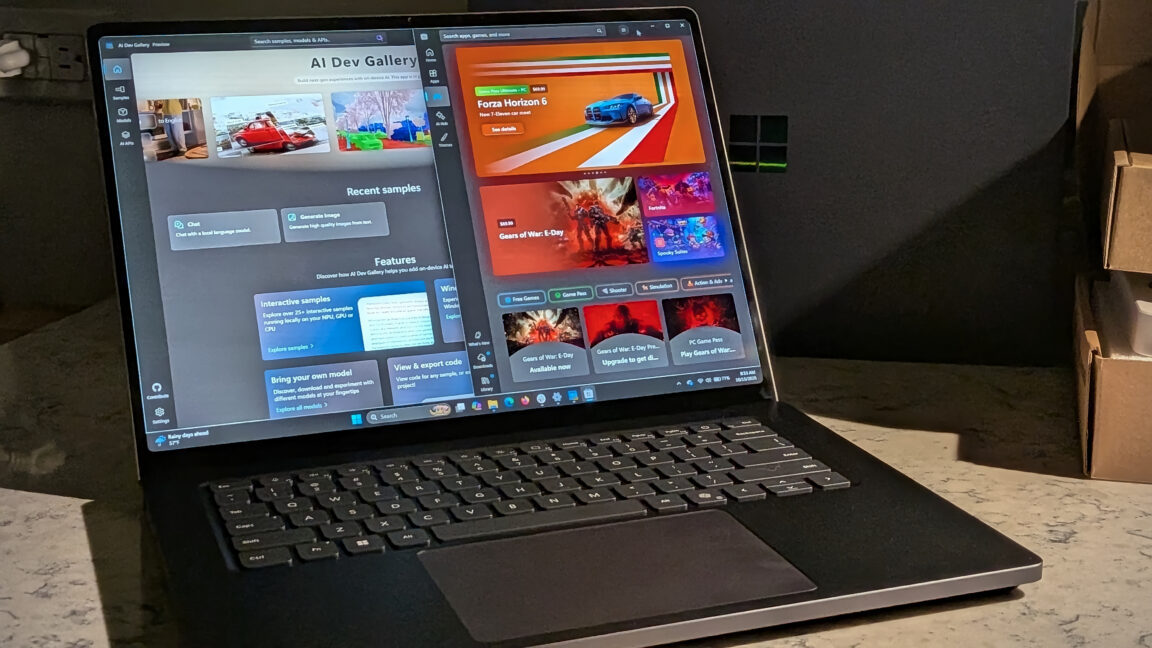
Microsoft's Surface Laptop Ultra, using Nvidia's RTX Spark platform, starts at $2,599 (up to $5,899)
Meta's new commercial terms, effective October 30th, appear to let it crawl and train AI on content from websi…
Vercel data published Thursday shows TypeSafe AI's Jev, a lightweight decision model for choosing among predet…
Reflection AI introduced Beam, an open-weight model for agentic coding and long-horizon tasks, with 501 billio…