What happened
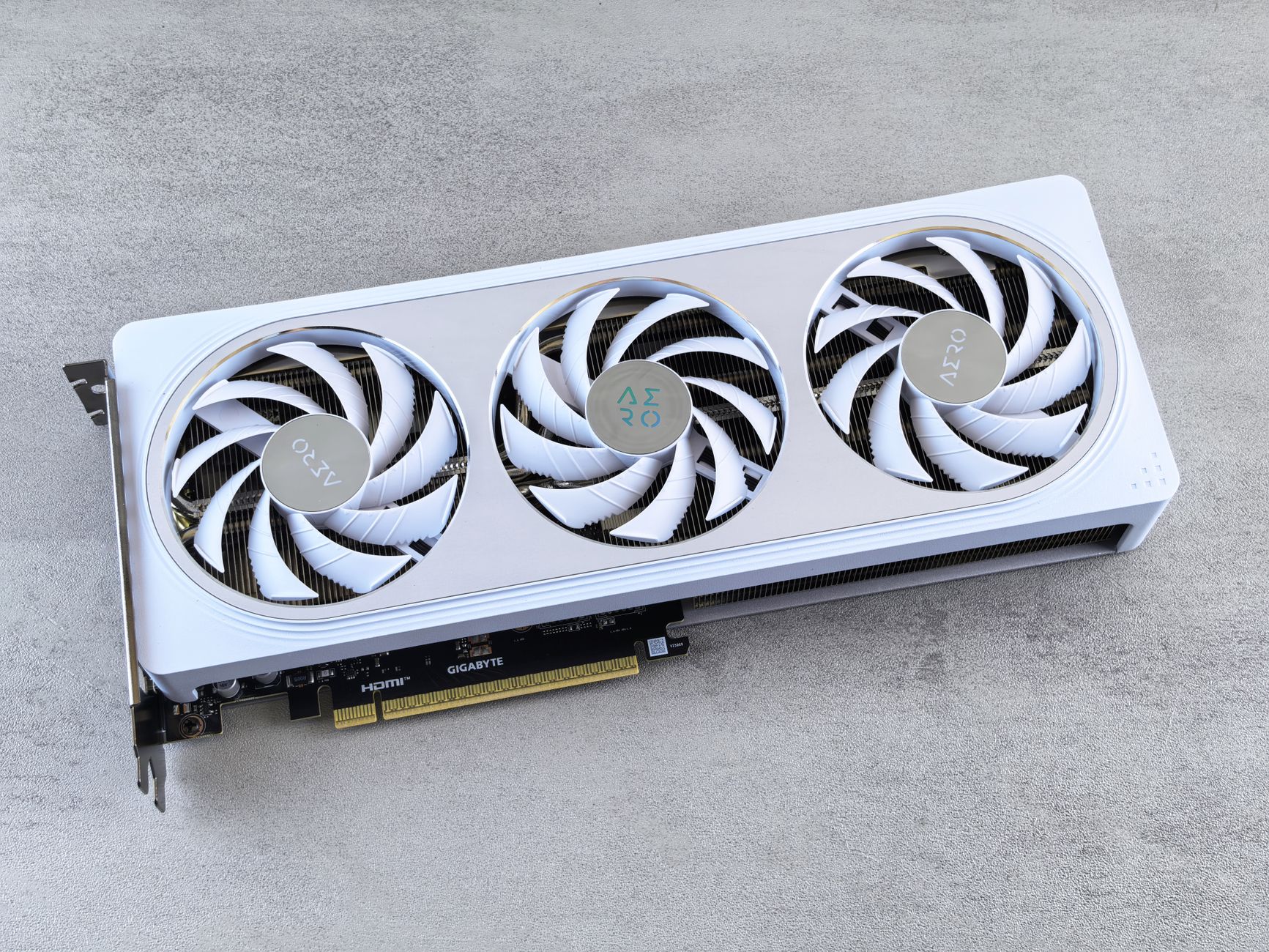
Baidu open-sourced Unlimited-OCR-2, a 3B vision-language OCR model, and a developer's lumichy-unlimited-OCR workbench ran it on an RTX 5060 Ti 16GB with a 0.401-second time to first token and 40.32 seconds of total inference.
Why it matters
The workbench keeps document parsing entirely on-premise, so sensitive contracts, medical records, and legal files never leave the machine, and the model's SR-SWA attention design holds VRAM roughly constant even across hundreds of pages.
Summaries like this, every morning.
The pitch is aimed at teams already paying per-page fees or sending files to cloud OCR services. The developer contrasts Unlimited-OCR-2 with Tesseract, which is free but breaks down on multi-column layouts, formulas, and merged-cell tables, and with cloud OCR APIs that charge per page and take data off-site. The workbench, distributed on GitHub as lumichy/lumichy-unlimited-OCR, wraps the model in FastAPI with a WebSocket feed that streams GPU utilization, VRAM, CPU load, and temperature every 1.2 seconds, plus PyMuPDF for on-demand page rasterization and four output views for rendered, Markdown, raw-tag, and log output.
The core architectural claim is that Unlimited-OCR-2 avoids the memory explosion that crashes conventional vision-language models on long PDFs. Its SR-SWA attention compresses the necessary reference region into a fixed-length sparse working reference, and Unlimited-Horizon Decoding carries the required key-value cache across page boundaries while purging local cache that is no longer needed, so multi-page tables and sentences that continue across pages stay coherent.
The demo is honest about limits. Native BF16 inference kept VRAM at a 15.26 GB peak of 15.93 GB, or 95.8%, which the developer describes as uncomfortably close to the ceiling, and the author notes that 8GB to 12GB GPUs would likely need future INT4/INT8 quantization or a vLLM backend. Throughput of 30 to 40 seconds per page rules out high-frequency real-time use, pointing instead to overnight batch processing or one-off deep analysis of a paper or book.
Pick your industry and the AI tools you use, and get news related to your work every day.
Free · 30 seconds with Google · unsubscribe anytimeWhat is AIToday? →
Ask AI anything about this article. The AI reads this article, earlier AIToday articles, and Wikipedia, and cites its sources. Q&As are published on this page for other readers too.
Arca head of AI Aman Singh described how the firm uses a custom harness and persistent memory to run agentic w…
Anthropic had Claude generate fine-tuning datasets of up to 5,000 examples aimed at making a smaller model mis…

Lyra raised neuron 8949 in layer 14 and lowered neuron 7956 in layer 13 of open-weight Qwen3.5-4B, which then…

The authors say they dropped several planned entry-level marketing hires at around $60,000 each, hired one per…
In a Fortune commentary, EqualAI CEO Miriam Vogel cited investor Katie Jacobs Stanton's Instinct assistant ema…

Exin Therapeutics CEO Gabriel Ocana Santero connected an AI agent to a custom surgical rig; Claude Opus 5.5 re…