AIToday
Large Language ModelsAI Business & IndustryDIGITIMES AsiaPublished: Aug 31, 2026, 19:01 JST1 min read

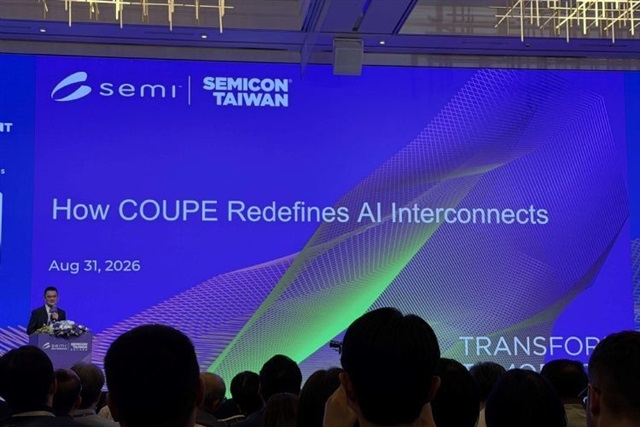
TSMC unveils two COUPE bandwidth paths for AI I/O

TSMC unveils two COUPE bandwidth paths for AI I/O

Key takeaway

  • TSMC is advancing its silicon photonics roadmap with two new bandwidth paths for COUPE.

  • This targets the AI I/O wall, where compute growth outpaces chip-to-chip data movement.

  • The move highlights deeper heterogeneous integration for future AI systems.

3 Key Points

  1. What happened

    TSMC unveiled two bandwidth-scaling paths for its next-generation COUPE platform, aimed at addressing the widening gap between AI compute growth and chip-to-chip data movement.

  2. Why it matters

    The silicon photonics (SiPh) roadmap is sharpened to tackle the AI I/O wall, as compute demand outpaces data transfer capabilities, which is critical for scaling AI systems.

  3. What to watch

    The broader role for heterogeneous integration in TSMC's SiPh strategy may signal more advanced packaging and co-packaged optics solutions in future nodes.

Ask the AI about this article →

Context & Analysis

TSMC's silicon photonics roadmap expansion comes as AI compute demands continue to grow faster than the ability to move data between chips. This I/O wall threatens to bottleneck overall system performance, so TSMC is addressing it with two bandwidth-scaling paths for COUPE. These paths likely involve different optical interconnect approaches, which, combined with deeper heterogeneous integration, could enable more efficient AI accelerators. The focus on heterogeneous integration suggests that future TSMC packaging will more tightly couple photonics with logic, potentially reducing energy and latency in AI clusters. This development is part of TSMC's broader strategy to maintain leadership in advanced packaging and system-level performance.

FAQ

What is the COUPE platform?
COUPE is TSMC's next-generation platform for silicon photonics, with two bandwidth-scaling paths to address AI compute and chip-to-chip data movement.
Why is TSMC focusing on silicon photonics now?
Because AI compute growth is outpacing chip-to-chip data movement, creating an I/O bottleneck that silicon photonics aims to solve.
DIGITIMES AsiaRead Original Article

Get the latest Large Language Models news every morning

For example, today's edition would include:

  • Nvidia revives Rubin CPX chip with major redesignYahoo Finance AI · 27m ago
  • AI advice followed by 79%, but well-being unchangedITmedia AI+ · 3h ago
  • Enterprises face agent governance gapSiliconANGLE AI · 6h ago

AI-summarized, only the topics you pick — one digest a day via Email, Slack, or Discord.

Free · takes 30 seconds · unsubscribe anytimeWhat is AIToday? →

Ask AI

Ask AI anything about this article. Q&As are published on this page for other readers too.

Related Articles

Next articleSK Hynix eyes Japan chip plant for AI demand