
What happened
A new study found that 62% of organizations faced unexpected AI expenses that materially altered business decisions over the past year, with 40% requiring board-level escalation and 25% delaying or canceling AI initiatives. This has triggered rapid adoption of AI model routers—software that automatically selects the lowest-cost, fastest, or most appropriate AI model for each task—with OpenRouter reportedly in acquisition talks with Stripe at a valuation of up to $10 billion, and startups like Not Diamond, LiteLLM, Cursor, Ramp, and even Meta and Runway developing their own solutions.
Why it matters
AI coding agents like Claude Code can run for hours, accumulating millions of tokens and thousands of dollars in inference costs without visible budgeting. Companies report intelligent model routing can reduce inference costs by double-digit percentages, up to 30% in some cases. Beyond cost control, routers promise to address trust, compliance, governance, and resilience—allowing enterprises to avoid overdependence on a single AI provider and switch models if access restrictions emerge, as happened recently with Anthropic's Fable model.
What to watch
OpenRouter co-founder Chris Clark cautions that building a production-grade routing platform is far more complex than it appears, requiring deep partnerships with model providers, constant monitoring of thousands of endpoints, and rapid response to outages. Many companies launching routing solutions in recent weeks will discover the problem is harder than anticipated, and OpenRouter's early 2023 launch and vendor partnerships may give it a structural advantage.
Summaries like this, in your inbox every morning.
The emergence of AI model routers reflects a painful shift in enterprise AI economics. Throughout 2024 and 2025, as companies rushed to adopt AI under C-suite pressure, they typically deployed the most powerful frontier models for every task, assuming "smartness" solved all problems. This "maximalist attitude," in OpenRouter co-founder Chris Clark's phrase, left organizations with no budgets in place and no cost controls. The arrival of sophisticated AI coding agents—which can operate autonomously for hours, repeatedly calling models and accumulating tokens invisibly—exposed this gap sharply: developers returning from lunch discovered thousands of dollars in charges.
The study data reveals the shock was severe enough to force organizational action. Beyond the 62% who faced material business impact, 40% escalated to the board level and a quarter canceled initiatives outright. This is not abstract cost anxiety; it is budget enforcement and strategic recalibration. The demand for routers is therefore rooted in a specific technical reality: not every task requires the newest or most expensive model. Tasks can be "intelligence-saturated," meaning older, cheaper models perform identically. Routing systems exploit this gap by predicting which model and reasoning level will deliver the required outcome at lowest cost—and by extension, at fastest speed.
Beyond cost control, a secondary motive is emerging: vendor resilience and governance. Recent restrictions on Anthropic's Fable model prompted enterprises to reconsider single-provider dependence, and routers offer a hedge. Salesforce and others also envision routers eventually enforcing compliance, access controls, and measurable business outcomes—shifting the router from a cost-optimization tool to a governance layer. However, the technical bar is higher than it appears. OpenRouter's Clark emphasizes that production-grade routing requires deep partnerships with model providers, continuous monitoring of thousands of endpoints, rapid outage response, and validation of data policies and infrastructure. This explains why OpenRouter, having launched in 2023 with established relationships, may retain structural advantage even as dozens of competitors enter the space in recent weeks.
For example, today's edition would include:
AI-summarized, only the topics you pick: one digest a day via Email, LINE, or Slack.
Free · 30 seconds with Google · unsubscribe anytimeWhat is AIToday? →
Ask AI anything about this article. The AI reads this article, earlier AIToday articles, and Wikipedia, and cites its sources. Q&As are published on this page for other readers too.
AWS made Amazon CloudWatch Omni generally available last week, with 17 built-in evaluators that score coherenc…

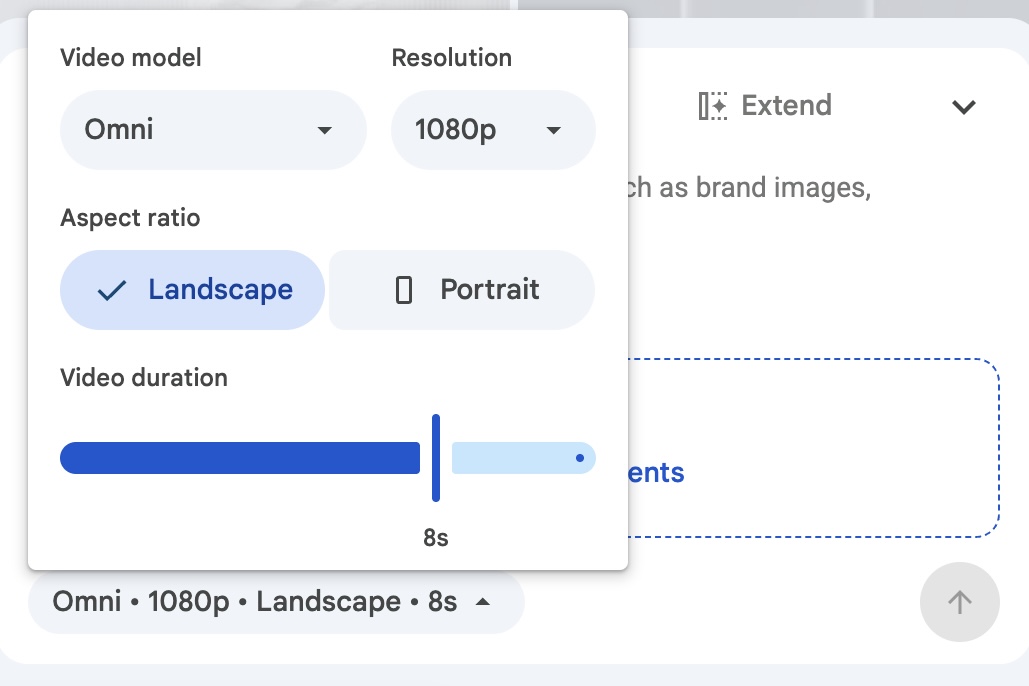
Google said Gemini Omni 1.1 Flash is now directly available in Google Vids, letting users extend scenes while…
In a September 2025 paper titled "Why Language Models Hallucinate," OpenAI researchers said low-frequency fact…

In a preliminary code-review trial (internal log EXP-001-R2), Claude and Codex each independently found one va…

The developer moved from IDE-centric work in WebStorm and PHPStorm to terminal-centric work with Claude Code…
A developer moved Codex work to Pi Coding Agent, running gpt-6-sol at high thinking

