What happened
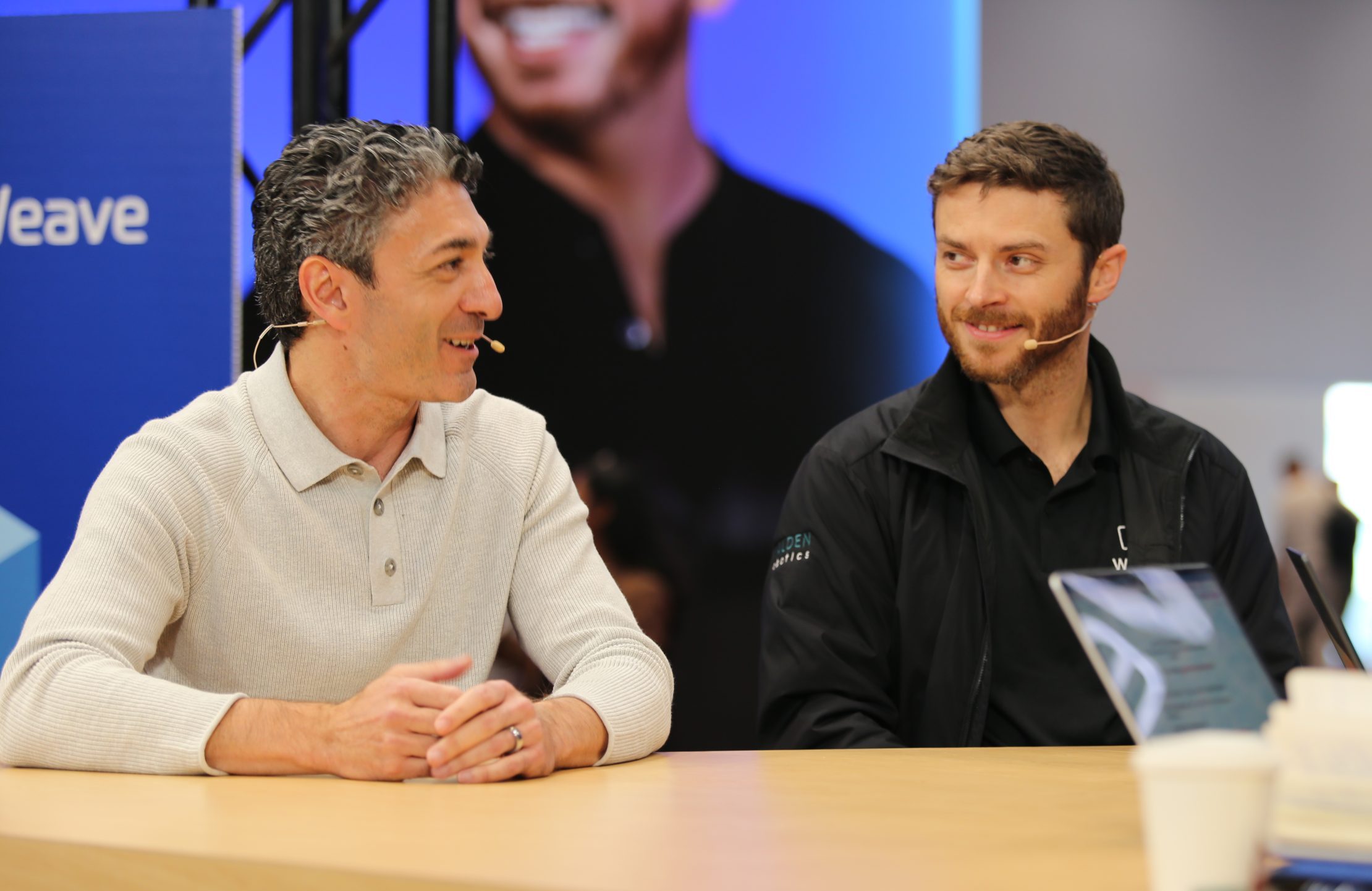
Walden Robotics, which spun out of Toyota Research Institute in January 2026 and launched with $300 million in July, has run general-purpose robots on full production shifts alongside people since May.
Why it matters
The pitch is continuous on-the-job learning plus remote human backup, which Walden says lets manufacturers change tasks and processes instead of being stuck with fixed, cage-bound machines.
What to watch
Walden’s robots stay autonomous but call for help when needed, so the test is whether that human backup really feeds data that makes the machines improve, as co-founder Adrien Gaidon claims.
WHO IT HITSManufacturing and factory operations teams weighing general-purpose robots against traditional fixed automation are the ones this lands on, since Walden is pitching continuous learning and remote human backup as the way to handle changing production tasks.
Summaries like this, in your inbox every morning.
Traditional industrial robots work behind a cage, repeat a single task and were never designed for today's market complexities, which is why manufacturers now want general-purpose machines that can switch tasks and improve as processes evolve. Walden Robotics, which spun out of Toyota Research Institute in January 2026, is one bet on that shift. It launched with $300 million in July, and its robots have worked full production shifts alongside people since May, handling machine tending, parts kitting, and subassembly — work that had either failed to be automated or had never been attempted.
The technical path runs through compute long before the factory floor. CoreWeave, which has been betting on physical AI, brings mechanical engineers and robotics experts into customer engagements alongside its infrastructure, and its VP of field engineering John Mancuso notes that a tremendous amount of simulation happens in the virtual world before a model does anything physical. But simulation alone cannot make a robot perfect, so Walden pairs autonomous machines with remote human assistants — a setup Gaidon compares to the automated looms of 120 years ago, when one person oversaw 40 machines. Gaidon also points to the roughly half a million open machinist positions in the U.S., arguing that part of that job does not require craft or human creativity.
The outcome hinges on whether continuous learning on the job and human assistance really deliver the adaptability Walden promises, and whether factory operators come to trust robots that change their behavior after deployment. For manufacturers weighing general-purpose robots against cage-bound fixed automation, that trust question — not raw robot capability — looks like the deciding factor, and it is likely to be settled on live production lines rather than in simulation.
Pick your industry and the AI tools you use, and get news related to your work every day.
Free · 30 seconds with Google · unsubscribe anytimeWhat is AIToday? →
Ask AI anything about this article. The AI reads this article, earlier AIToday articles, and Wikipedia, and cites its sources. Q&As are published on this page for other readers too.
In Q2, billionaires or their funds sold six 'Magnificent Seven' AI stocks

Nvidia was rising early Friday, even as the wider chip sector kept falling, Barron's reported

ElevenLabs completed a $300 million employee tender at a $22 billion valuation, and co-founder Mati Staniszews…

Skild AI used Nvidia Isaac Sim to give its S1 model one objective — score a goal — and let it compete against…
On October 15, OpenAI announced the Rosalind Academic Plan, giving approved US university labs free access to…

Neostellar Capital principal Evan Schlossman said CoreWeave's $103.7 billion in remaining performance obligati…


