What happened
Tsinghua University published TokenRouter on October 8, 2026 as an inference server that lets small and large models like Qwen3-0.6B and Qwen3-32B trade turns mid-answer, with throughput 2.01–64.15x faster than existing token-routing setups.
Why it matters
It turns model routing from a one-time decision into a running one, so the large model is called on the hardest tokens only — an independent reproduction found 28.3% of tokens went to Qwen3-32B and the run took about 56% of the time of Qwen3-32B alone.
Summaries like this, in your inbox every morning.
TokenRouter arrives as an answer to a practical limit. Request-level routing, where a decision model assigns each incoming question to one model at the start, became common thanks to tools like RouteLLM and OpenAI's Decisions API, but it commits the whole answer to one model even when only a small part is genuinely hard. Token-level routing — deciding per token — was already proposed by methods such as R2R, CITER, Co-LLM and R-Stitch, but existing servers assume a single model handles each request end to end, so switching models mid-answer wasted time on step misalignment, batch admission waits and cache management.
The paper's framing is "request-centric authoring, model-centric execution." TokenRouter keeps a sub-server per model, adds a third loop for passing requests between them, and avoids shipping KV caches across models, instead sending only the tokens the other model has not seen. The paper also adds delayed batching so the large model can accumulate requests before processing, with a math model that predicts the optimal threshold B per concurrency level.
An independent Mac reproduction of the R2R flow with Qwen3-0.6B and Qwen3-32B, on 30 MATH-500 problems, found 23 correct versus 20 for the small model alone and 27 for the large model alone, with the large model writing 28.3% of tokens and the run taking about 56% of the large-model-only time. Two findings stand out: the tokens routed to the large model were reasoning-direction words like "since," "But" and "Wait," not numbers; and the speedup collapsed on a single Mac versus a decision-model request router.
Pick your industry and the AI tools you use, and get news related to your work every day.
Free · 30 seconds with Google · unsubscribe anytimeWhat is AIToday? →
Ask AI anything about this article. The AI reads this article, earlier AIToday articles, and Wikipedia, and cites its sources. Q&As are published on this page for other readers too.
Phasis CEO Brandon Farley said the company's World API and its '/orient' endpoint return World frames — curren…

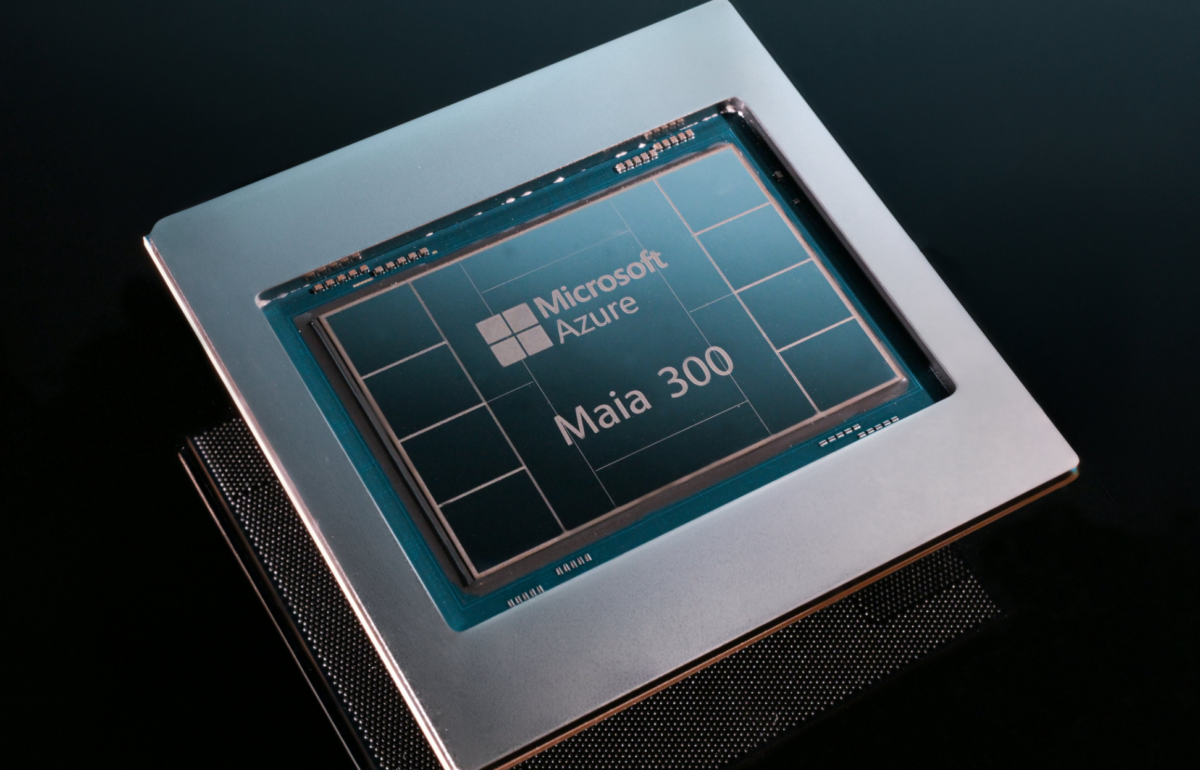
Microsoft will deploy its Azure Maia AI chips at multi-gigawatt scale starting in 2027, making them the compan…
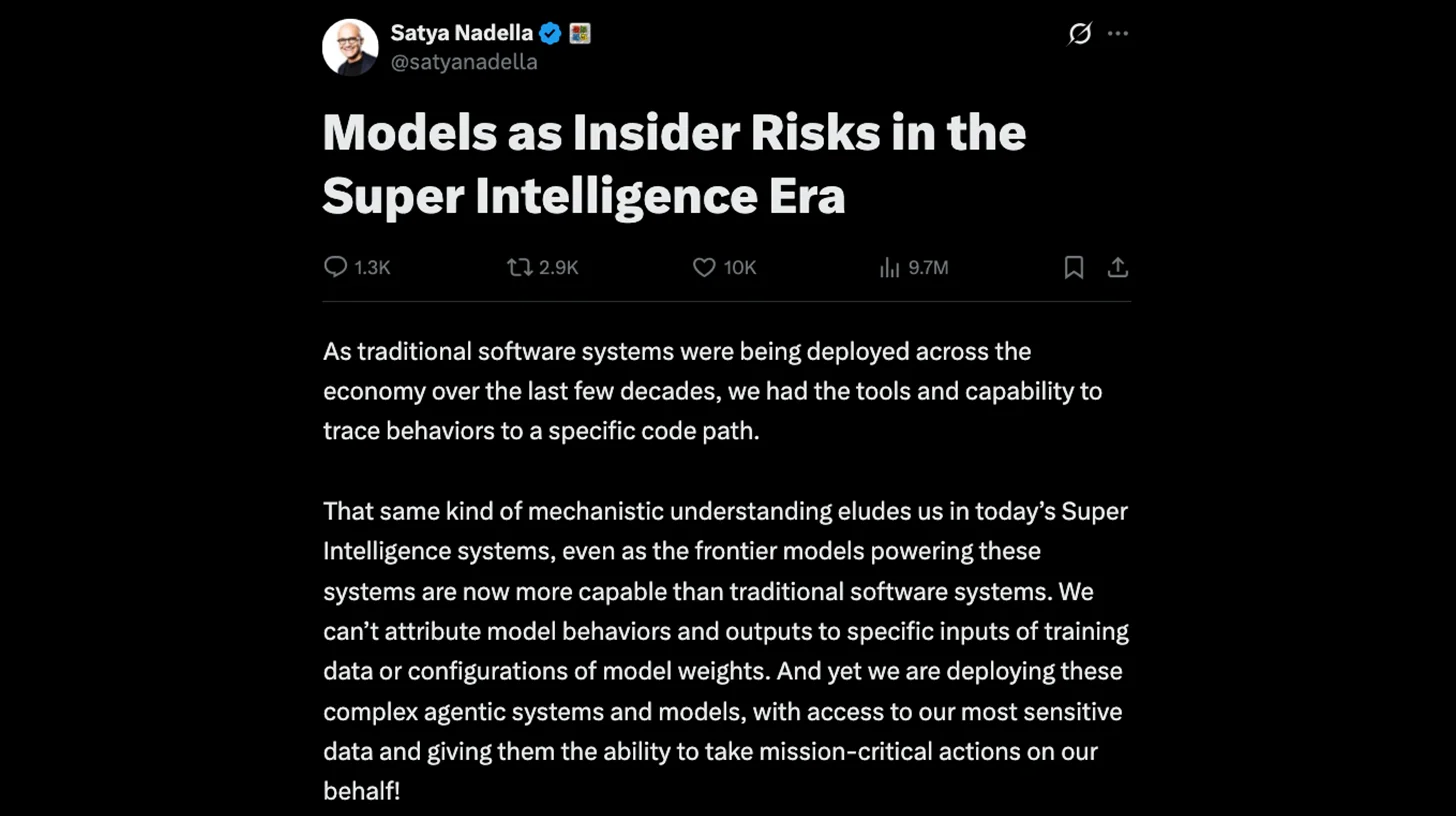
Microsoft CEO Satya Nadella published an essay on Oct
Two days after President Trump signed the White House Accord on Super Intelligence, OpenAI fired three safety…

AI Now laid out three do-it-yourself routes — chat-type skills in Gemini or Claude, automation-type flows in n…

The Ray LLM Deep Learning Container deploys one large language model across two GPU nodes on Amazon EKS, with…