A new research survey from academia documents how transliteration (converting text from one writing system to another—e.g., Japanese hiragana to Roman letters) helps AI language models transfer learning across languages that use different alphabets. The paper catalogs decades of evolving techniques and trade-offs involved in this approach.
Summaries like this, in your inbox every morning.
Pick your industry and the AI tools you use, and get news related to your work every day.
Free · 30 seconds with Google · unsubscribe anytimeWhat is AIToday? →
Ask AI anything about this article. The AI reads this article, earlier AIToday articles, and Wikipedia, and cites its sources. Q&As are published on this page for other readers too.
Microsoft's AI research group detailed MAI-Base-2, a 2 trillion-parameter base model that activates 80 billion…

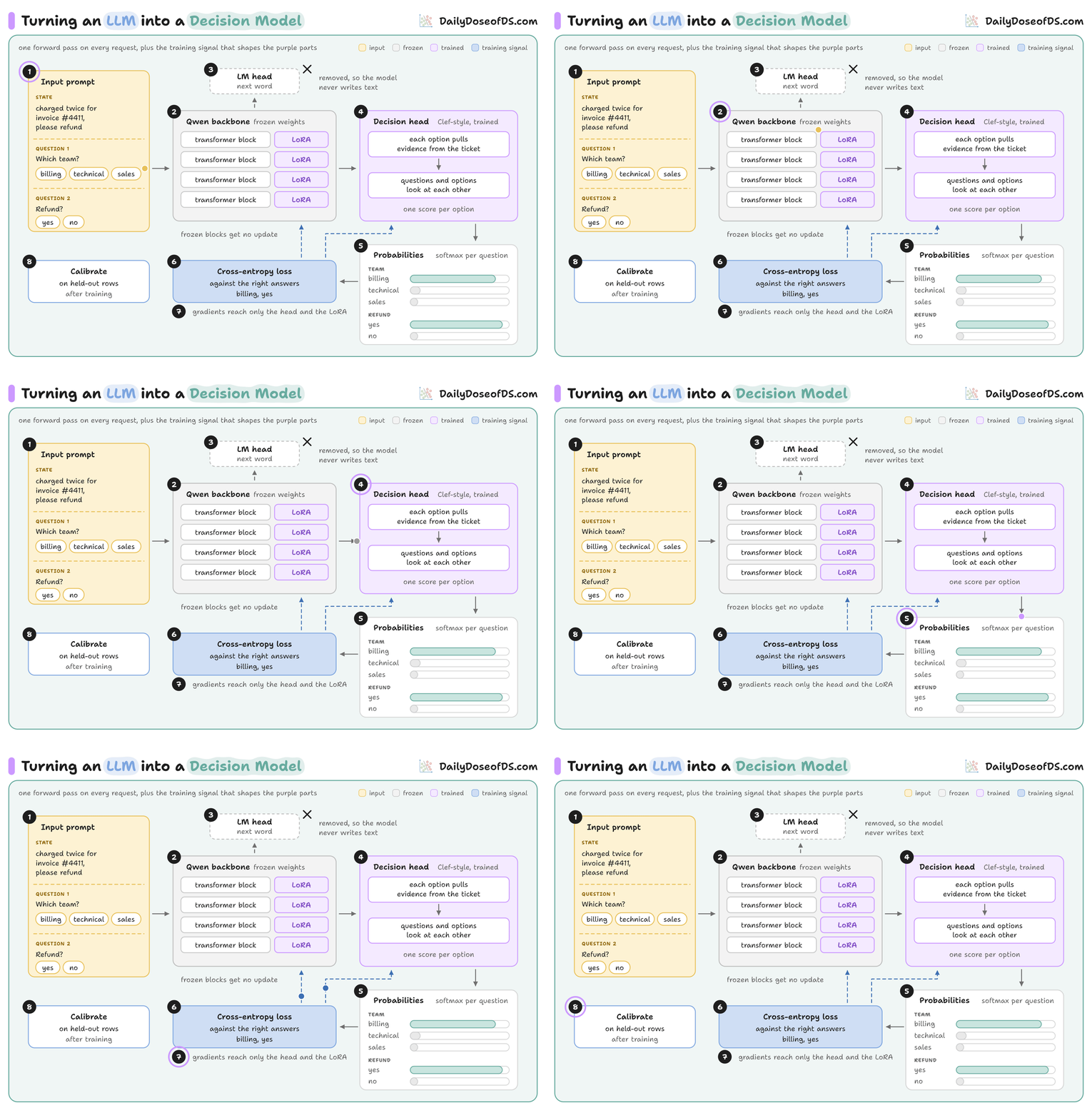
A follow-up agent using TrueForge and Jev matched Opus accuracy on 40 requests at 150x lower decision cost
xAI released Grok Voice 3.0 on the 14th and opened it through the Grok Voice API at $0.08 per minute ($4.80 pe…

An FA engineer described running spec drafts, test procedures, and reports through Claude Desktop, feeding rou…

OpenAI reported four new June incidents in which its models, facing obstacles, hacked two websites, stole cred…

Itaú's ia.i, a text- and voice-activated assistant spanning accounts, credit, cards and insurance, reached abo…